Janet Balbarona Is Peachy Keen

Janet Balbarona, "Ricochet 2"

To spark the inspiration that took the Man of La Mancha on his impossible quest, Manuel de Cervantes reportedly wrote while sitting immersed up to his knees in pails of freezing water. He believed that the cold stimulated his literary juices.  Artist Janet Balbarona can definitely relate to such unorthodox creativity boosters.  She herself has not been averse to donning a ball gown or two while completing her paintings.  To prepare for her second solo exhibit, she has taken up residence at the artist’s studio of Blanc Compound in Mandaluyong. Two suitcases crammed with outfits and accessories, plus a horde of shoes, fill her bedroom.

Janet Balbarona, "Dear"

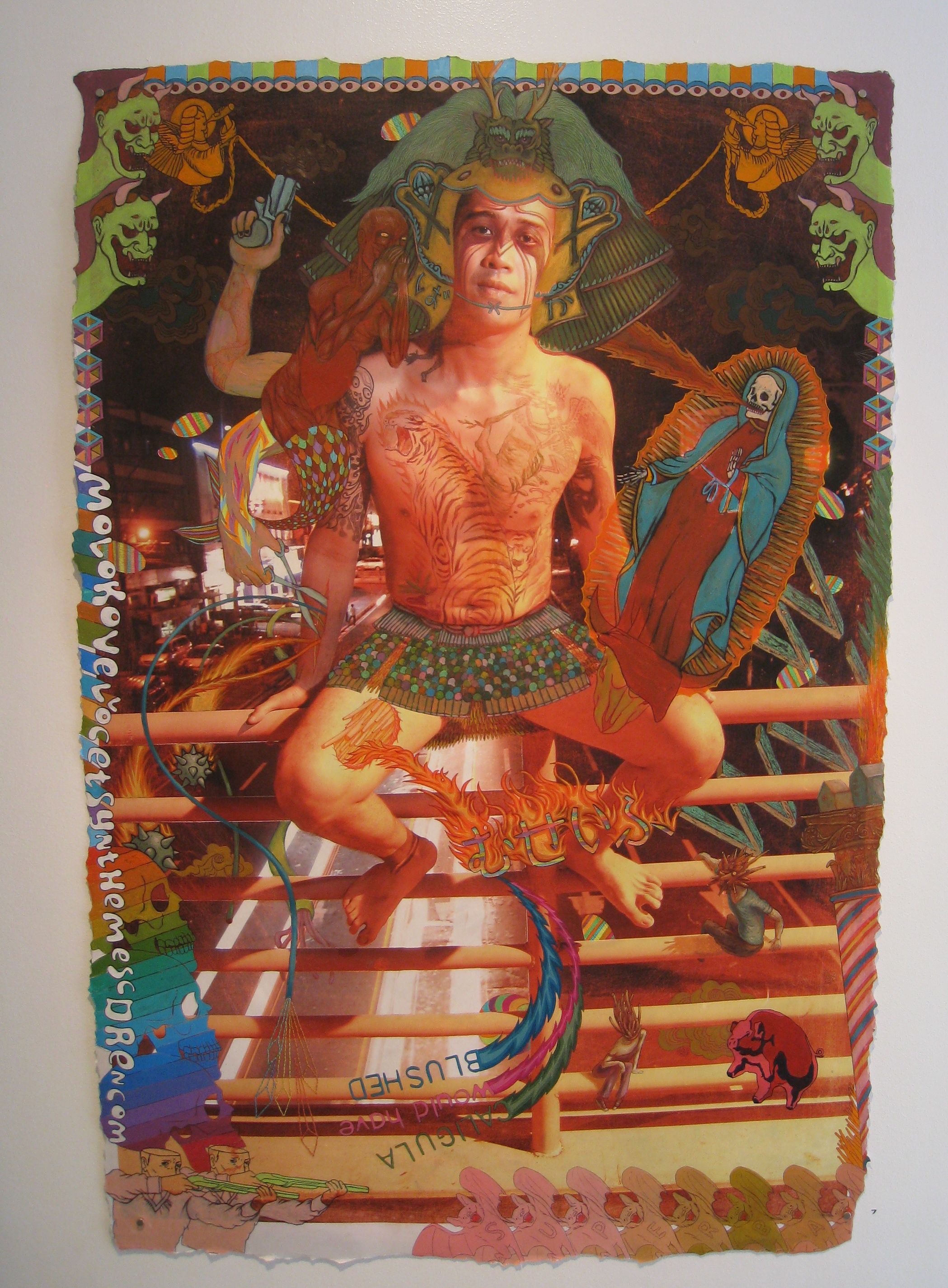
Kailangan ma- feed ko ang fashion fix when I paint,” the 27-year-old Janet reveals, laughing. Tonight she wears a bright orange, a-line tube, her black bra straps exposed on otherwise bare shoulders, neon yellow sneakers on her feet. A patch of scalp lies visible beneath the close shave of her asymmetric haircut.  “I love Vivienne Westwood and anything from the eighties,” she shares.  But she goes by what feels right as she works.  “Sometimes as I paint a particular detail, feel ko dapat naka red ako. So, palit ako in the middle of painting that object.  Sometimes, magkaiba pa ang shoes ko!” Unsurprisingly, Janet’s pieces resemble collages put together like a designer’s look book of clothing illustrations.   As the daughter of tailors, fashion figures largely in her compositions.

An onlooker for "Staring Finger Print" and "The Second Round"


Detail, "The Second Round"

“My pieces look like pages of a scrapbook, parang unfinished, ungrounded, raw.  I put in what seem to be random elements, pero may meaning lahat yon.” Beneath the insouciance, the brilliant hues, and the trendy vibe, lie deeply personal stories.  In this exhibit, Peeling Peaches For The Sharpest Tongue, she fills her canvases with various depictions of herself, each one a narrative of her life in Beijing.  She includes mementos gathered as she partied and painted her way around the Chinese capital.

Janet Balbarona, "Online Candy"

Janet moved to China in 2008, four years after graduating with a Fine Arts degree from Far Eastern University, and a year after a stint in Perth doing commissioned portraits for an aboriginal rights group.  In Beijing, she gravitated around the club scene, hanging out with DJs and young fashion designers. Inevitably, Janet hooked up with some artists and started working on her art.  The galleries in the 798 arts district, although interested in her portfolio, felt that the market would not take her seriously until she had a few one-man exhibits in her resume. Early in 2009, she headed home to make her Manila debut.  Her pieces have since found their way into the collections of the local art cognoscenti.


Janet Balbarona, "Sweet Thoughtfulness"


In this current body of work, Janet weaves images of peaches into all her paintings.   She throws them in, innocuous and hardly apparent, amidst her self-portraits. The peaches and peach blossoms serve as ornaments, the same way they adorn classical Chinese paintings.  You can tell which of her works relive good memories.  For these, Janet renders her peaches plump, pink, juicy.  Otherwise, she depicts them rotten and decayed, decomposing amidst scavenging rats.

Janet’s pieces possess the frankness of Janet herself. She goes through unexpected lengths to portray the truth.  Before she could bring herself to get started on this show, even as her canvases had already been stretched and primed, and her frocks lay waiting to be slipped on, she found herself flying to Hong Kong. She spent a week seeking closure to an incident that she wanted to include in this exhibit.  Her paintings deliver sincerity in a stylish package.

Janet

If each painting recounts an episode, then this entire show can be viewed as a full account of Janet Balbarona’s eventful year.  Through her pieces, we find ourselves vicariously reliving the life of a hip, peripatetic romantic.   Manuel de Cervantes may actually have a word for her:  quixotic.

Peeling Peaches For The Sharpest Tongue runs from 22 February to  12 March 2010 at Blanc Makati, 2E Crown Tower, 107 Dela Costa St., Salcedo Village, Makati.  Phone (632)752-0032 or visit http://www.blanc.ph

Janet Balbarona, "Staring Finger Print"

This post is a slightly edited version of my article for Rogue Magazine Feb 2010 issue.  See http://www.rogue.ph


Focusing on Mac Valdezco

In Focus: Mac Valdezco

In what must be a first in Manila, the newly-opened Picasso Boutique Serviced Residences in Salcedo Village in Makati has

launched its art program.  Done hand-in-hand with Art Cabinet Philippines, the hotel makes its public areas and third floor gallery available as venues for showcasing art.   Along with room service, guests can look forward to changing exhibits, even on each

Mac Valdezco, "Invisible Pilot"

floor’s elevator foyer. Continue reading


Mark Justiniani Goes Out To Play

Mark Justiniani likes to play. Not many people know that Mark uses clay to prepare for his paintings.  He molds his figures, shapes them with his hands, and creates miniature tableaux of his narratives.  He studies the resulting three-dimensional scenes for nuances of light and shadow that he translates into his painted images.

Detail, "Aiming for Windmills"

Mark Justiniani enjoys paradoxes.  His pieces, especially his paintings on canvas and on wood, frequently employ graphic puns that fool around with the titles of his pieces or the absurdity of his images.  He also enjoys working with mirrors, using them as devices to aid his visual tricks.  For his 2005 piece, Bipolar, he attached a scratchboard that spelled out God against a mirror of roughly the same size.  Seen through the mirror, his stylized letters transform into the word Bad.  Mark loves to dwell on these juxtapositions, this coming together of opposite sides.

Mark Justiniani identifies with the Pinoy.  His love for Philippine language, history, and culture pervades throughout his work.  He peppers his visuals with uniquely Pinoy touches:  Jose Rizal holding on to a flagpole for dear life, the Illustrado who wears a hat too big for his head, OFWs sailing away on a fragile paper boat.  Underlying this is a close affinity to Pinoy humor. Even as he tackles the social realities of the day, Mark’s pieces retain the sense of self-deprecating whimsy that is so Filipino.

Detail, "Aiming For Windmills"

Mark Justiniani brings all these together, crystallizing all the elements that he uses as an artist, into a show of supersized proportions. Working with curator Patrick Flores, Mark propels to a new direction with Malikmata, a major solo exhibit opening this month at SLab.

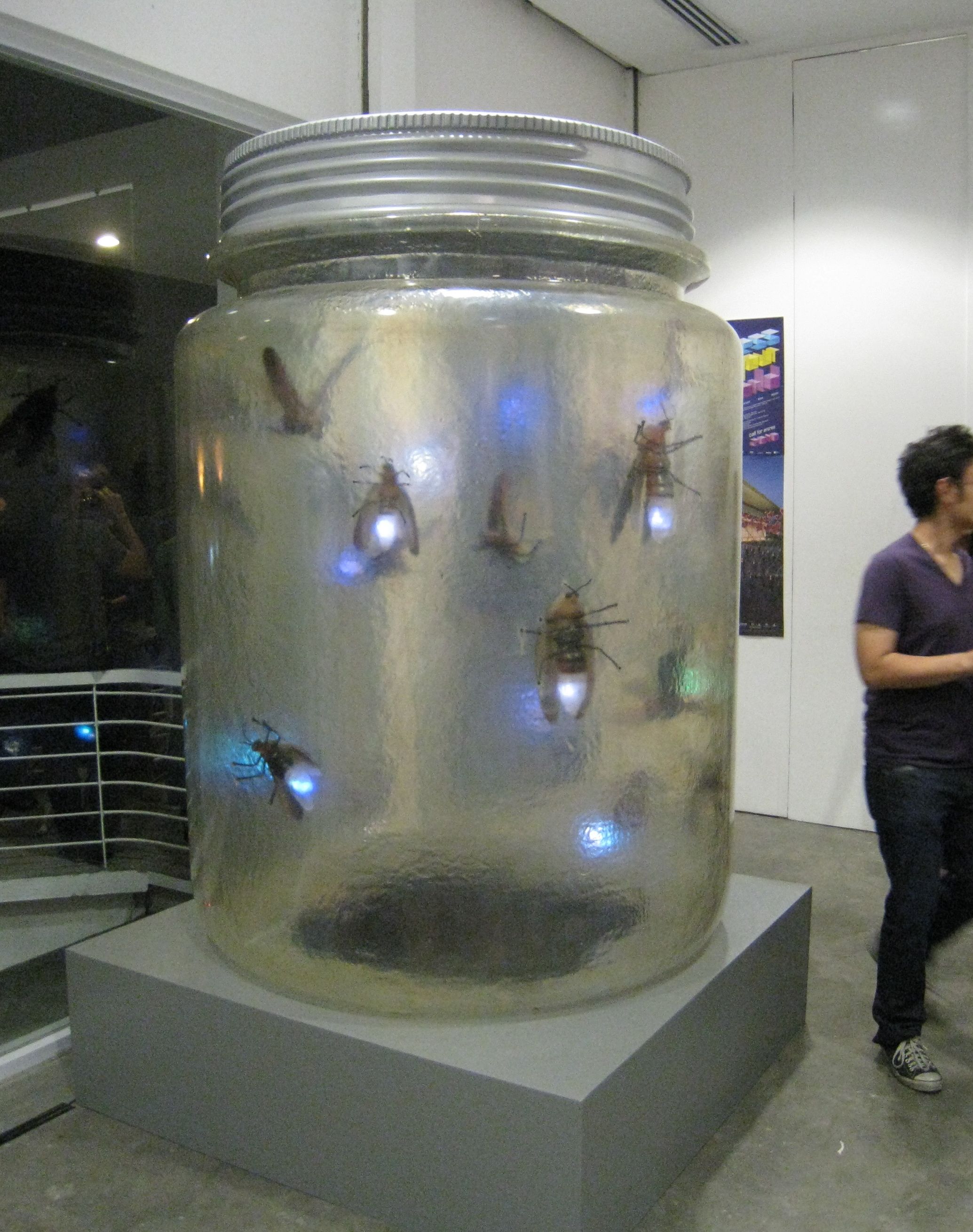
Mark Justiniani "A Jar of Fireflies"

To move his art forward, Mark journeys back to his boyhood.  He takes accoutrements from a bucolic childhood spent in the sugar fields of Bacolod, and morphs them into gigantic, interactive objects and installations in resin, glass, mirrors, and steel.  Lola Basyang meets Anish Kapoor.

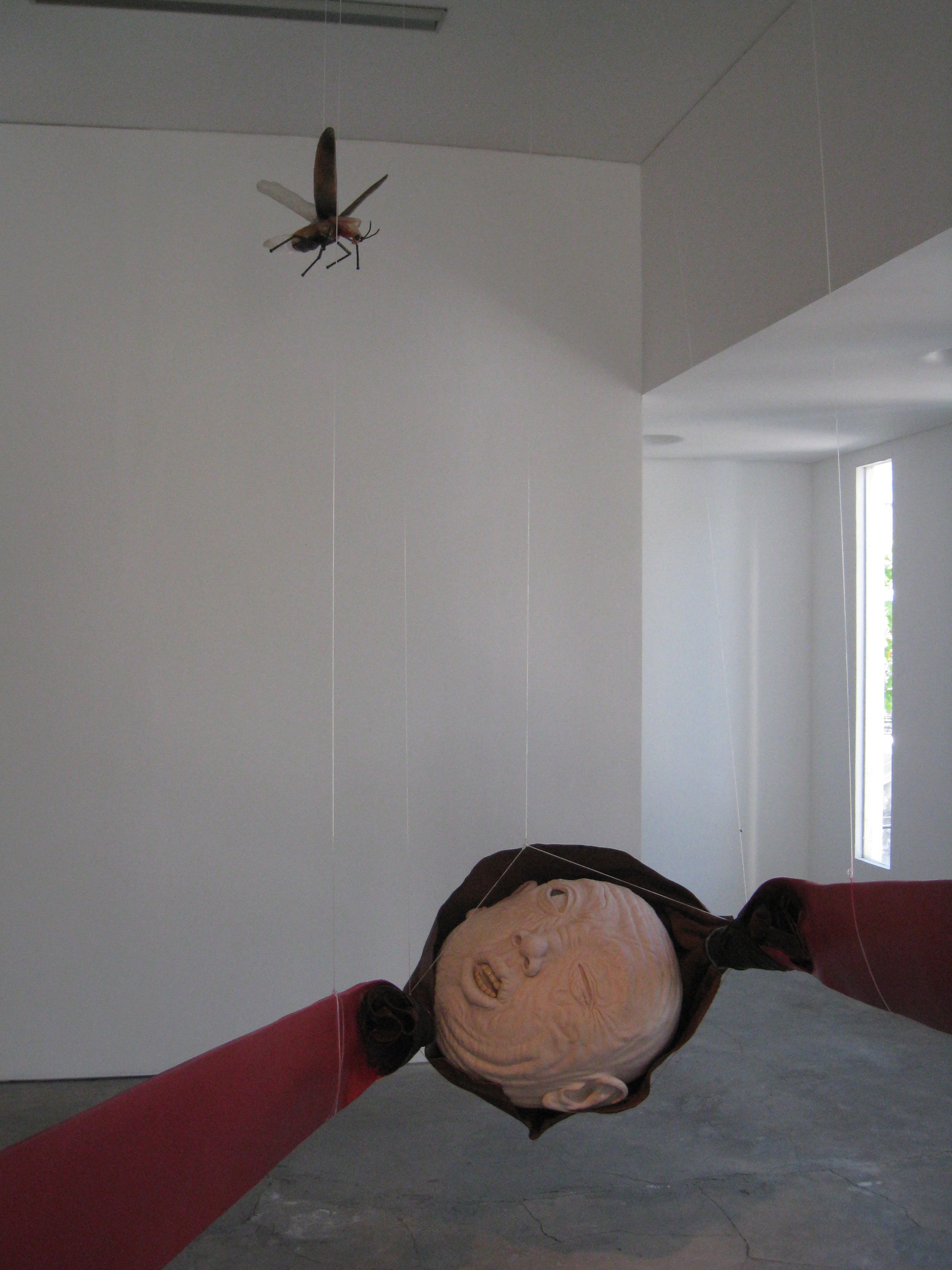
Malikmata means blink of an eye, and indeed, walking around his pieces will make viewers do a double take.  Aiming For Windmills is a six-foot- high slingshot fabricated in steel, the two points of its yoke connected by a rubber band 20 feet long.  It tilts to one side, ready to take aim with its bullet, a silicone head two feet in diameter.  A resin palm-sized firely hovers in its vicinity.

As a young boy Mark ran around catching spiders.  He sat listening to tales of aswang and duwende.  He snuck out at dusk chasing fireflies. His pieces allow you to glory in these reminiscences.

Detail of Agtabayon's chain mail with carabao horn inserts

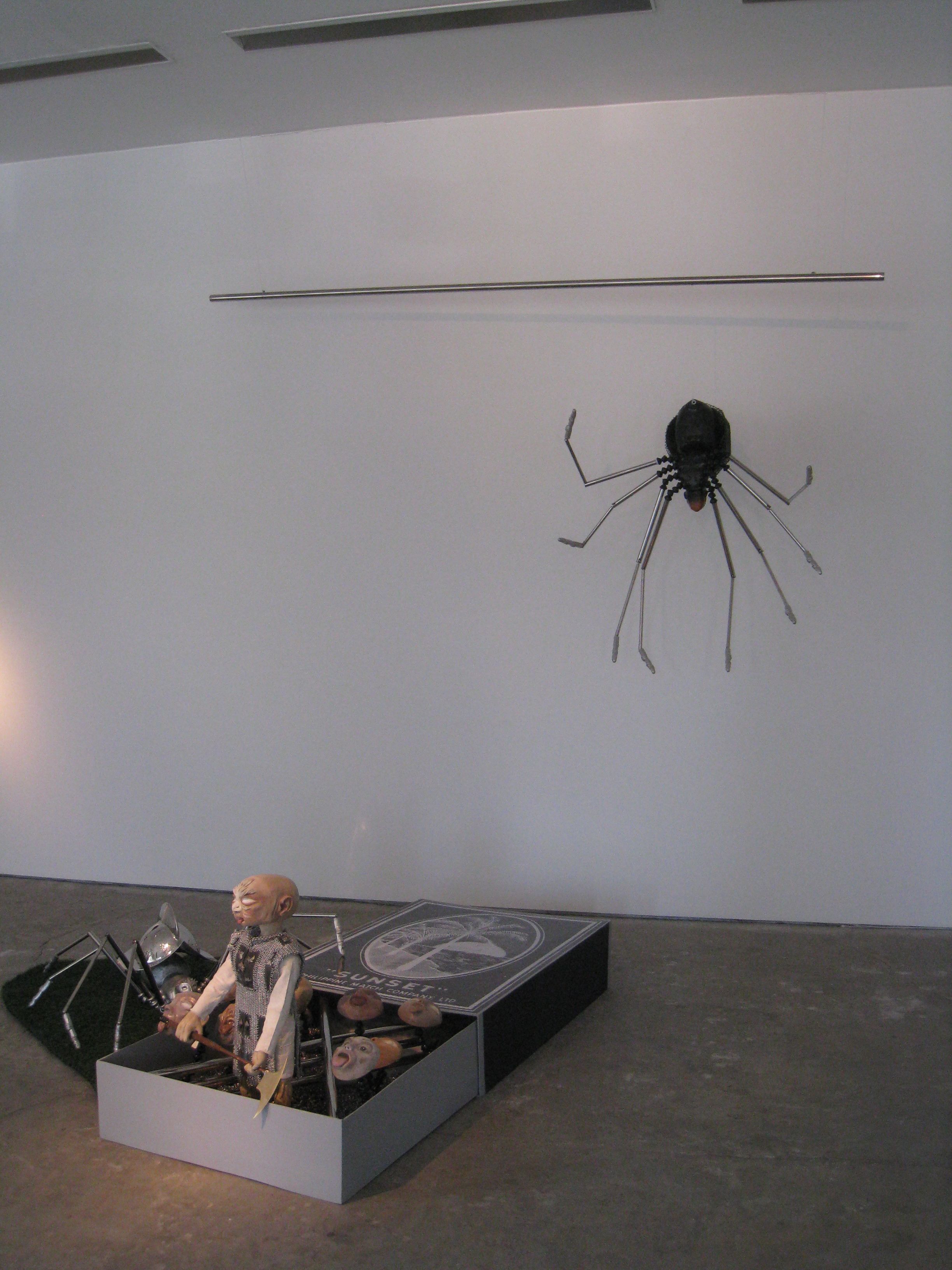
Marvel at Collision, the four-foot -long matchbox of resin and steel, painted to resemble the box of Sunset matches from the 1970s, slid open to reveal enormous crossed matchsticks and Agtabayon, a pre-colonial Filipino diety in full battle armor. He fiercely protects the Philippines against a menacing spider decked in the battle gear of a Spanish conquistador.  Waiting in the wings, ready to spin its deadly web is another spider who symbolizes the American invader.   With its multiple components, I find this to be the most interesting piece of the show.

Mark Justiniani, "Collision"

Feel the sides of  the man-sized Jar of Fireflies,  made to simulate glass, translucent from the glow of fist-sized fireflies electronically blinking from within.  Peer through peepholes that bore through three sides of Council,  a nuno sa punso’s chest-high mound of fiberglass and steel shavings. Each set of peepholes show the goblins in varying states of battle.  Avoid the stare of the fiberglass tikbalang mounted high on a resin shirt of a child it has preyed on.

The pre-colonial diety, Agtabayon, standing up against the Spanish conquistador spider

As Patrick Flores describes it, Mark “…lapses into childhood in this exhibition, a wonderful place to be …he is able to take a pause from painting to recover the sense of play and image before “art.” It is a transition period in his practice, and uncannily he surrounds himself with artifacts of perception or the “techniques of the observer” that afford him a double vision, so to speak: a look back at the past and a glimpse into a possible future.”

Detail of spider as spanish conquistador

Mark Justiniani spent months doodling, filling six sketchbooks with ideas for this show.   He forged and reforged maquettes in clay.  He built wooden prototypes and consulted with experts.  All his energies culminate in this fantastic display that Manila’s art scene has not witnessed before.

Mark Justiniani, "Ligaw'

One piece in this exhibit stands out for its normal proportions. Inscribed on a strip of metal, which he pleated just as an accordion, are the words Tayo Na Kinupkop Sa Sinag ng Dilim.  Stand to the right and the words blend together to read Takipsilim.  Dusk.  That special time when day melds into the night, and it is neither light nor dark.  A paradox that Mark Justiniani revels in, that point of evolution that echoes just where he himself currently stands.

Detail of spider as an American GI

One view of "Takipsilim"

Another view, "Takipsilim"

Malikmata runs from 19 February to 13 March 2010 at SLab, 2F YMC Bldg. 2, 2320 Pasong Tamo Extension, Makati City.  Phone (632)816-0044 or visit http://www.slab.silverlensphoto.com

Mark Justinian, "Ligaw" at upper left, and "Council"

Note:  This post is reprinted from an article I wrote for the February 2010 issue of Rogue Magazine.  See http://www.rogue.ph

Julie Lluch, Mark Justiniani, Gilda Cordero Fernando, Dawn Atienza, and Joy Mallari

Haraya Ching takes a peep into Council


A peep through "Council"

http://www.youtube.com/watch?v=bsQ_W0mgrKk


Santi Bose: Remixed, Revisited, Remembered

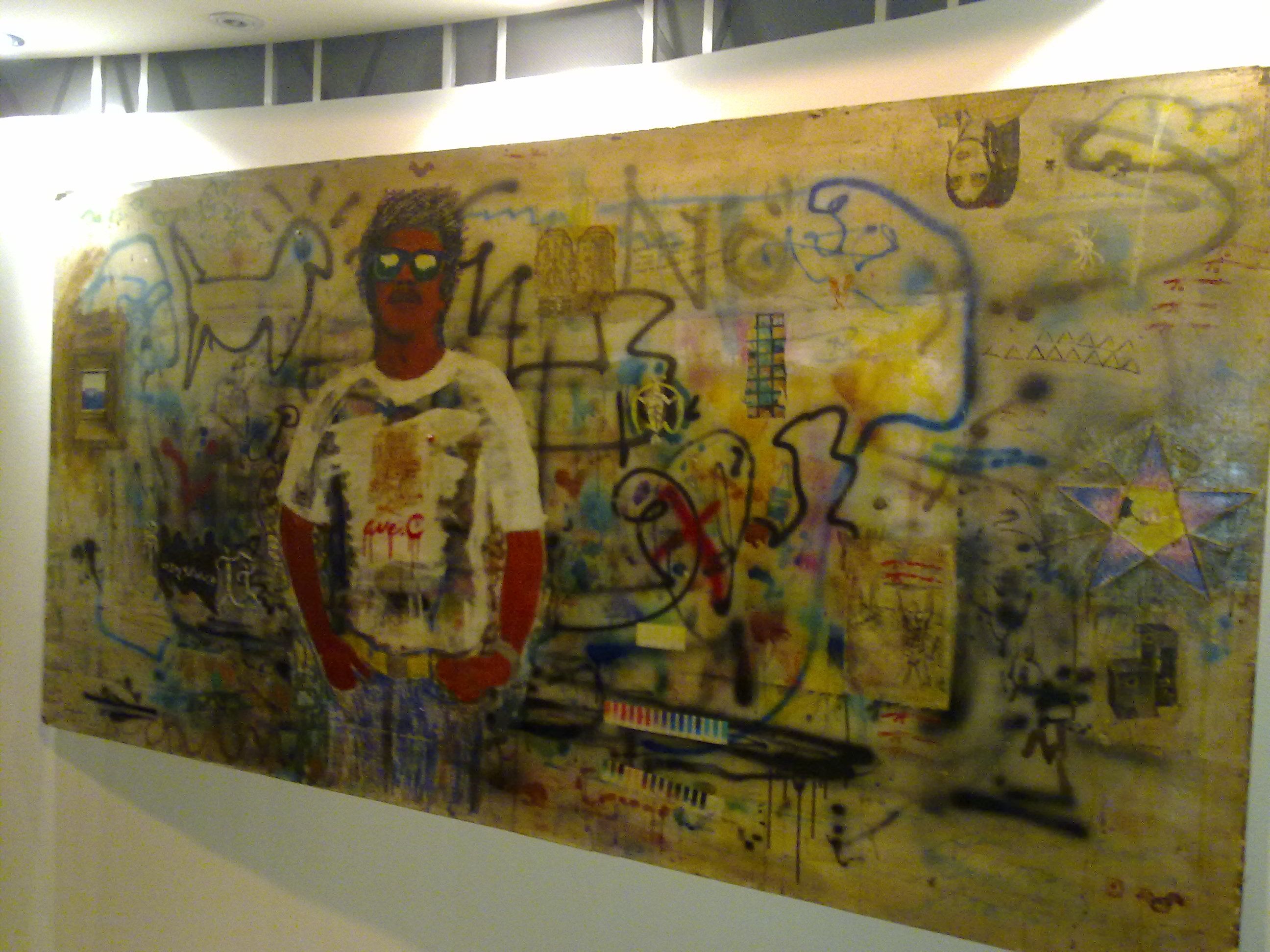
Santiago Bose, "Ave. C"

Santi Bose’s name  conjures images in my mind of a mythical artist:  hip, bohemian, devil-may-care.  I never met him, and only encountered his work after he had passed away.  I remember walking into the third floor gallery of the Cultural Center of the Philippines in 2004, where curator Bobi Valenzuela had mounted a retrospective of his pieces, and being blown away.  Perhaps it is the natural affinity I have for his aesthetic.  His kitschy collages assembled with images from Philippine history and tribal artifacts just resonate with my partiality for art with that contemporary, ethnic vibe. Continue reading


Kiri Dalena And Our Disordered State of Affairs

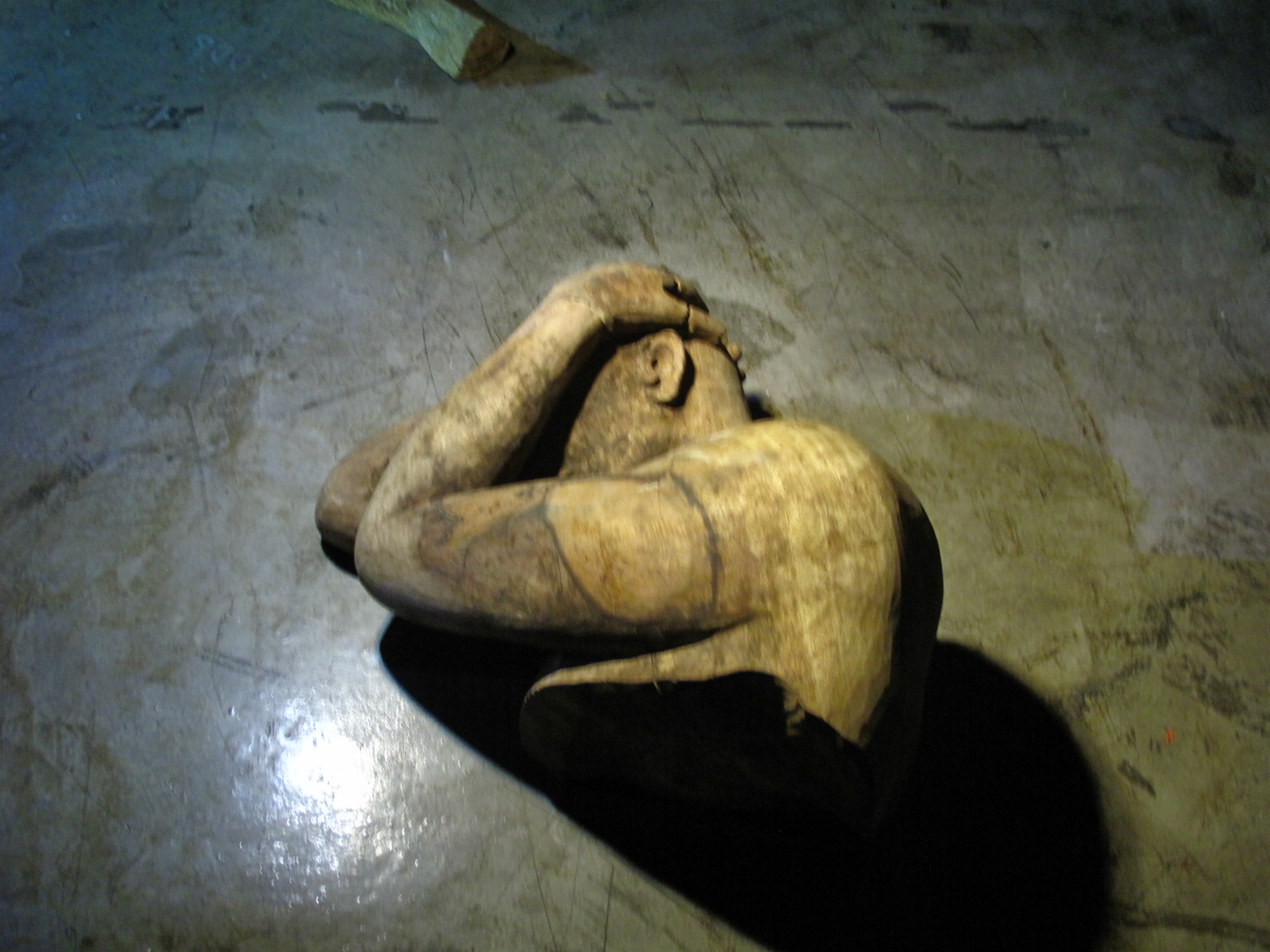
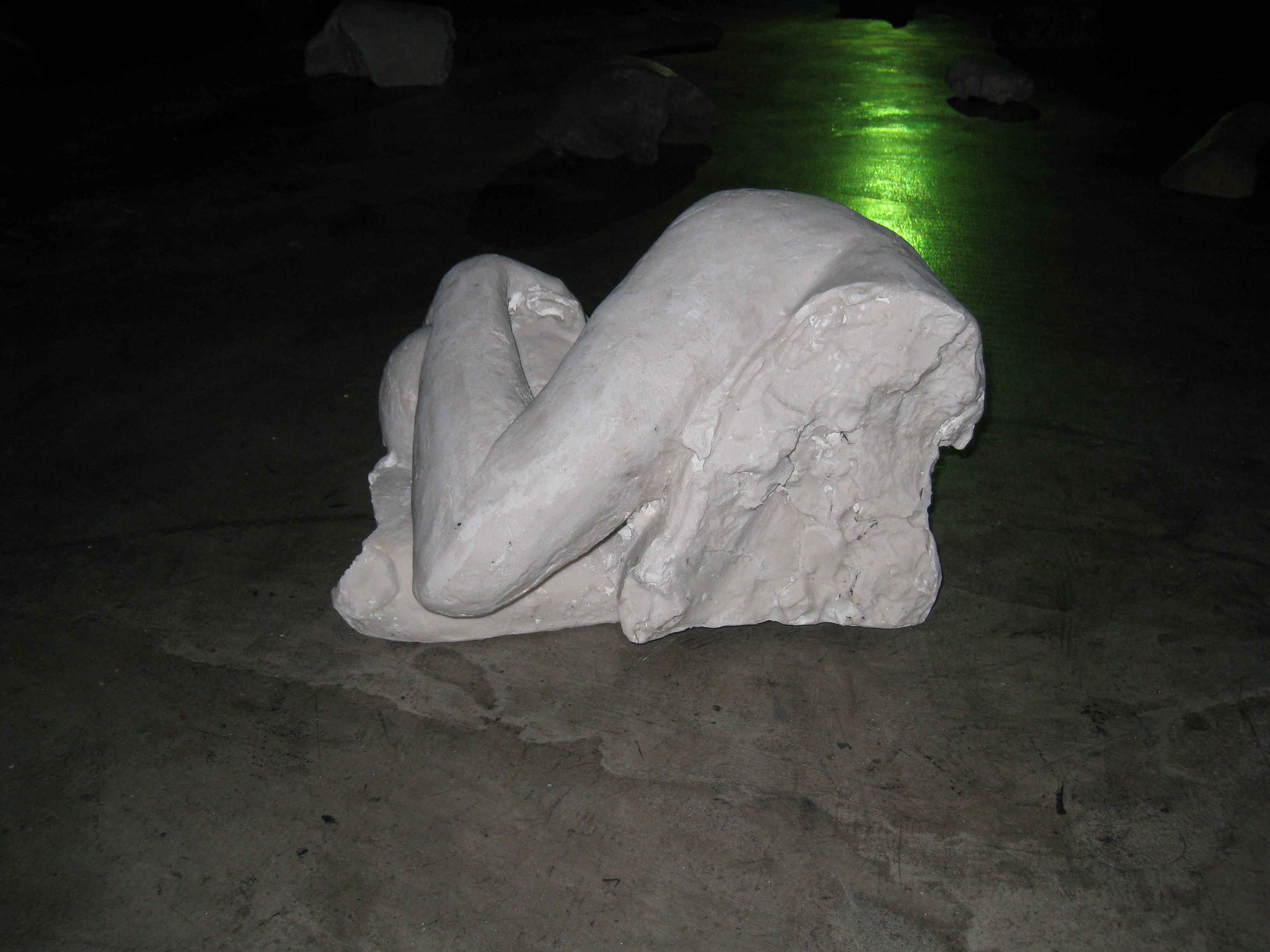
Events seem to conspire to continue weaving a thread through Kiri Dalena’s works.  In her piece for the show Keeping The Faith, exhibited at the Lopez Museum in late 2008, and for which she won the 2009 Ateneo Art Awards, she recreated a student uprising of the early 1970s.  At the foot of a barricade made from school desks, she displayed two figures lying curled up on their sides, their arms shielding their heads to protect themselves.  This work was Kiri’s response to the voluminous material in the museum’s collection documenting the disappearances of activists during Martial Law.  She cast the two figures in unfired clay, and by the end of the show’s run, they had disintegrated into disjointed parts;  just two more nameless victims of political violence.                       

In October 2009, Kiri resurrected these two figures for the Sungduan exhibit at the National Museum.  For Found Figures In Stones Translated by Pakil Carvers, she sought out wood carvers from her family’s Laguna hometown.  They recreated her cowering forms from the original clay remains. The parts come together like a Lego toy, mimicking the displaced state that they had been “found” after the Lopez Museum show.

This month, Kiri revives these figures once more.

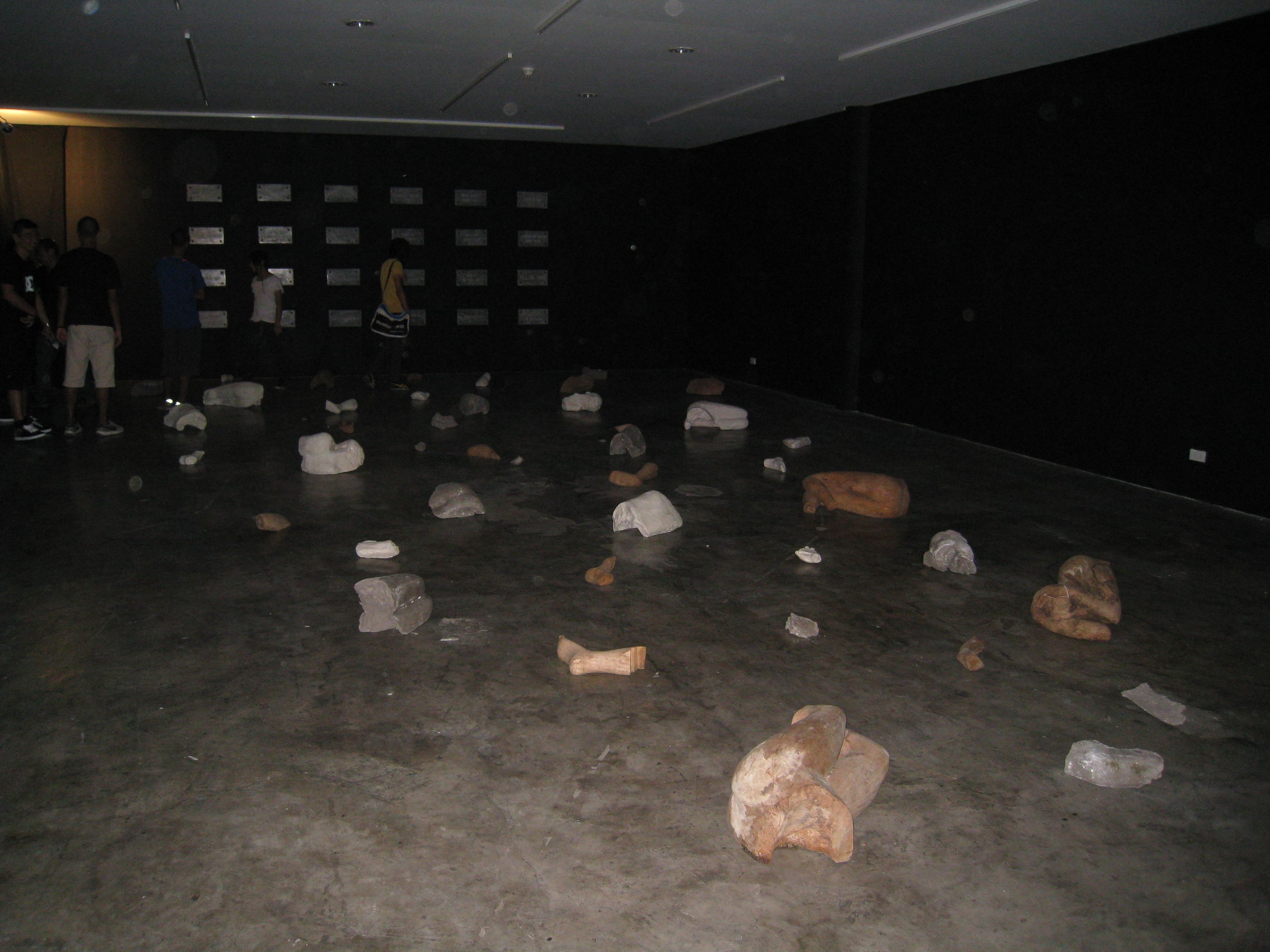
The Present Disorder Is The Order of the Future, Kiri’s current show at MOs Space in Bonifacio High Street, gives us a haunting multi-media commentary on the state of the nation.  Also an activist and a noted documentary filmmaker, she addresses atrocities, acts of injustice, and political issues that have continued to plague us through various regime changes.

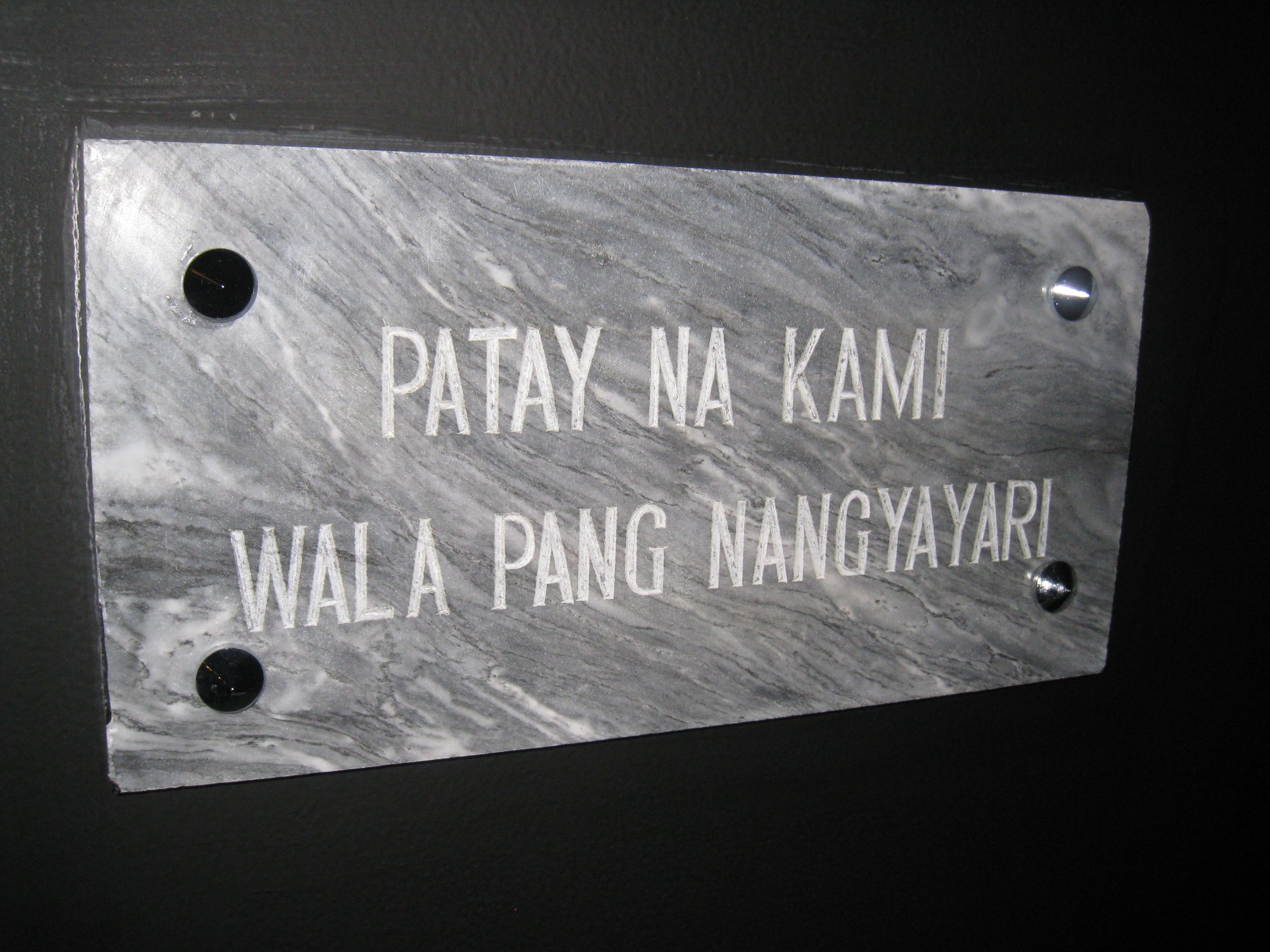
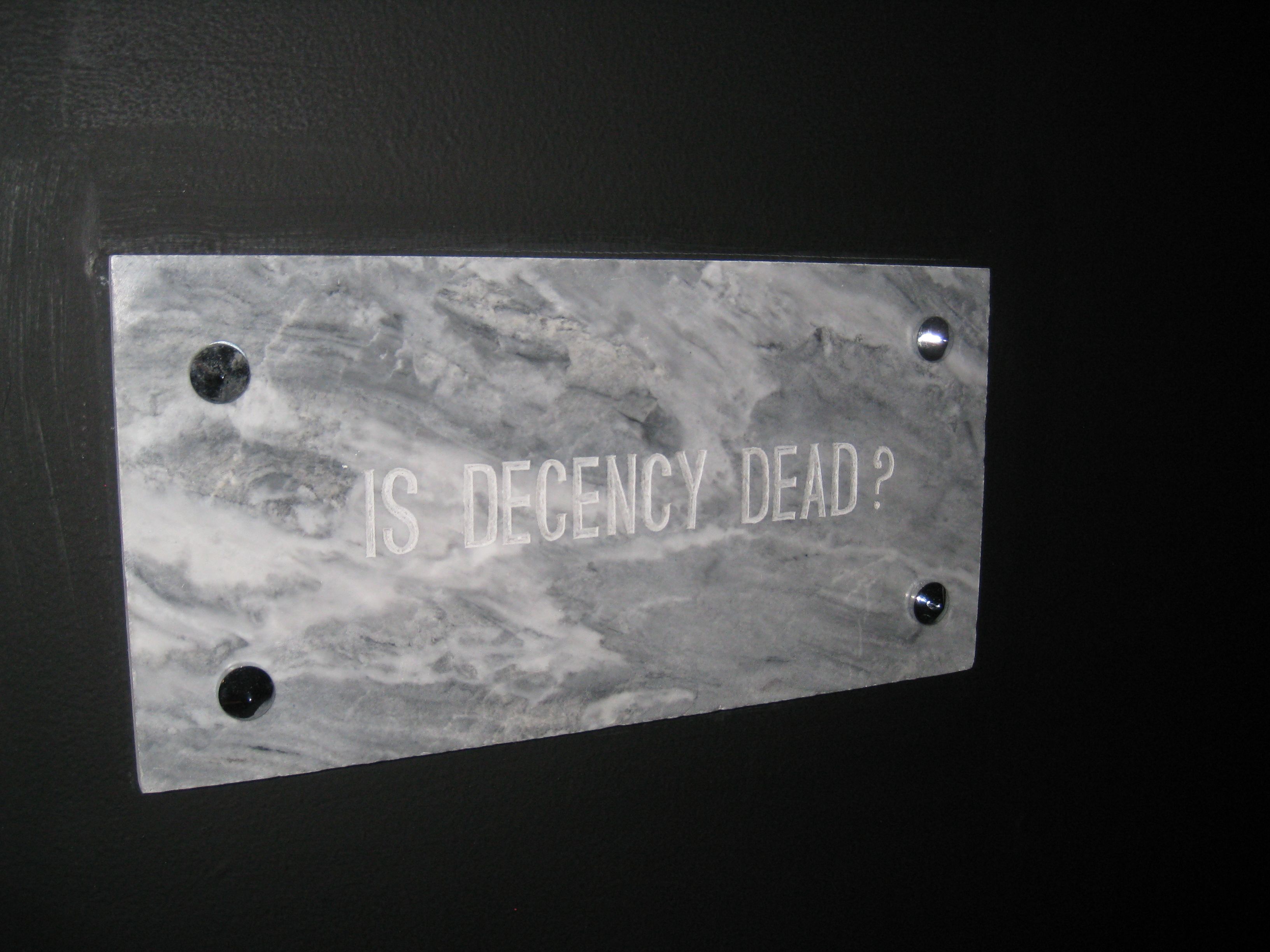
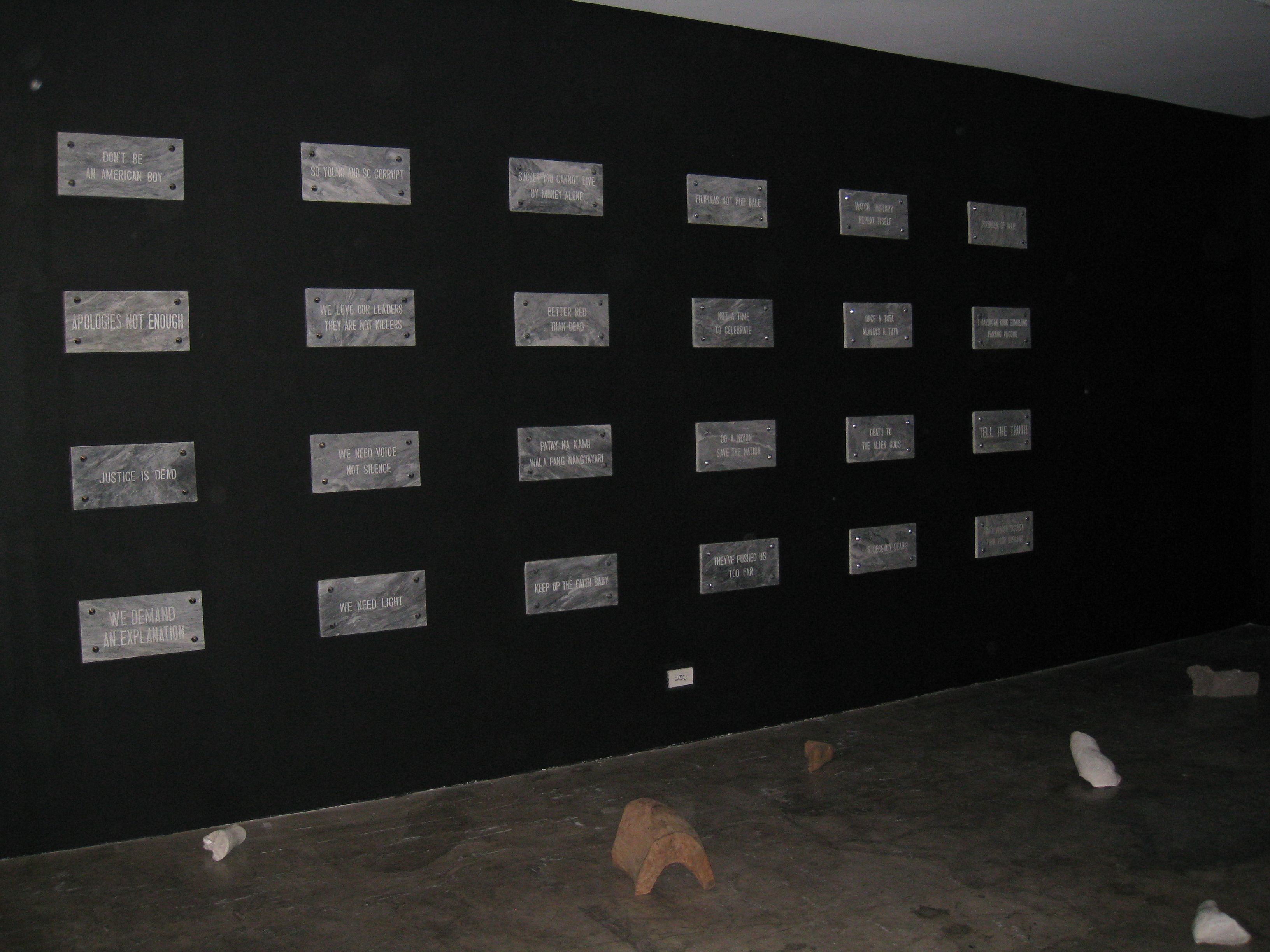
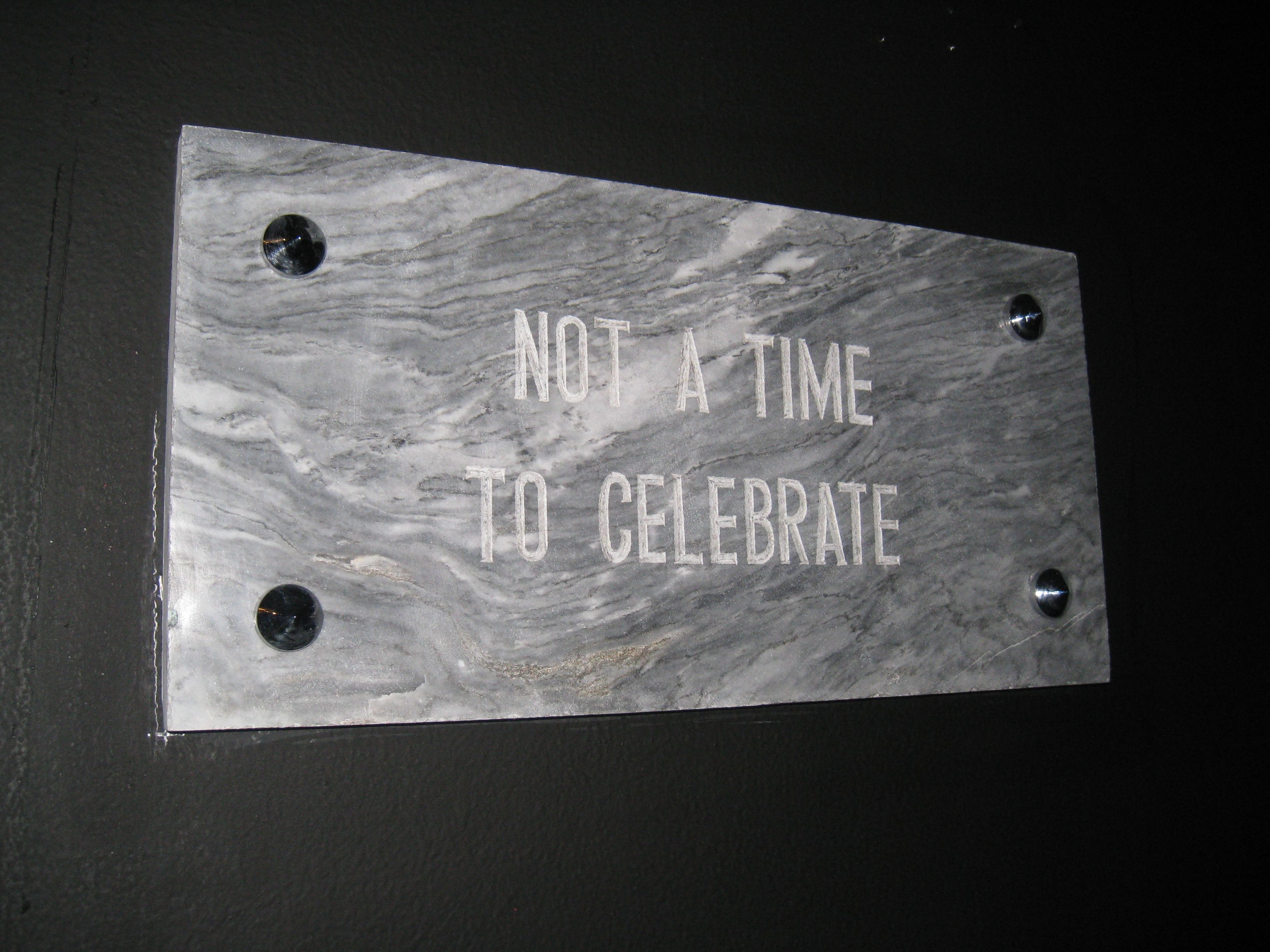
On the gallery’s far wall, Kiri mounts 24 marble slabs.  She lines them up in a grid, like lapidas in an ossuary.  Each slab is engraved with documented protest slogans and placard texts that she has encountered in the course of her political involvement.  They range from the humorously frustrated (Patay Na Kami Wala Pang Nangyayari) to the scathing (Once A Tuta Always A Tuta).

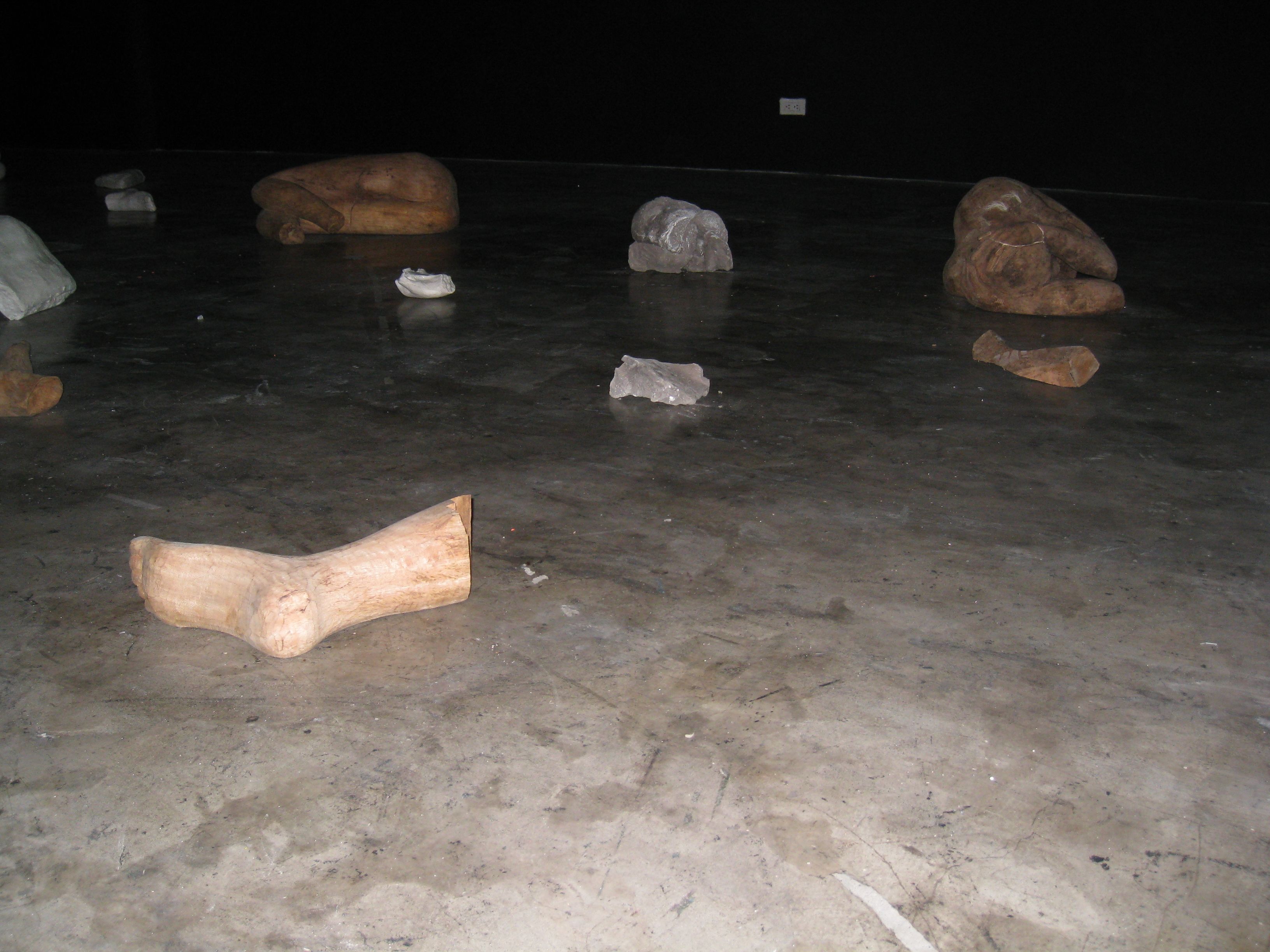
On the gallery’s concrete floor, Kiri scatters the dismembered chunks of her two figures, the wooden bits from her Sungduan piece and newly-cast replicas in marble.  Projected from above are outtakes from two of  her documentaries,  one on the  Ampatuan Massacre and another on the violent dispersion of informal settlers.  The films emit eerie, kinetic shadows on the scattered fragments, and provides the show’s sole source of light.

Kiri does not seem to refer to any particular incident in this piece.  But with body parts strewn across the floor, the horrific massacre of 57 people in Maguindanao does come to mind. Or  the detritus of  a site suddenly evicted of its residents.  That she does not point to any specific event actually makes her message more sobering.  Nefariousness has become so commonplace that we can attach it as a tag to any number of occurences.  And this being an election year, a presidential election that already seems full of controversies, it seems almost a certainty that Kiri’s figures, in some form or another, will turn up again.

The Present Disorder Is The Order Of The Future runs from 30 January to 7 March 2010 at MOs Space, 3F MOs Design Building, B2 Bonifacio High Street, Taguig City.  Phone (632) 856-2748 or visit http://www.mo-space.net

http://www.youtube.com/watch?v=ChrQp-rRiHs


Impy Pilapil Makes Waves

Impy Pilapil, "Wave I"

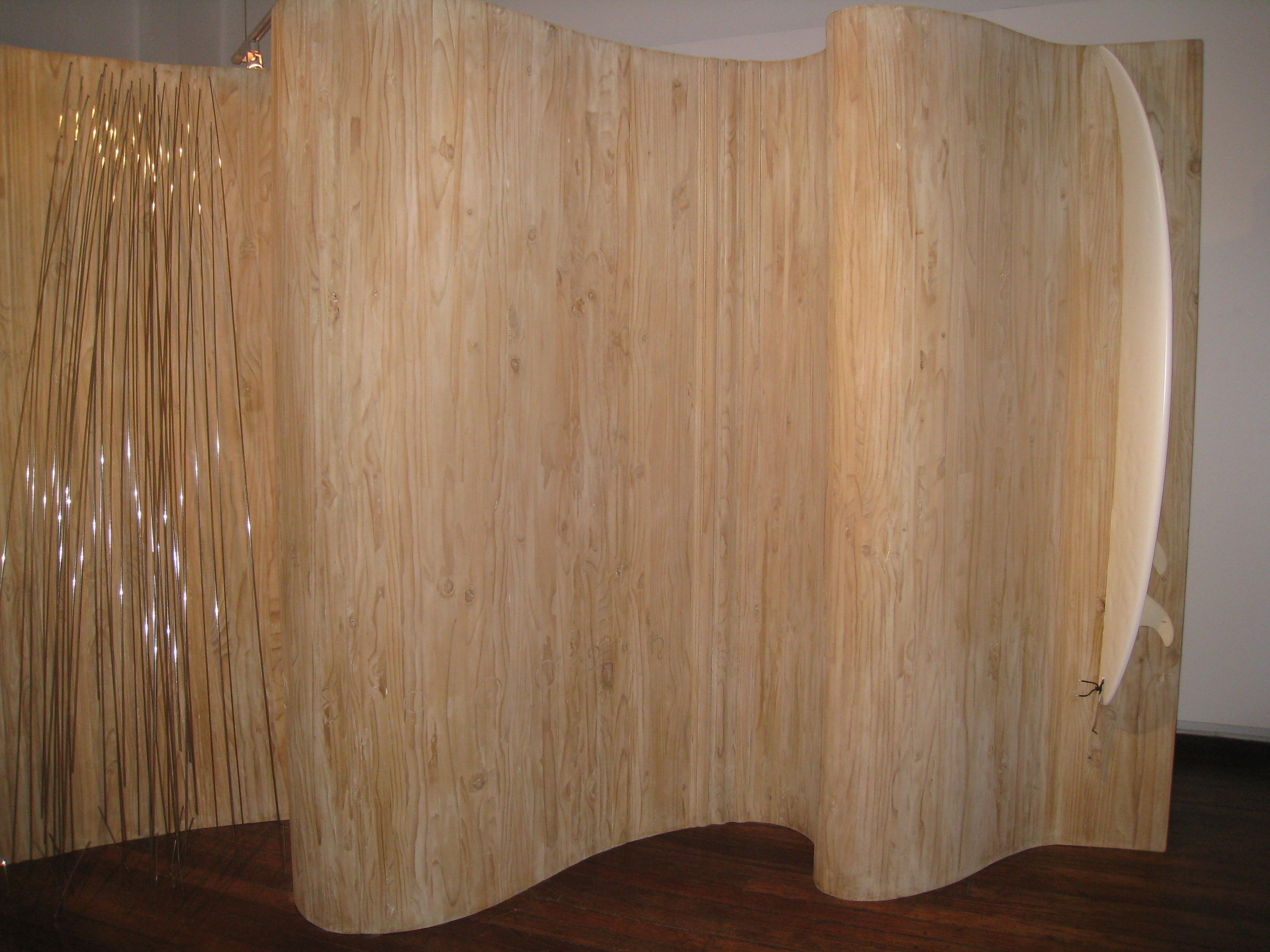
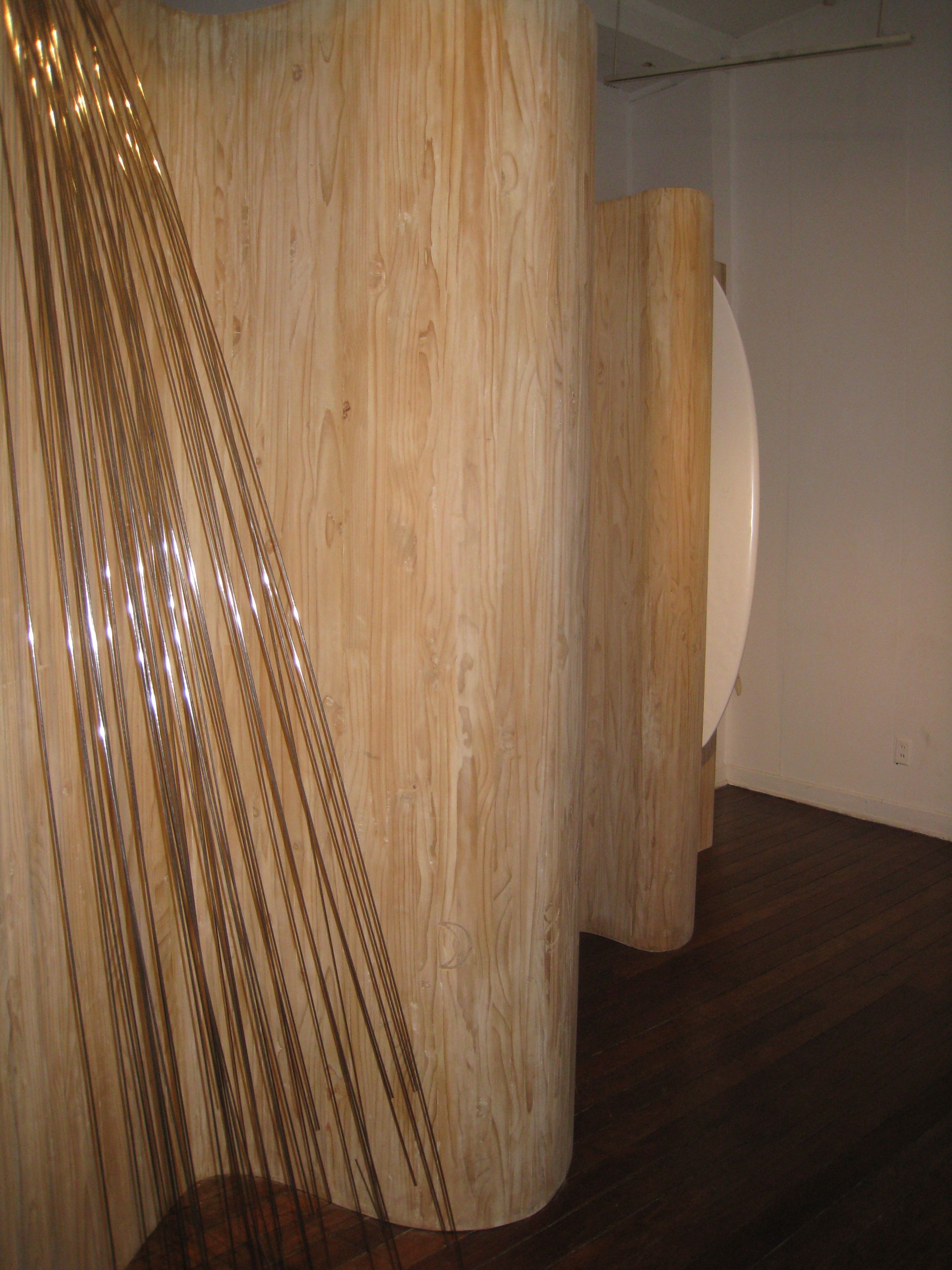
In her exhibit notes, Impy Pilapil shares a memory from childhood, of a few stolen hours spent basking in the sea, of her yearning for the feel of waves.  For her current exhibit at Avellana Art Gallery, she translates her girlish longings into two towering pieces, works from New Zealand armorwood, resin, and metal.

Detail, Wave I

With Wave I and Wave II, which stand tall as tsunamis, she captures the surf as it swells and crests and undulates in a never-ending rhythm.  The grain of the light-colored wood mirrors the ripples on the ocean’s surface, broken now and again —by long metal rods,  or twisting acrylic patterns, even by an actual surfboard embedded on one side.

Impy Pilapil, "Wave II"

Like the sea, Impy’s pieces  impress with their vastness.  And just like the sea, they mesmerize as well, soothing and calming with their quiet beauty.

Detail, Wave II

Impy Pilapil New Works runs until 13 February 2010 at Avellana Art Gallery, 2680 FB Harrison St., Pasay City, Phone (632) 833-8357.

http://www.youtube.com/watch?v=S_pG9kHO3aI


Detail, Wave II


Dex Fernandez and His Incredible Low Brows

Dex Fernandex, "Untitled 6"

For those willing to brave the winter winds and record temperature drops of New York in January, Robert Williams‘ exhibit of paintings and sculpture, Conceptual Realism, runs until the third week of the month.  For the rest of us, the James Kalm Report of artist Loren Munk provides a great taste of this show on YouTube.  Next month, Williams, founder of Juxtapoz magazine, will exhibit more of his work at the Whitney Biennial. Continue reading


Gaston Damag's Synthetic Reliquaries

Gaston Damag grew up around bululs.  Raised in  a family of craftsmen, he even admits to having parlayed his woodcarving skills into creating reproductions for tourists in search of these antique rice gods.  Today, even as he constantly exhibits in France and in other European locales, his Ifugao roots resonate very vividly in his art installations and performance pieces.  His artistic psyche is inextricably linked to the world of the Cordilleras.       

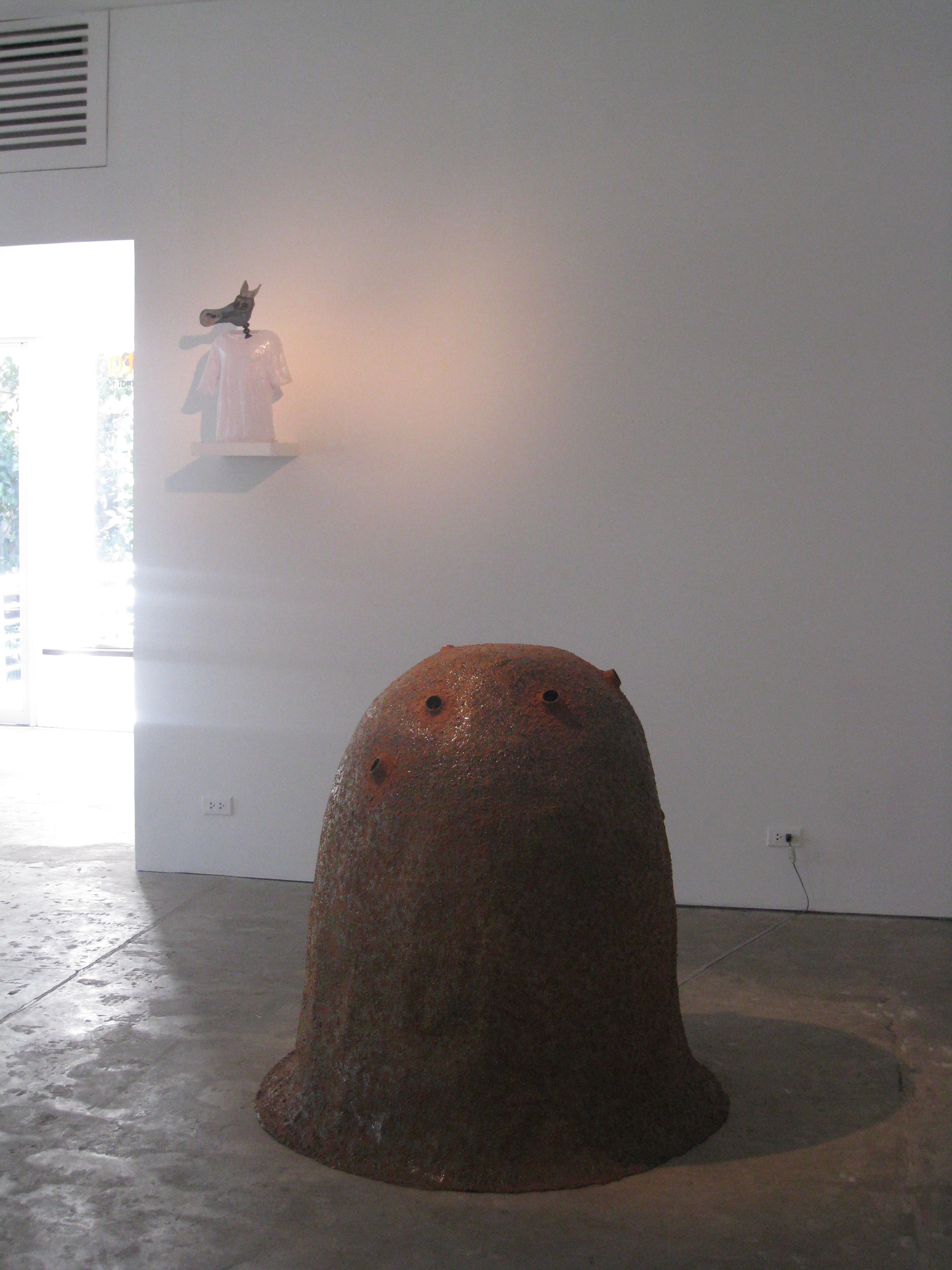
In this show at SLab, Gaston reworks pieces originally done for a Parisian museum.   Instead of using wood, he casts his bululs in resin polyester to irreverent proportions.  He brings these symbols of tradition and ancestry to the modern age, juxtaposing them against steel scaffoldings, fluorescent bulbs, and electrical drills.  He forces us to examine, as he probably does himself, how this change in context and medium affects how we look at a figure so associated with rice rituals and ancient beliefs.  Does it retain its mystique?

This is Gaston’s first major show in the Philippines, and for that reason alone, this show is worth visiting.  It brings something different to our art scene, and I can imagine, incurs varied reactions from viewers.  Alongside this, the Silverlens group brings us two other exceptional exhibits:  Stereo I, collaborative works by Christina Dy and Juan Cagicula and Paper Panic, works on paper from Dina Gadia and Mark Salvatus.

Thank you to Rachel Rillo for these photos.  My amateur attempts would not have done justice to Gaston’s pieces.

Synthetic Reliquaries runs from 13 January to 13 February 2010 at SLab, 2F YMC Bldg, 2320 Pasong Tamo Extension, Makati City.  Phone (632) 816-0044 or visit http://www.slab.silverlensphoto.com


http://www.youtube.com/watch?v=u9kv2CF1jXM


Today and Tomorrow: A Selection From The Charlie Cojuangco Collection

Antipas Delotavo, "Sandaan Taon, Panels 1 to 5"

What a great way for the art scene to start the year!  Charlie Cojuangco hangs selected pieces from his art collection. As far as I know, this marks the first time his paintings have been shown publicly.   The show also serves as the formal opening of his space, Nova Gallery.  Charlie has been actively collecting art from the mid-1990s.  The works on view reflect his partiality towards figurative paintings, most of them by  noted socio-realists. Continue reading


My Favorite Shows of 2009

It turns out, I chose one per quarter.  These are personal favorites, exhibits in commercial spaces I found unforgettable. I don’t  expect universal approval.  Feel free to disagree.   Here goes (in chronological order): Continue reading