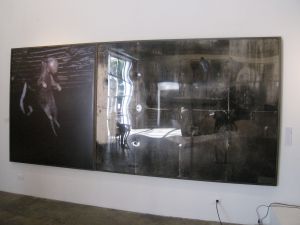
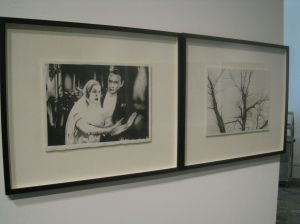
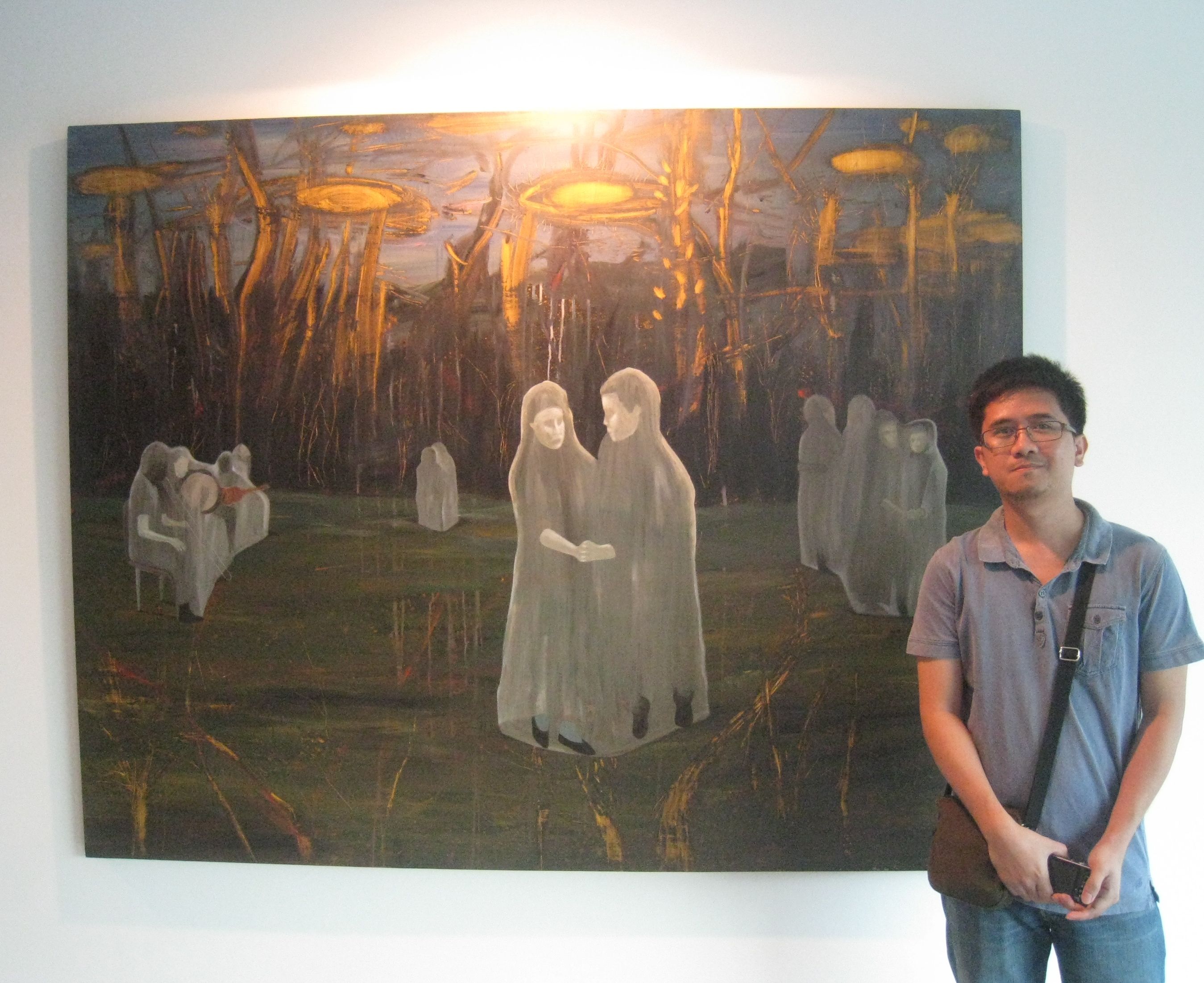
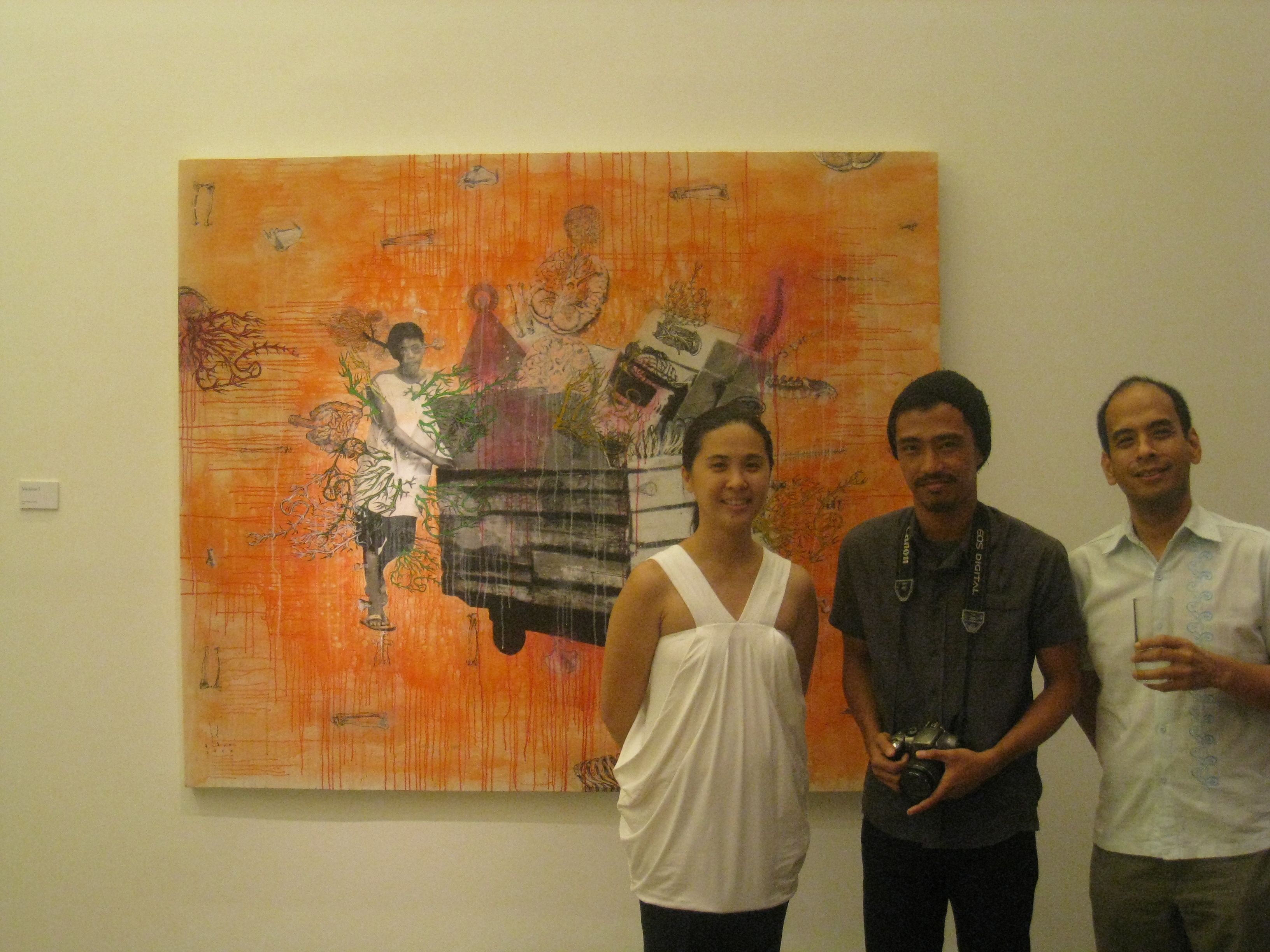
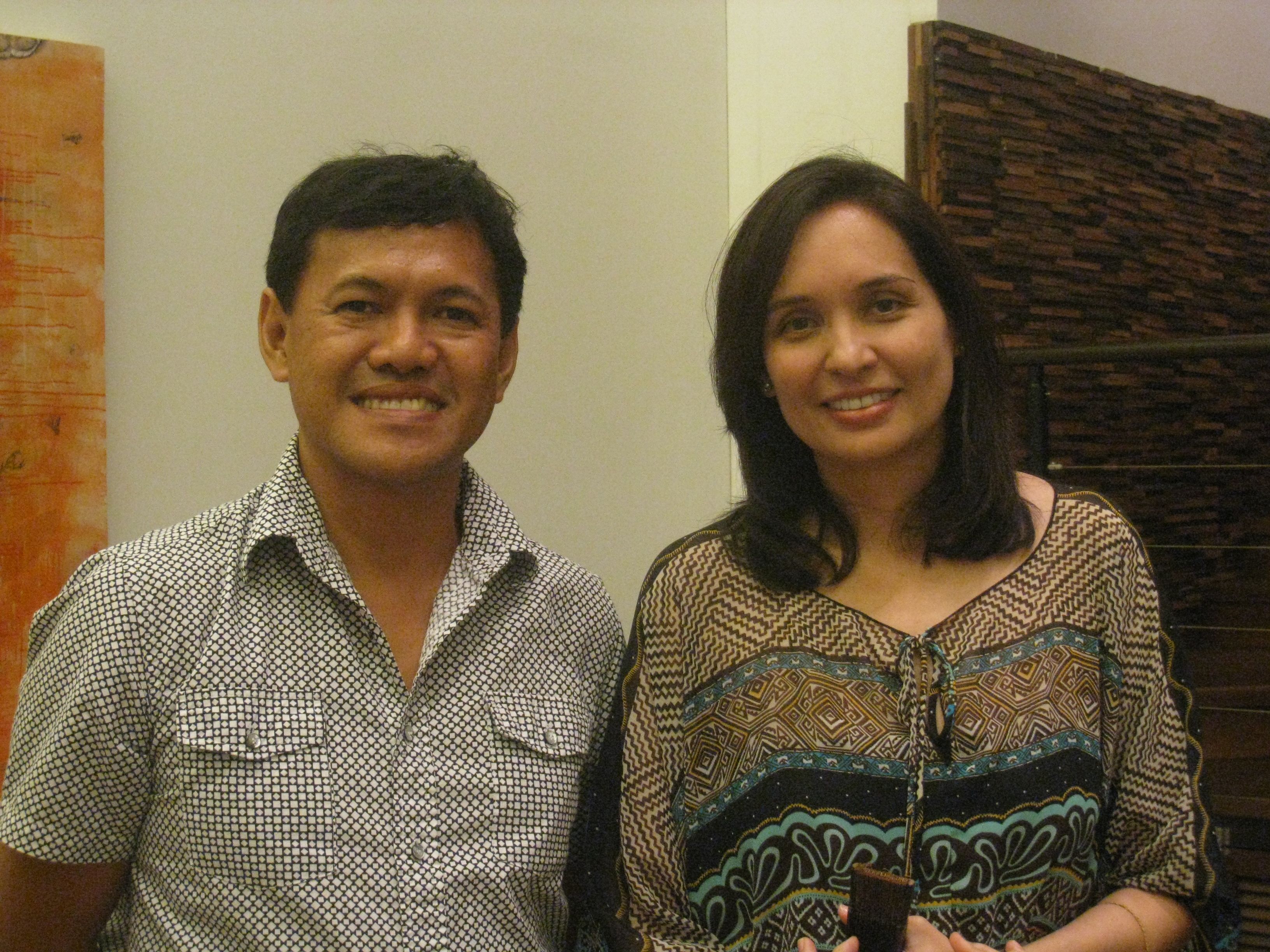
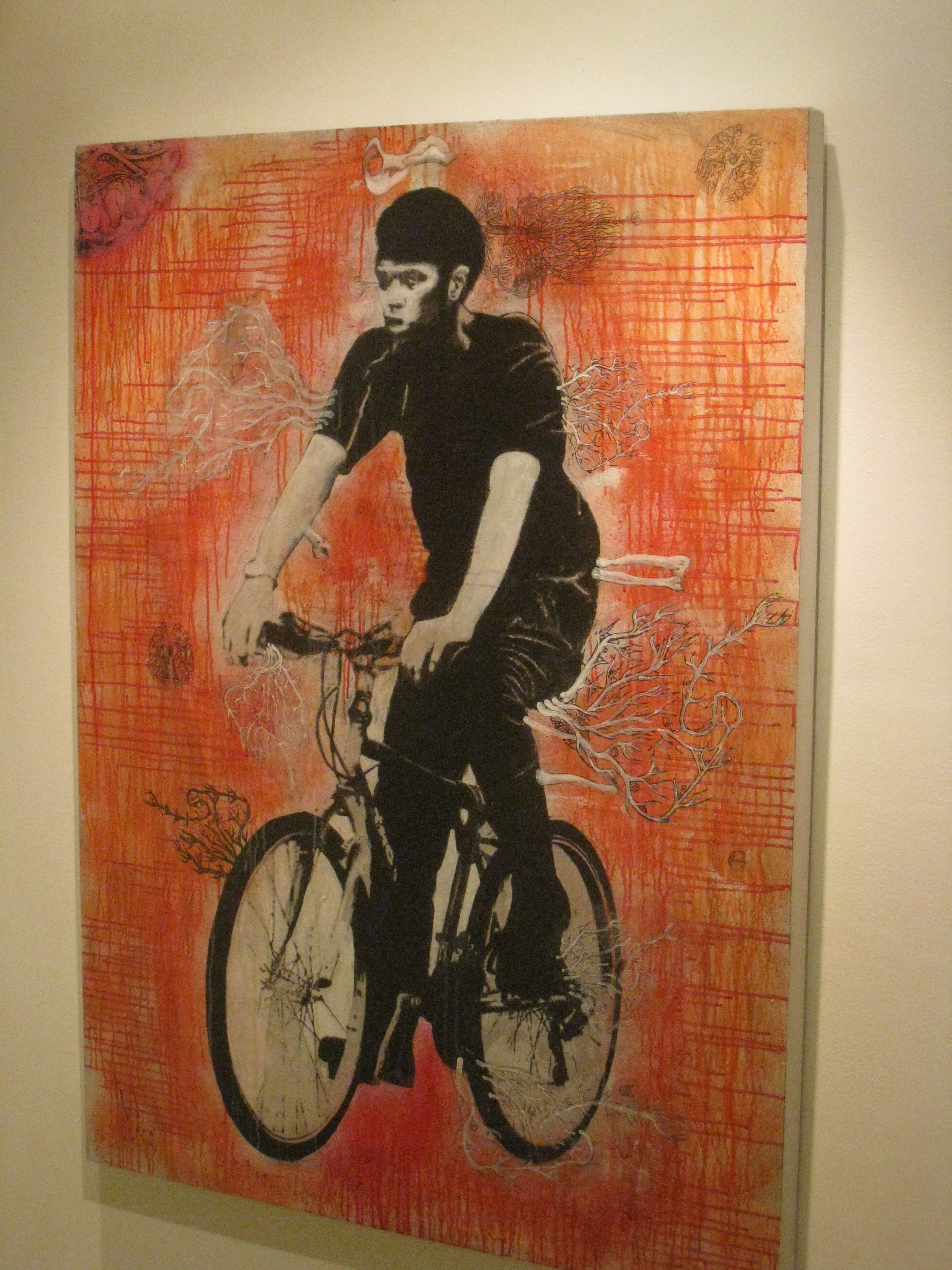
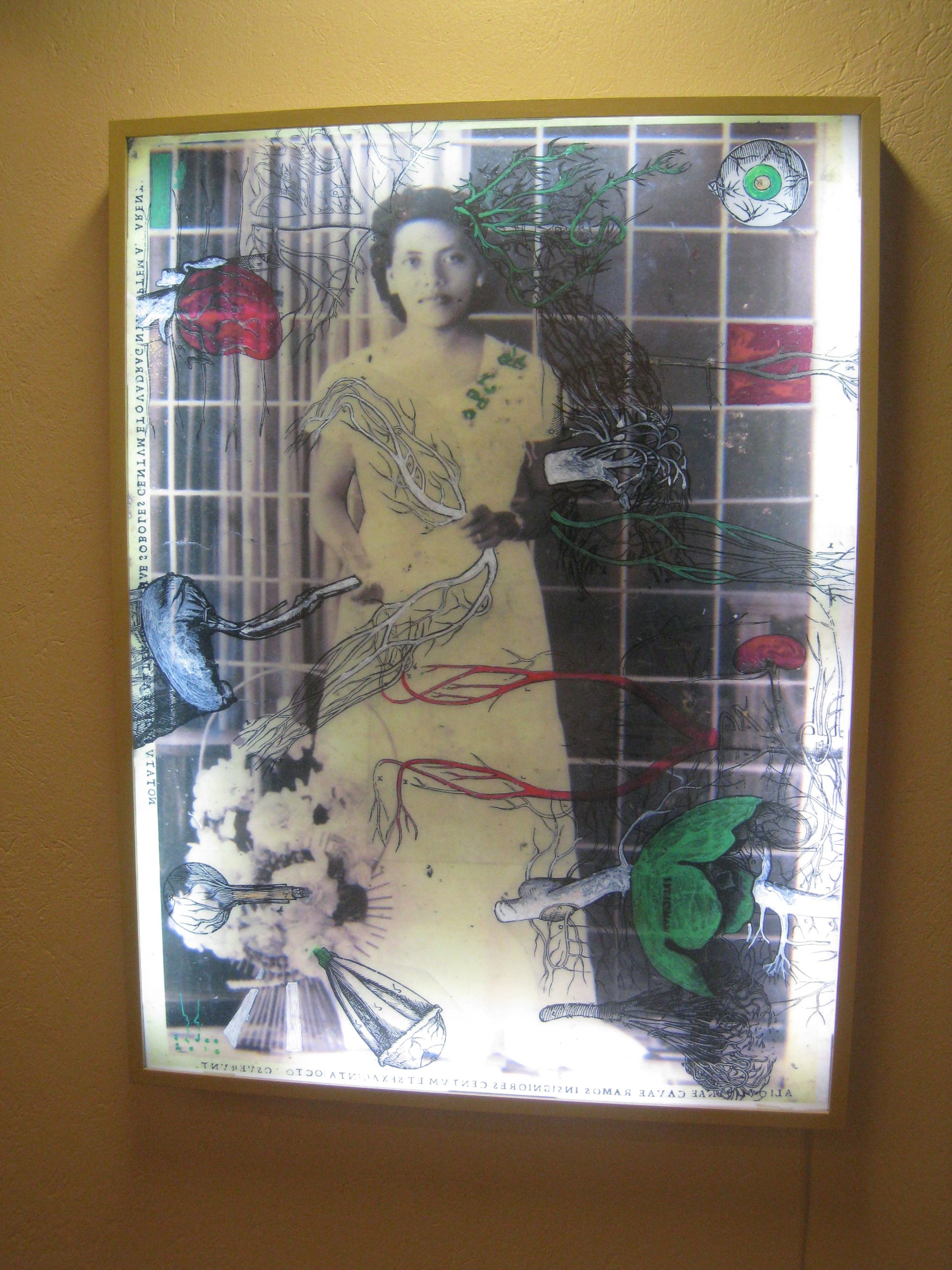
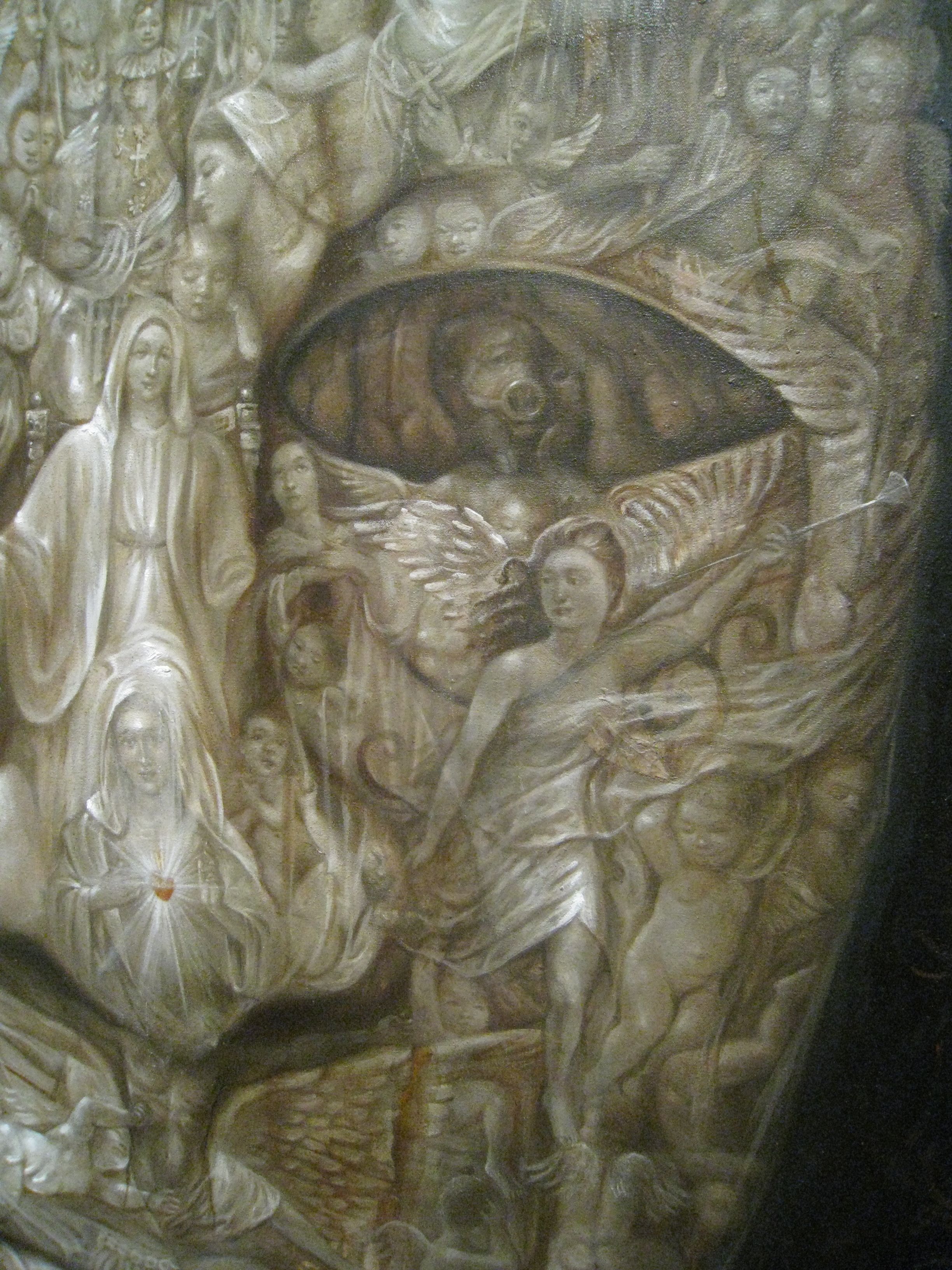
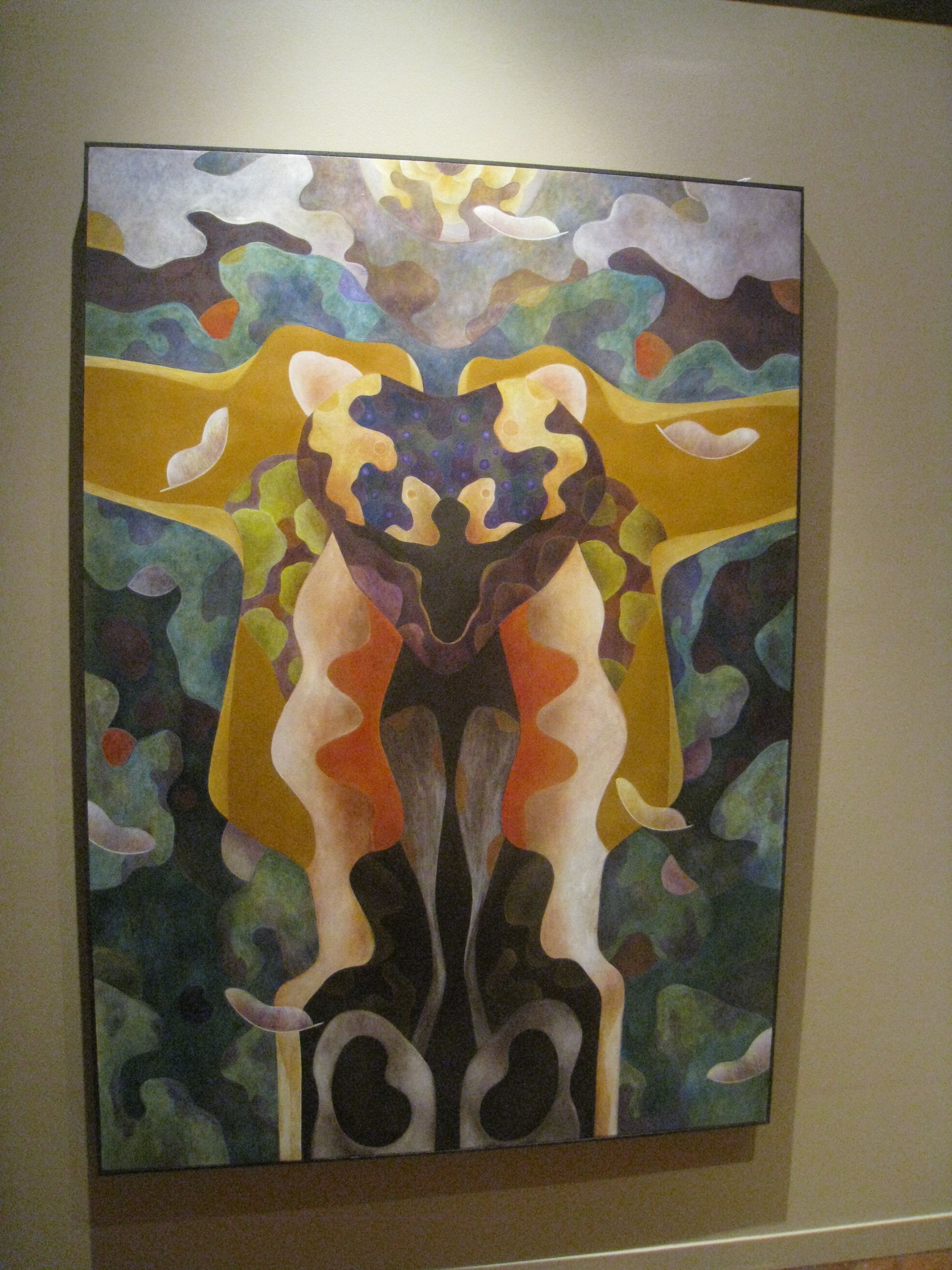
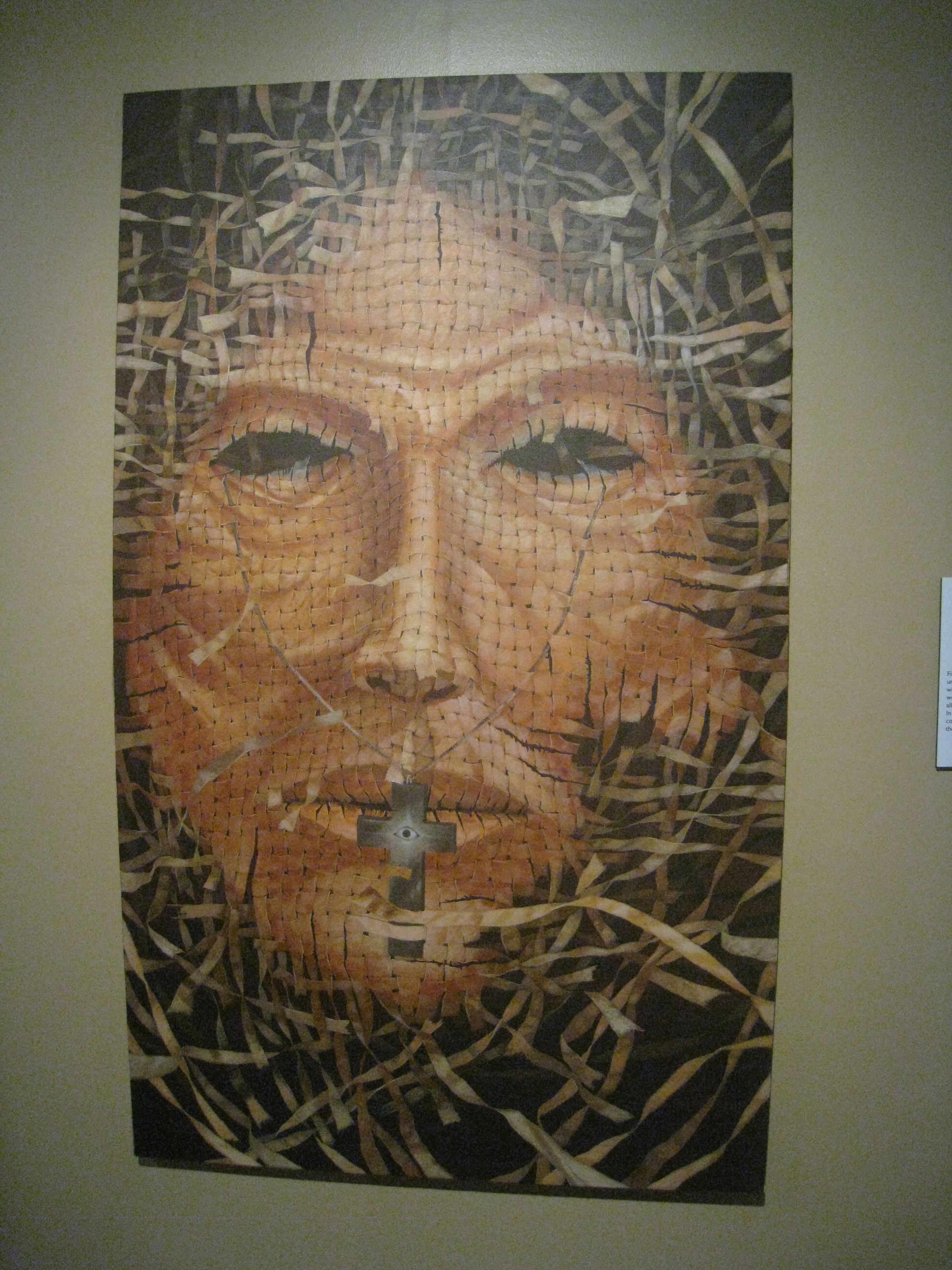
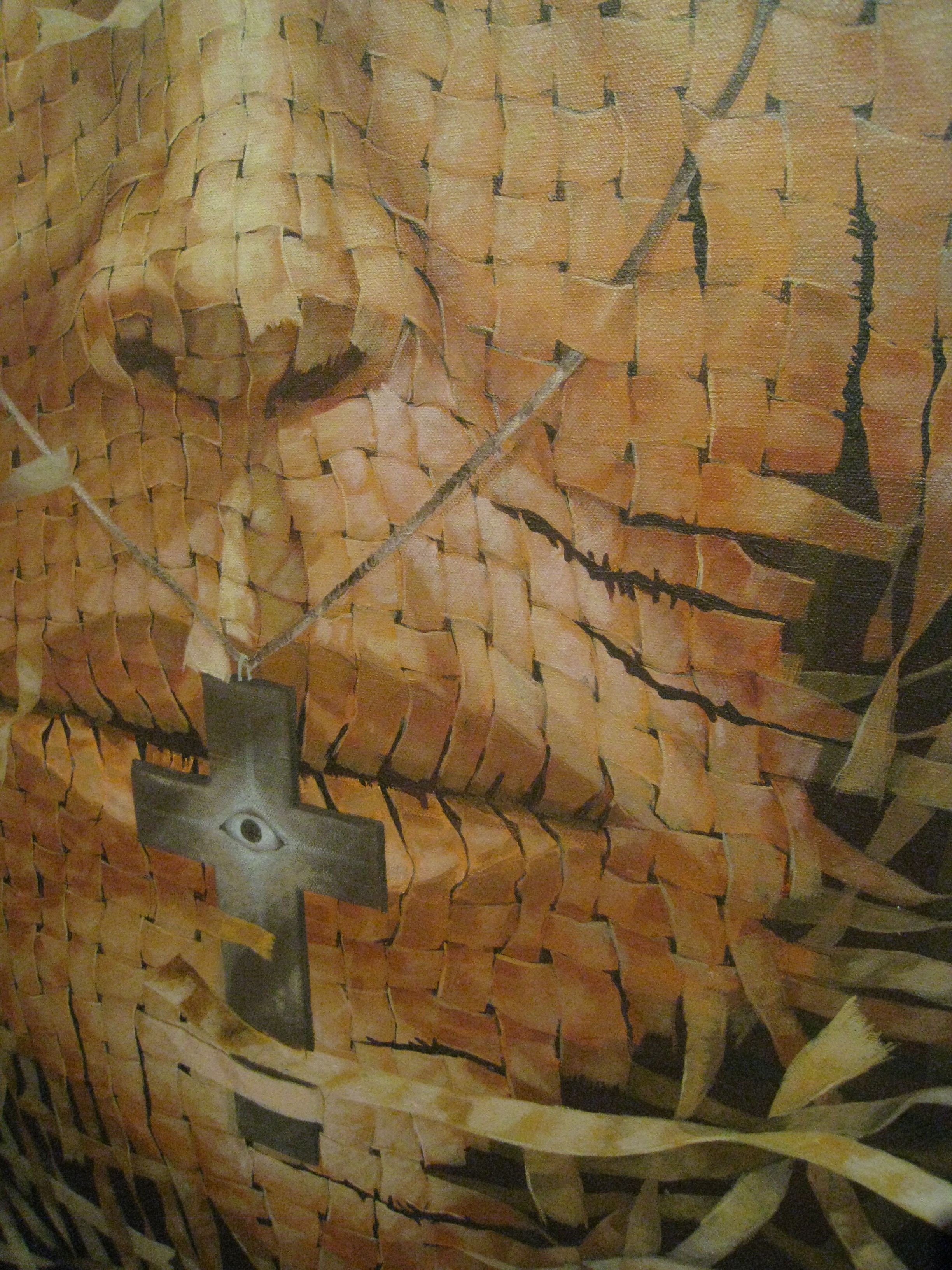
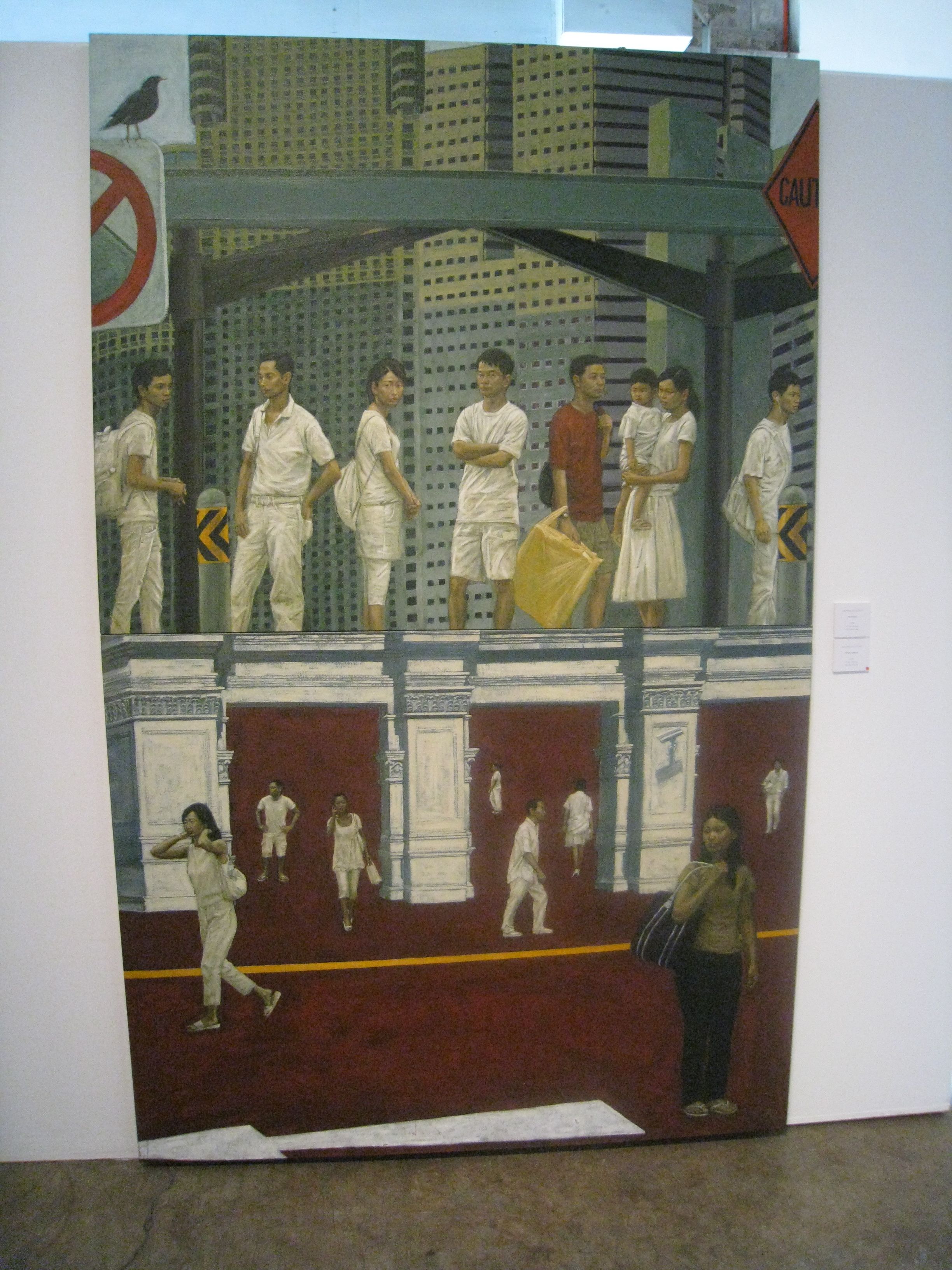
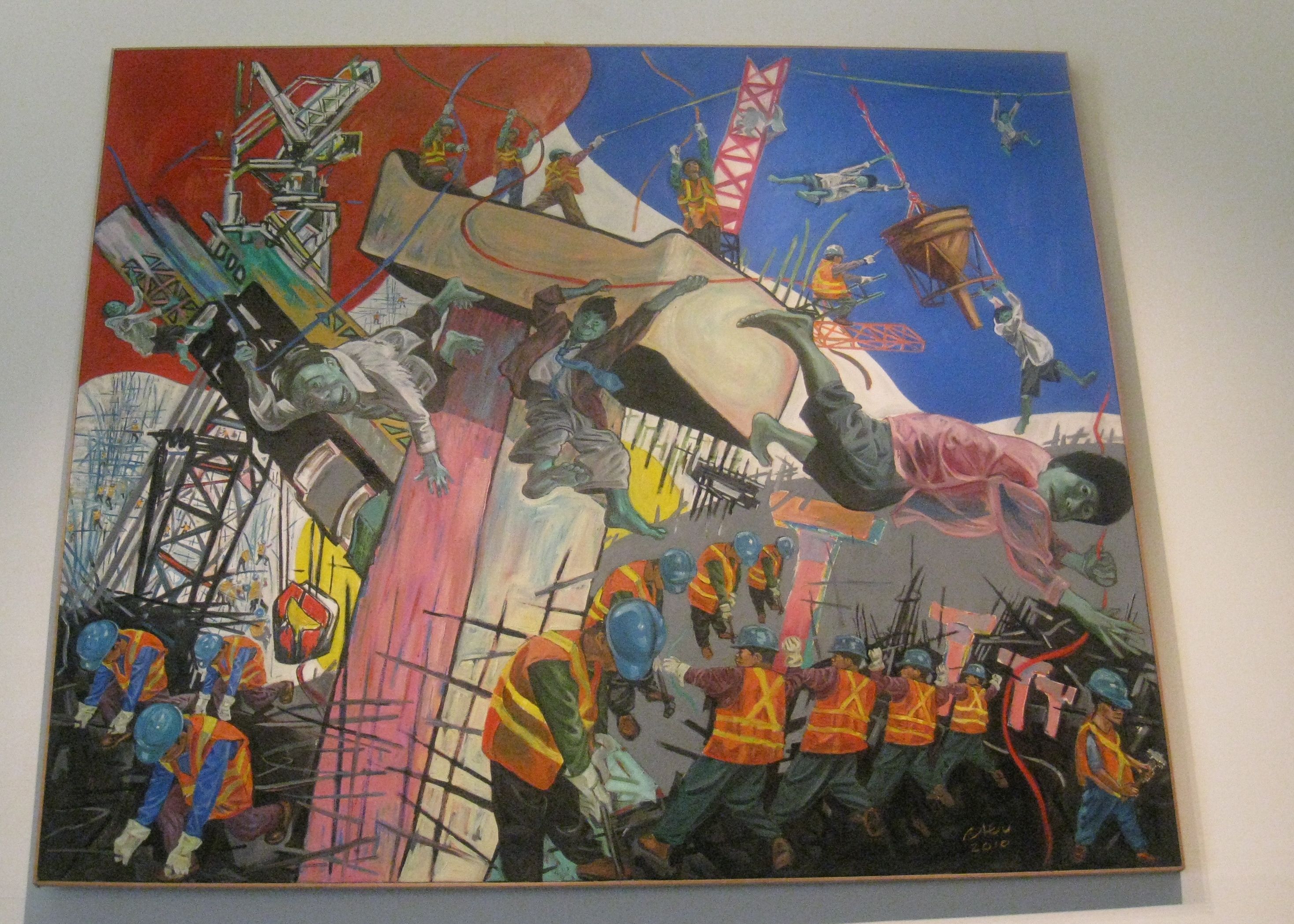
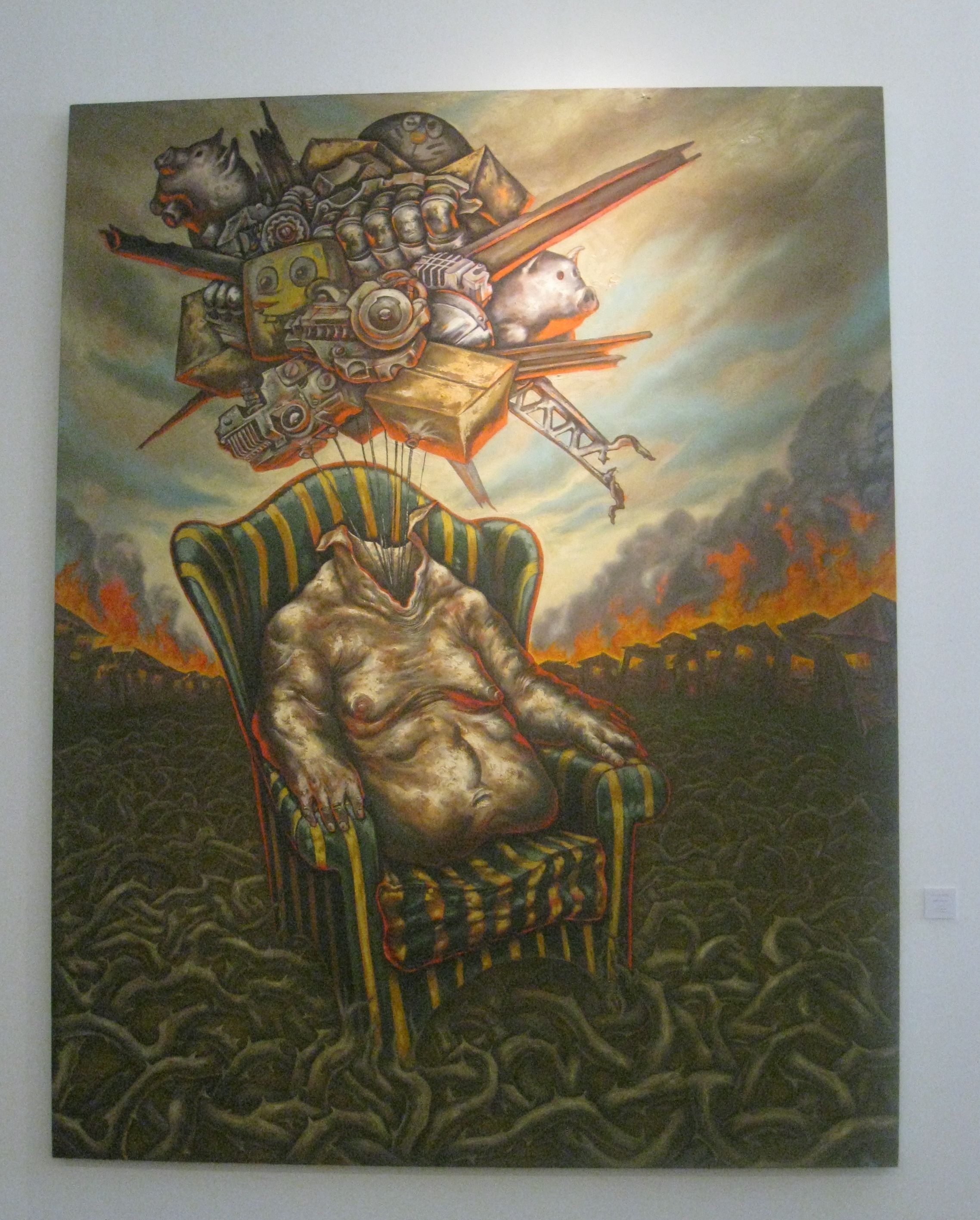
From a raconteur that brings oral traditions to life, Rodel Tapaya has turned into a chronicler of countryside vistas. In this latest body of work that make up Memory Landscapes, Rodel’s exhibit at The Drawing Room in Makati, he moves away from his narrations of forgotten Philippine folk tales. Instead of regaling us with the fantastic creatures that people his visual narratives, he invites us to witness the panorama that surrounds his Bulacan home. Continue reading
Category Archives: arts and culture
Brendale Tadeo And His Machines
I first saw Brendale Tadeo’s work three years ago, in November 2007, at Art In The Park. I remember being attracted to the
blood red drips he used as backdrop for the distorted santo heads on his oil on paper pieces. At that time, he worked as an apprentice to artist Don Salubayba and did projects with Anino Shadowplay. A native of Zambales, he also became a regular at the workshops of Casa San Miguel, Coke Bolipata’s oasis for the visual and performing arts in that province.
Financial difficulties had forced Brendale to abandon his Fine Arts studies. But the desire to create kept him at the fringes of the visual arts scene. He attended short courses at the CCP and worked with the artist group TutoK. He learned composition by closely observing Elmer Borlongan. His perseverance has paid off. Next month, he goes back to the Philippine Women’s University as the first Art On The Verge scholar, a grant made possible by Rogue Magazine and Art Cabinet Philippines. He continues to help out at Casa San Miguel, where he now has been generously given studio space.
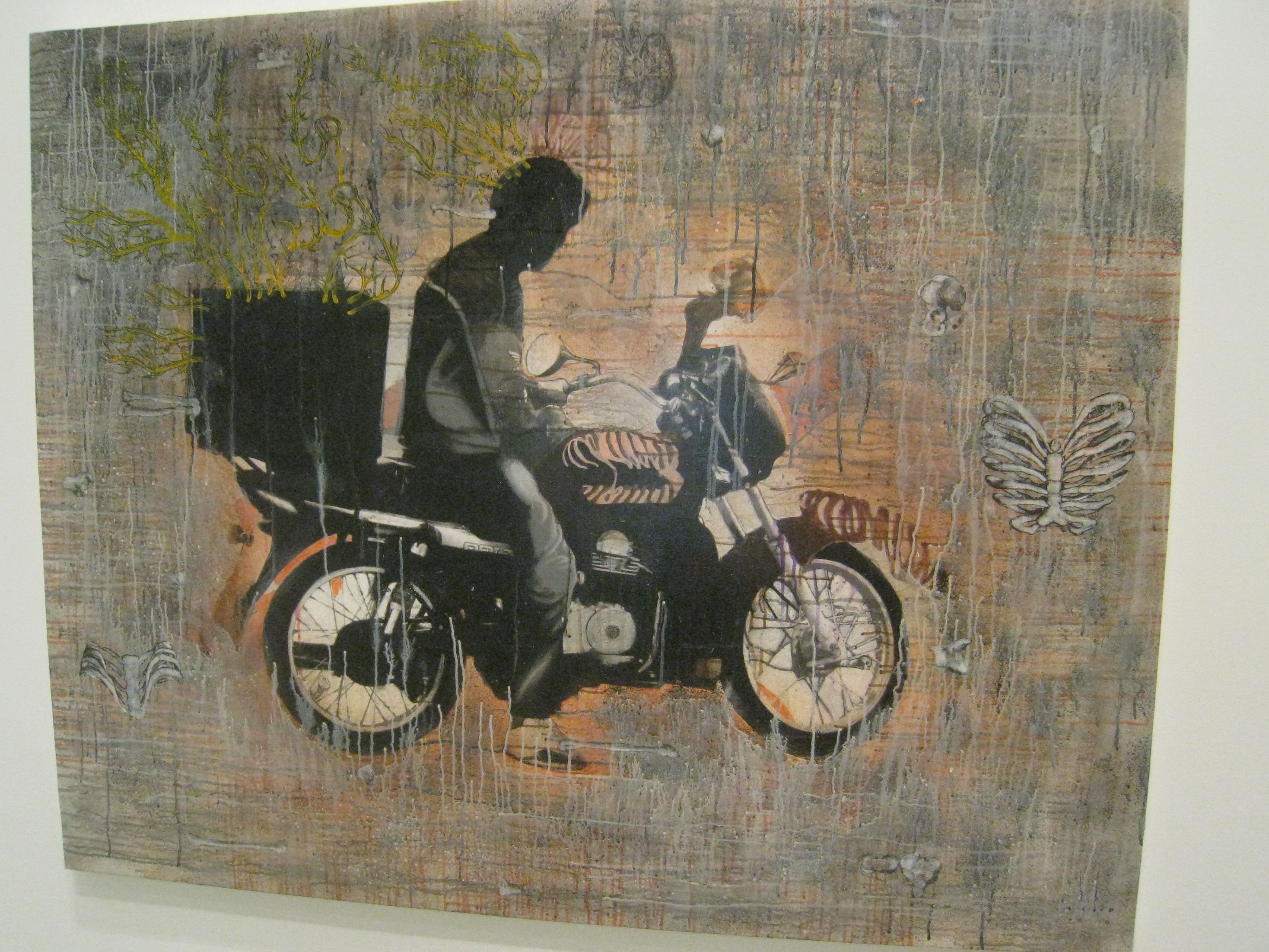
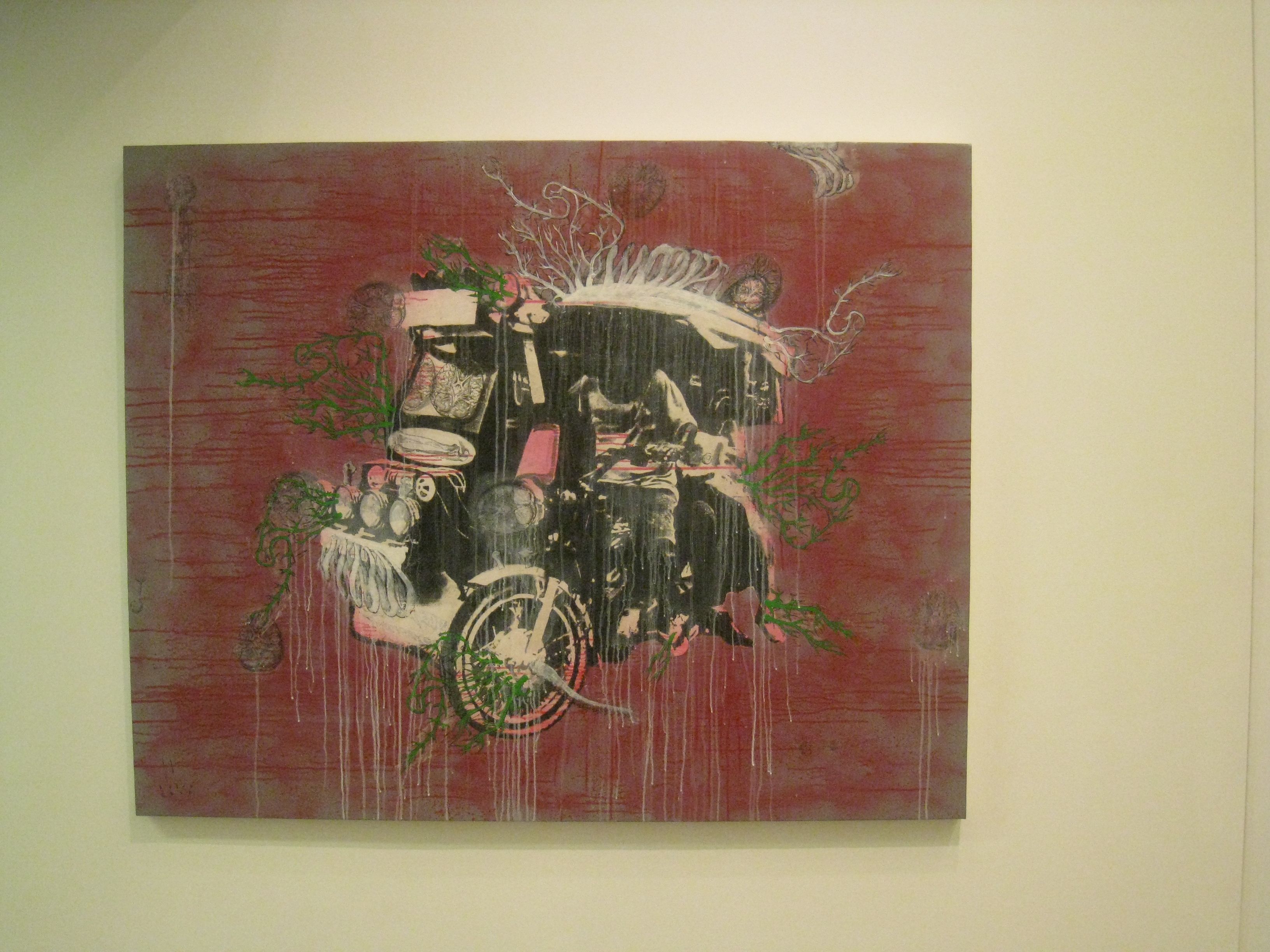
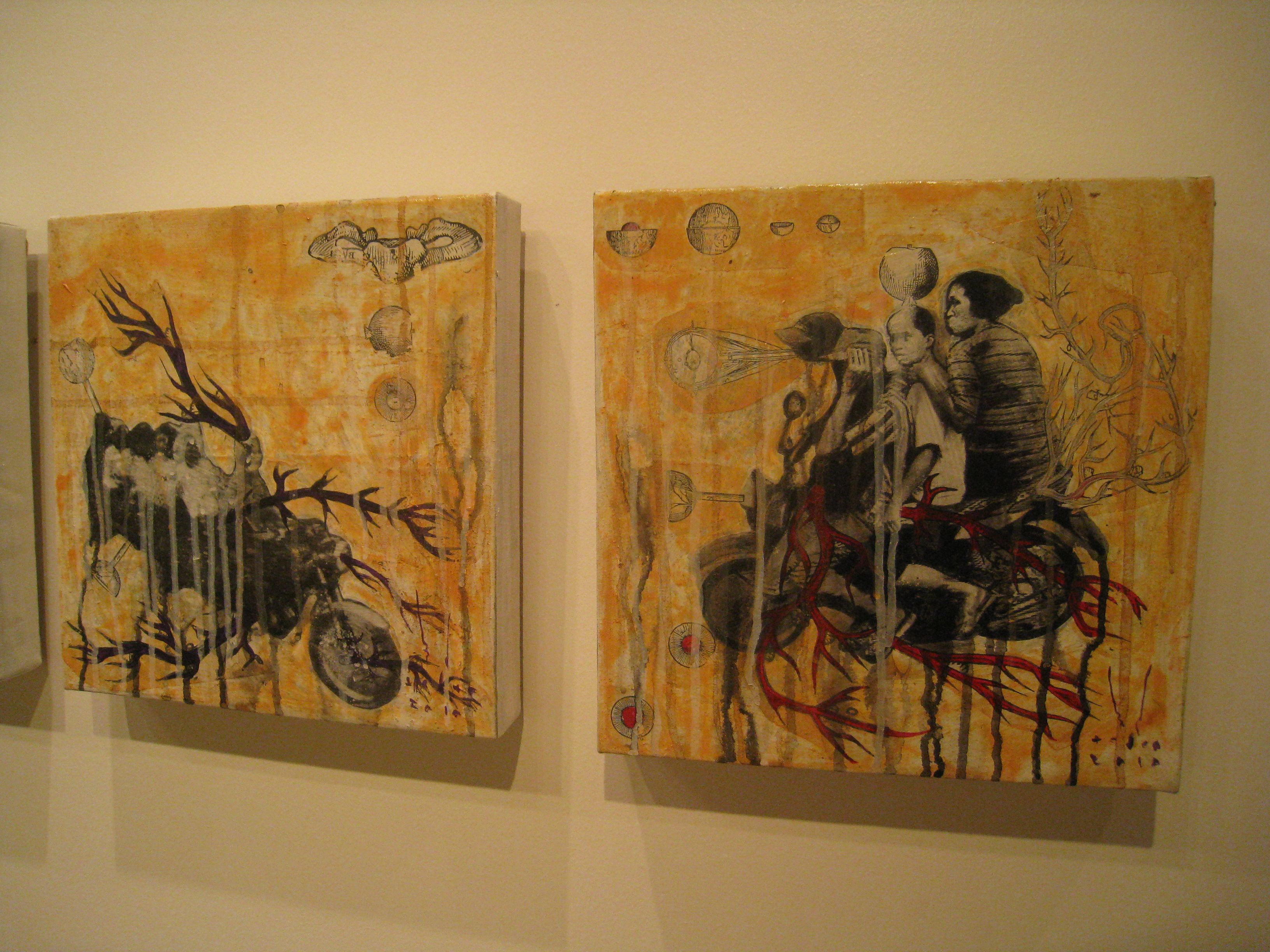
For his first one-man show, part of his Art On The Verge grant, Brendale worked closely with independent curator Boots Herrera. In Machinas, he explores how machines have become extensions of the self, especially to those who depend on them to eke out a living. For the tricycle driver, or the messenger, or the bus driver, and even for the mangbobote who goes around scavenging for waste, the machines they work with on a daily basis act as their lifeblood, as vital to their survival as an artery or a lung. He uses photo transfers to create the figures on his mixed media pieces. Just as it was in Art In The Park three years ago, I thought his pieces came alive with the colors he chooses as his backdrop, the bright drips of magenta or green or orange.
You do get a sense of Don Salubayba’s influence in this particular set of works. But then, this show marks a beginning for Brendale. As he moves on to take instruction in a formal academic environment, we hope to see his raw promise crystallize into something purely his own.
Machinas ran from 29 April to 21 May 2010 at the Nova Gallery, Warehouse 10A, La Fuerza Compound, 2241 Chino Roces Ave., Makati City. Phone (632) 392-7741 or visit http://www.novagallerymanila.com
Art On The Verge is an annual grant awarded to deserving visual artists, 32 years old and younger, who wish to continue with their formal studies. For more information, visit http://www.rogue.ph or http://www.artcabinetphilippines.com
Dekalogo: Painting Patriotism
When Apolinario Mabini drafted the Malolos Constitution, he included a treatise outlining ten points which he felt incumbent upon every freedom-loving Filipino to hold dear. With The True Decalogue, Mabini called upon his countrymen to love and honor God and country above themselves, to continually strive for the nation’s independence, to treat each other as brothers, to make sure that they only allow leaders who have been duly-elected to rule over them. Continue reading
Nona Garcia Works With Synonyms While MM Yu Gets Wasted
Philippine Art Awards (Visayas and Mindanao)
If I had not known that the complete roster of finalists for the Philip Morris Philippine Arts Awards had already been mounted in an exhibit, I would have not bothered going through all the galleries on the fourth floor of the Museum Of The Filipino People, aka our National Museum. With no signs, nor any promotional materials of any kind, it seems that only museum visitors who make a wrong turn actually stumble onto this display. Not even the very intrepid and efficient office staff of the Museum Foundation of The Philippines had any inkling that this level housed something other than the Slim’s retrospective. Sigh.
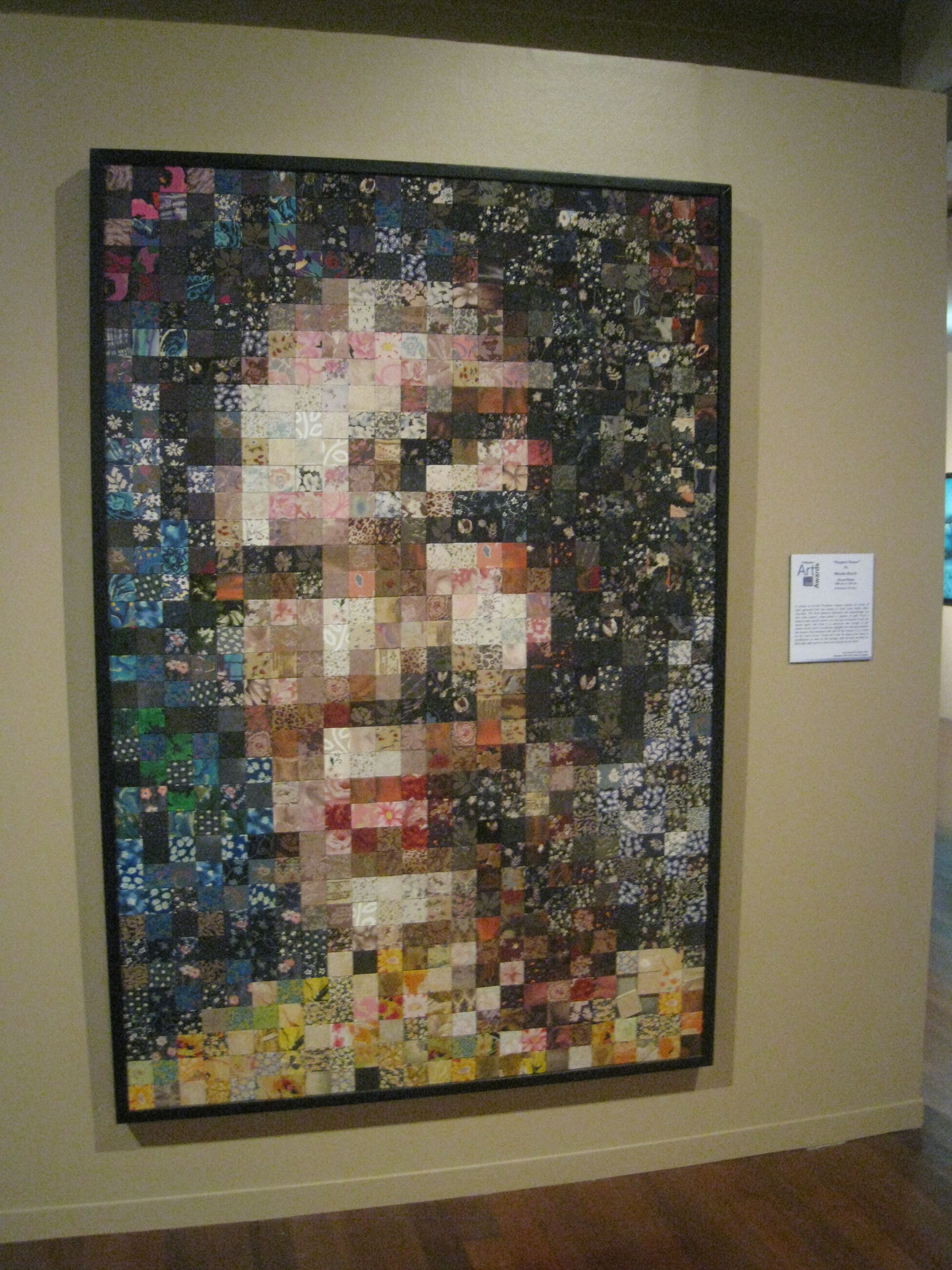
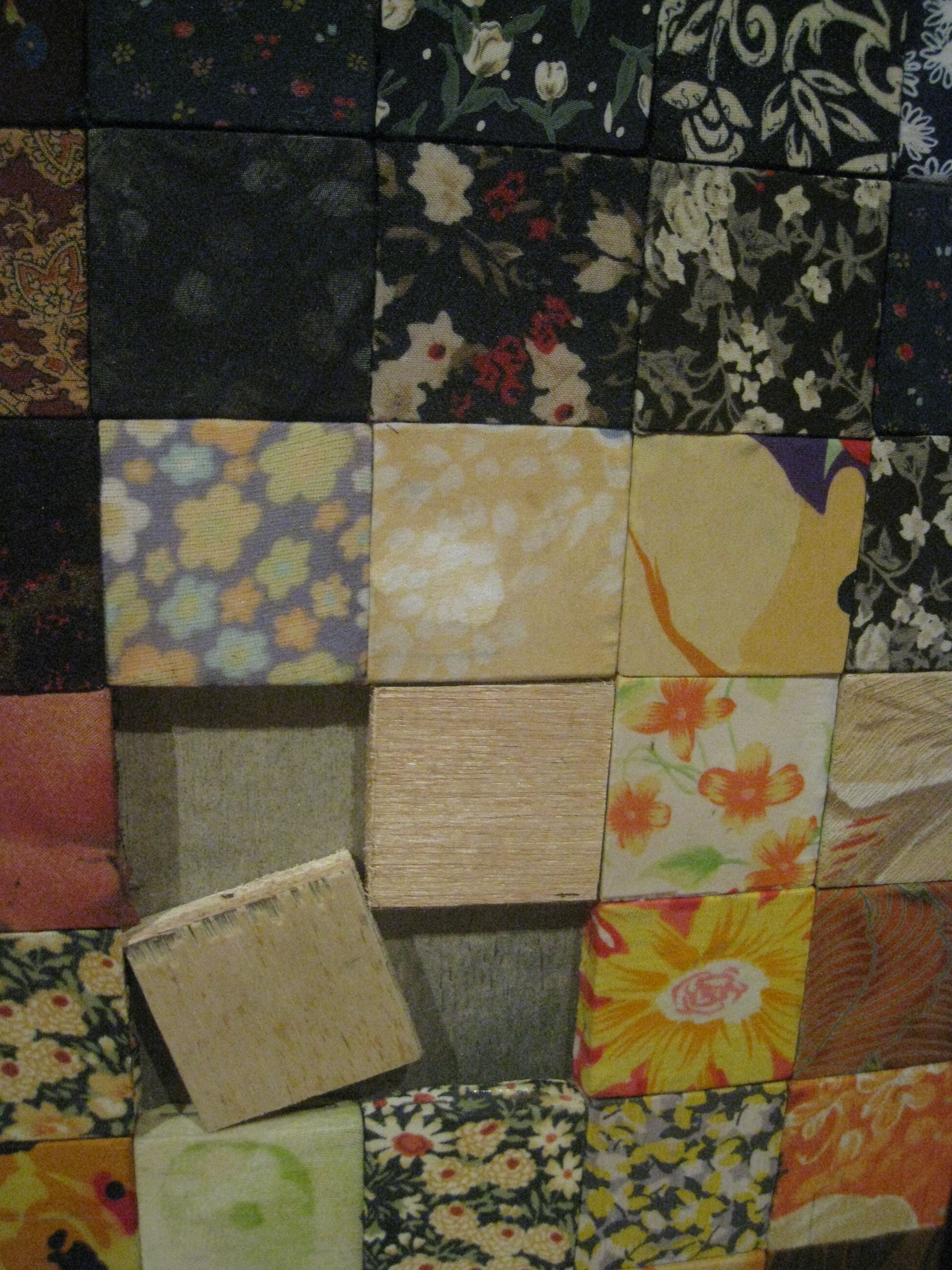
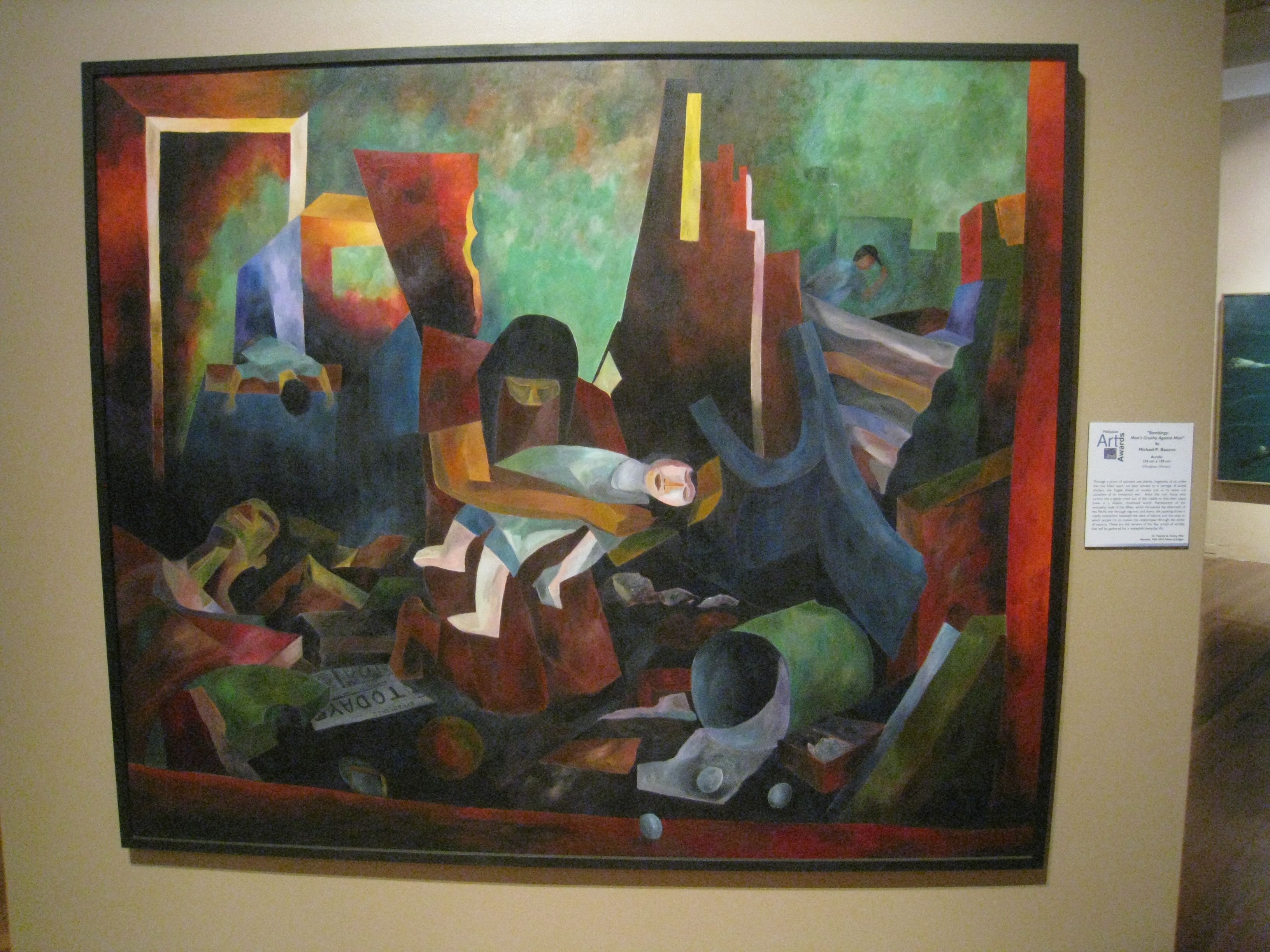
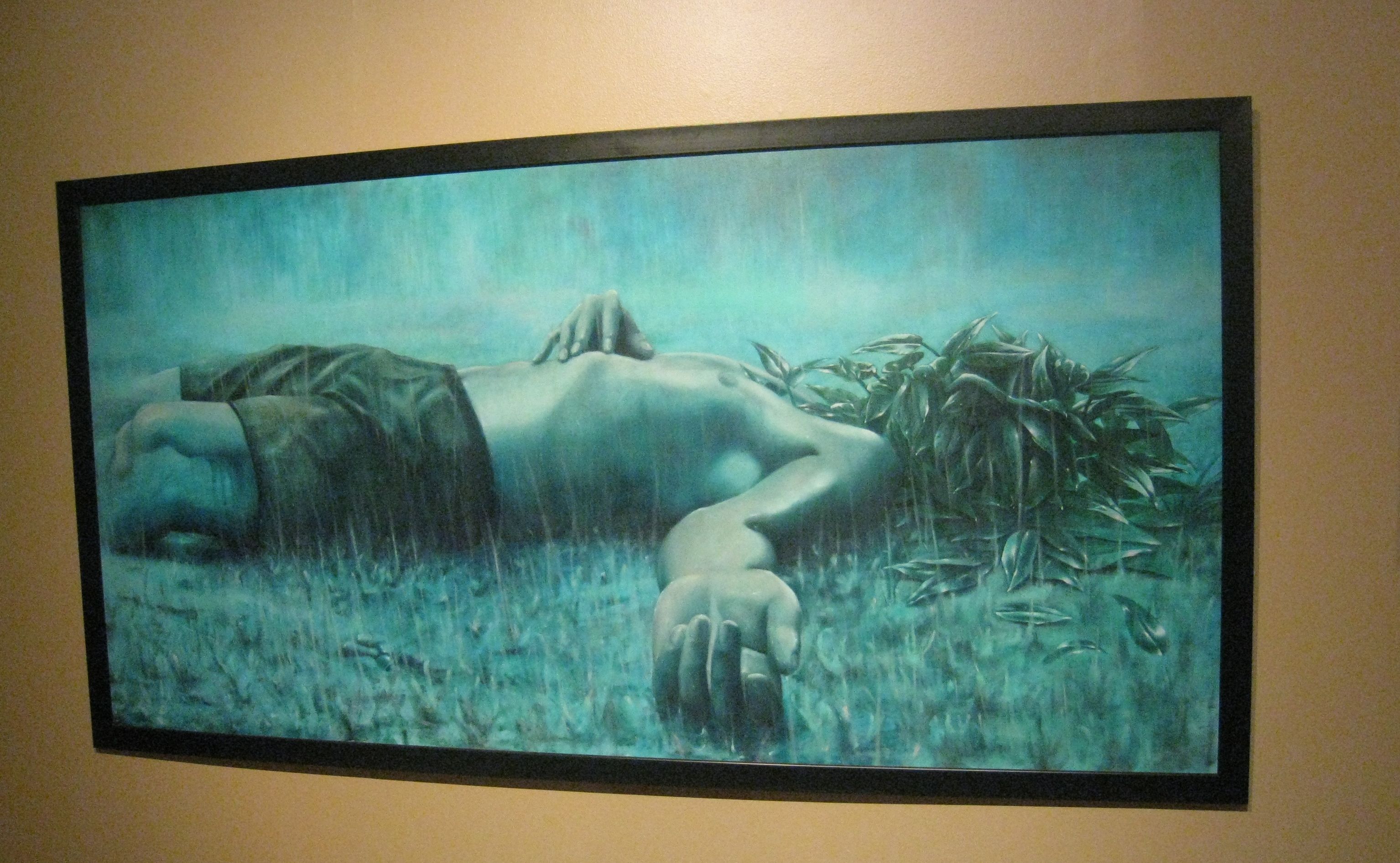
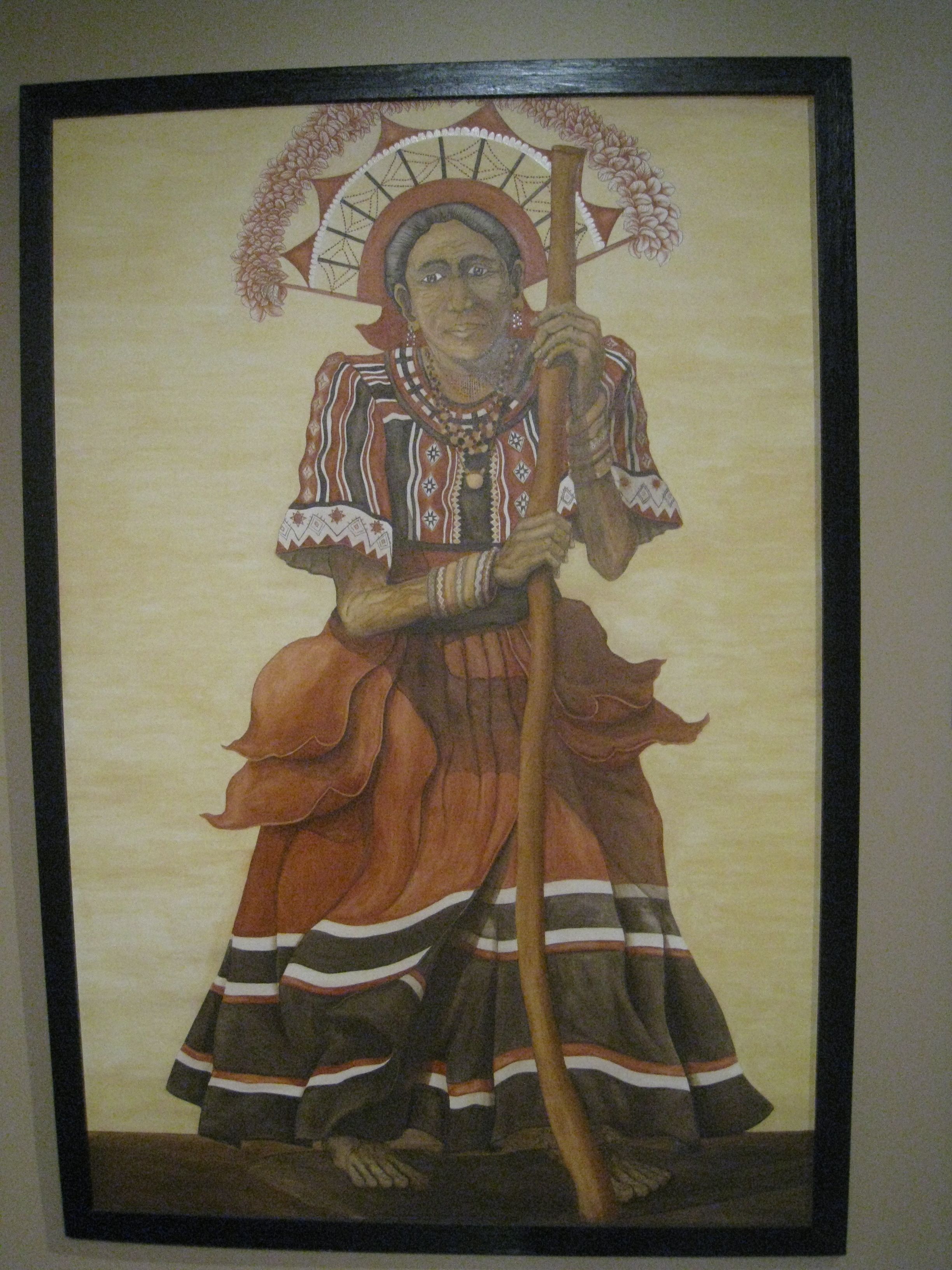
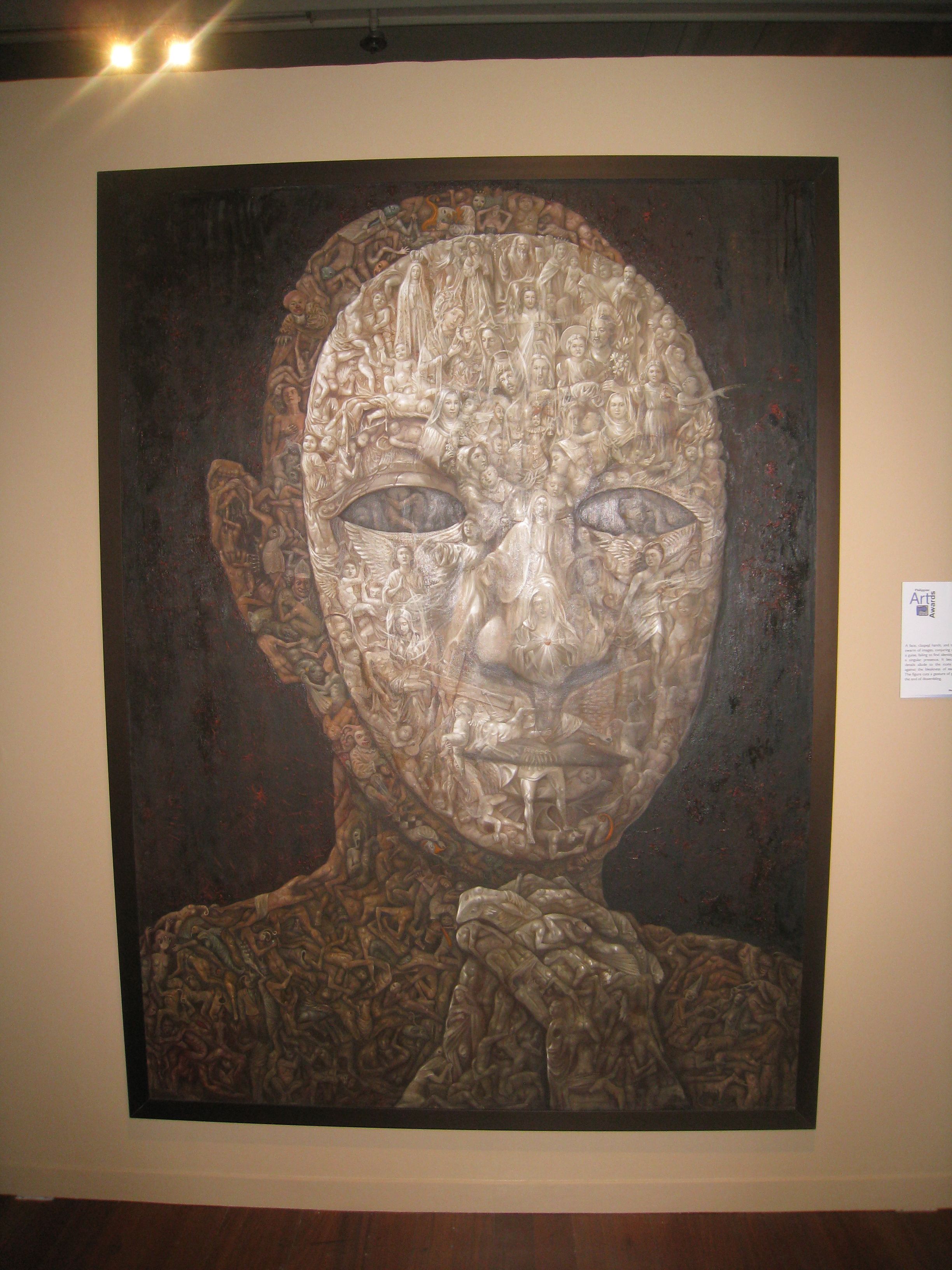
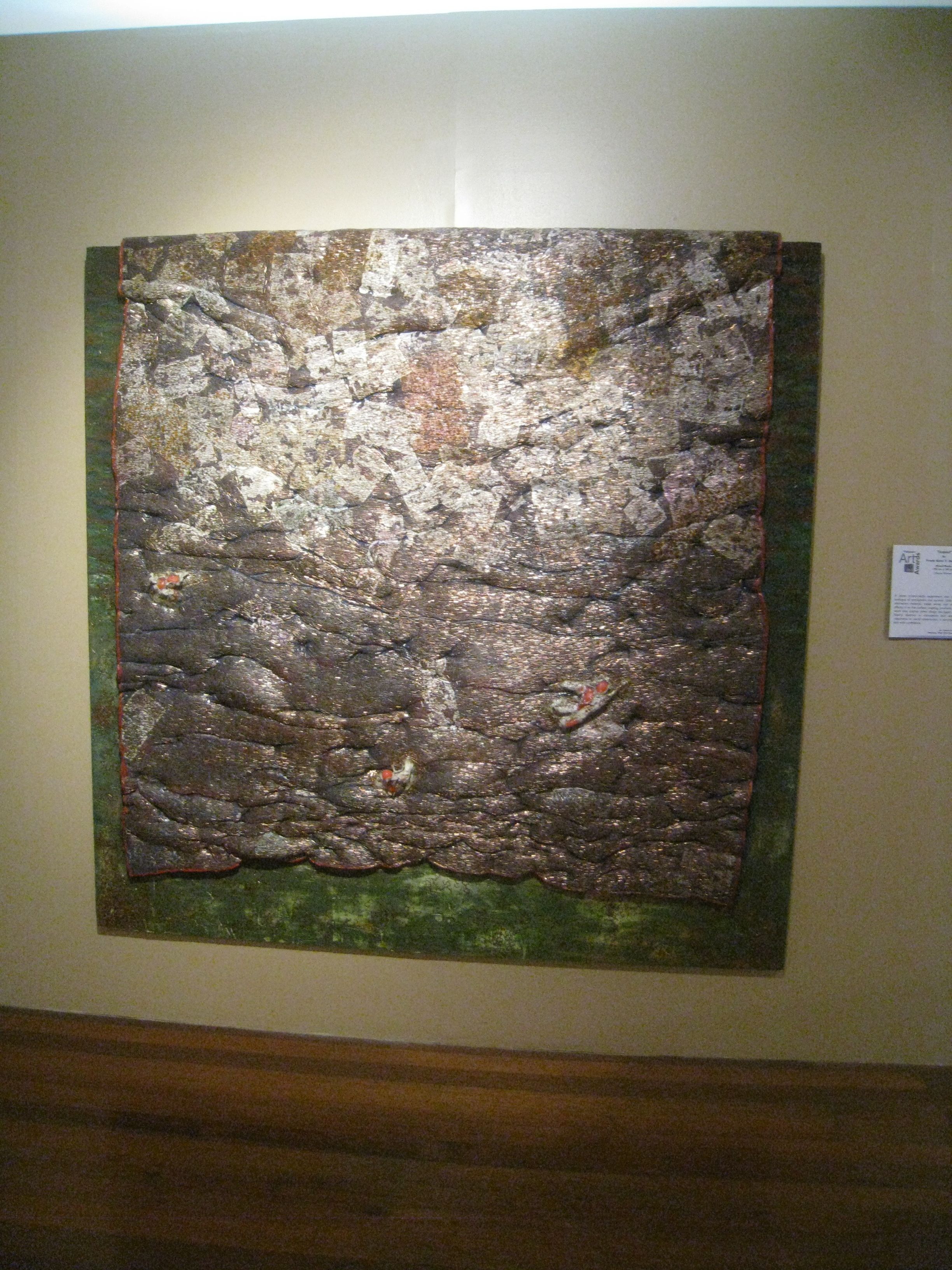
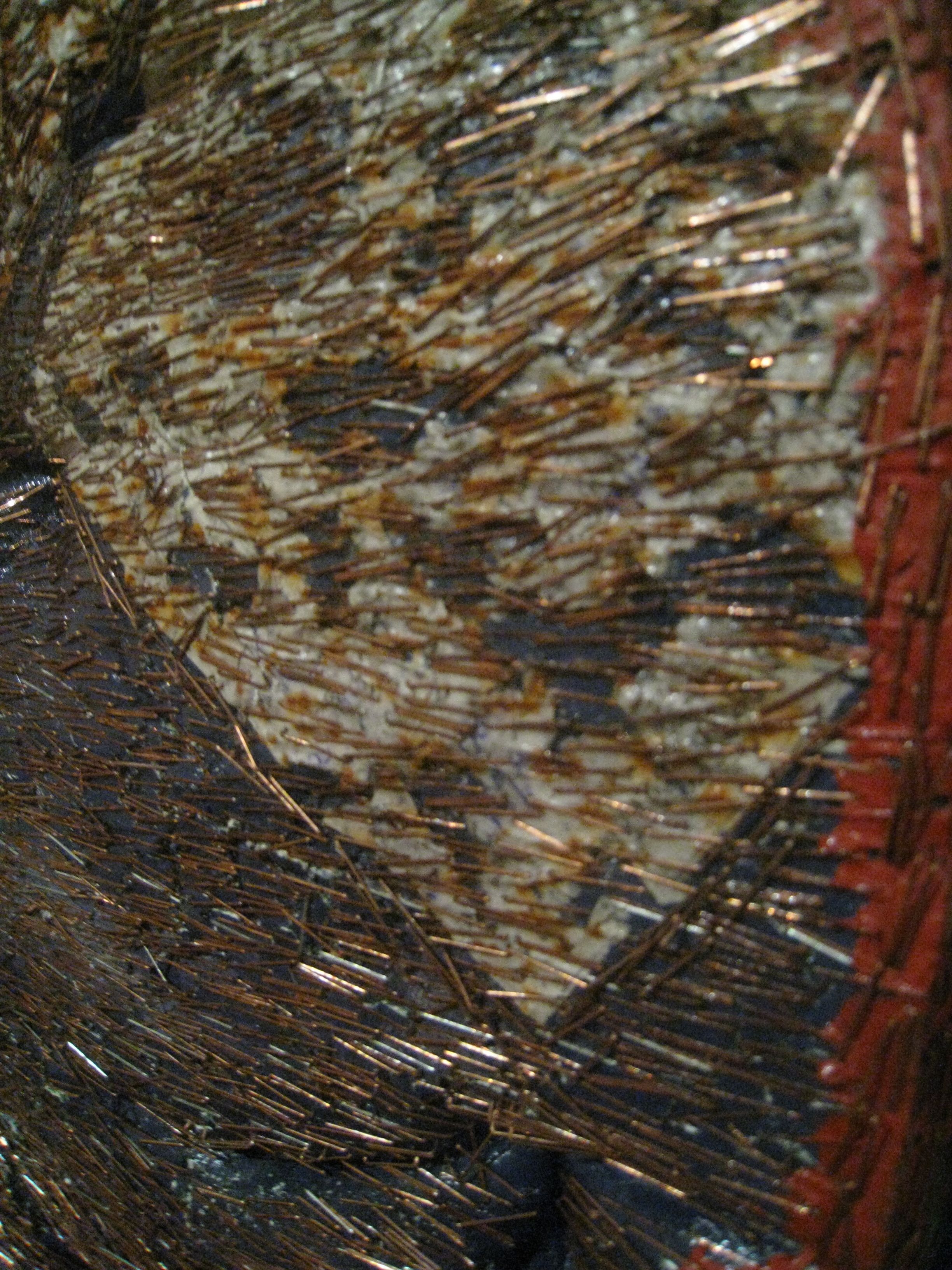
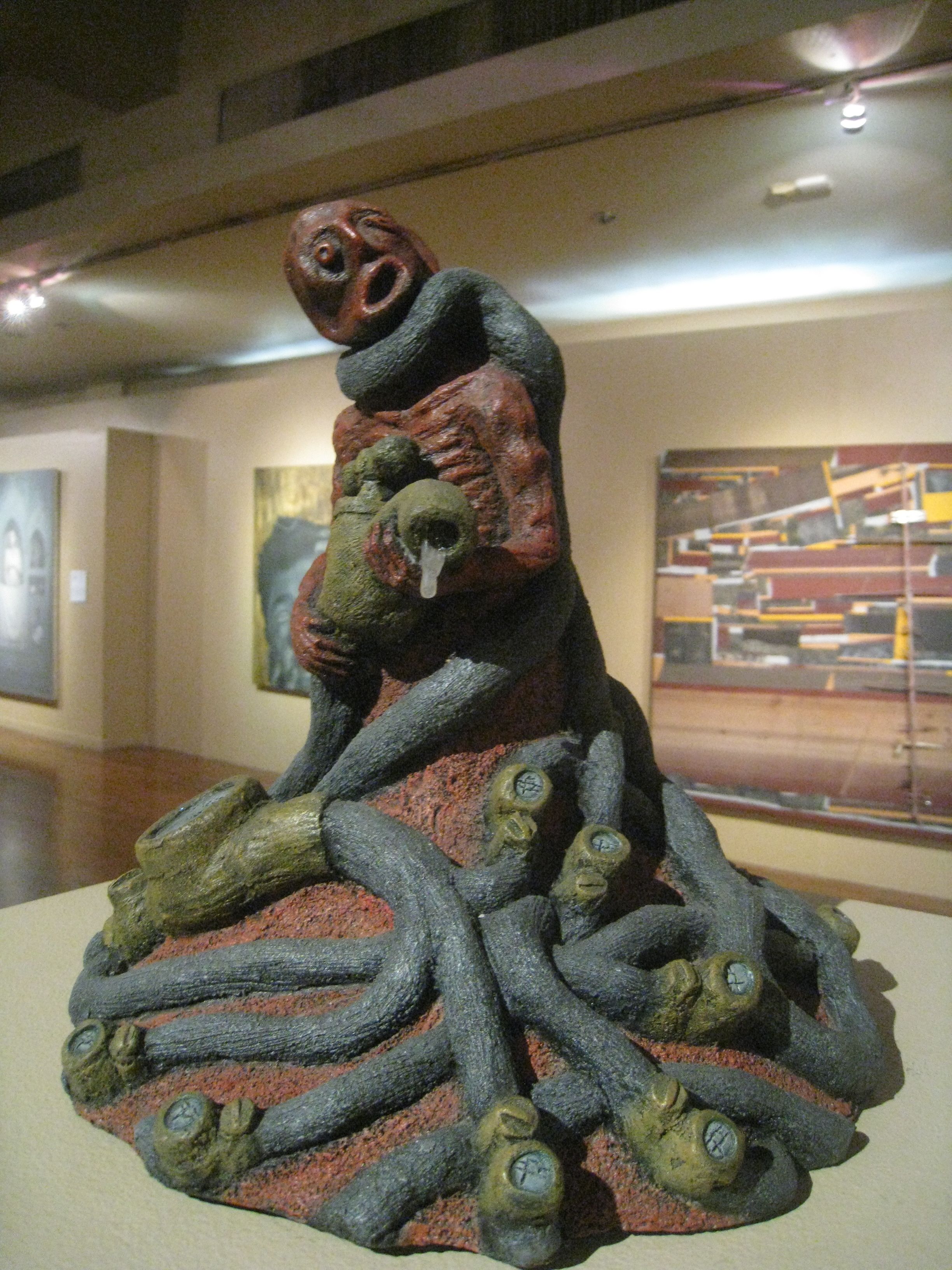
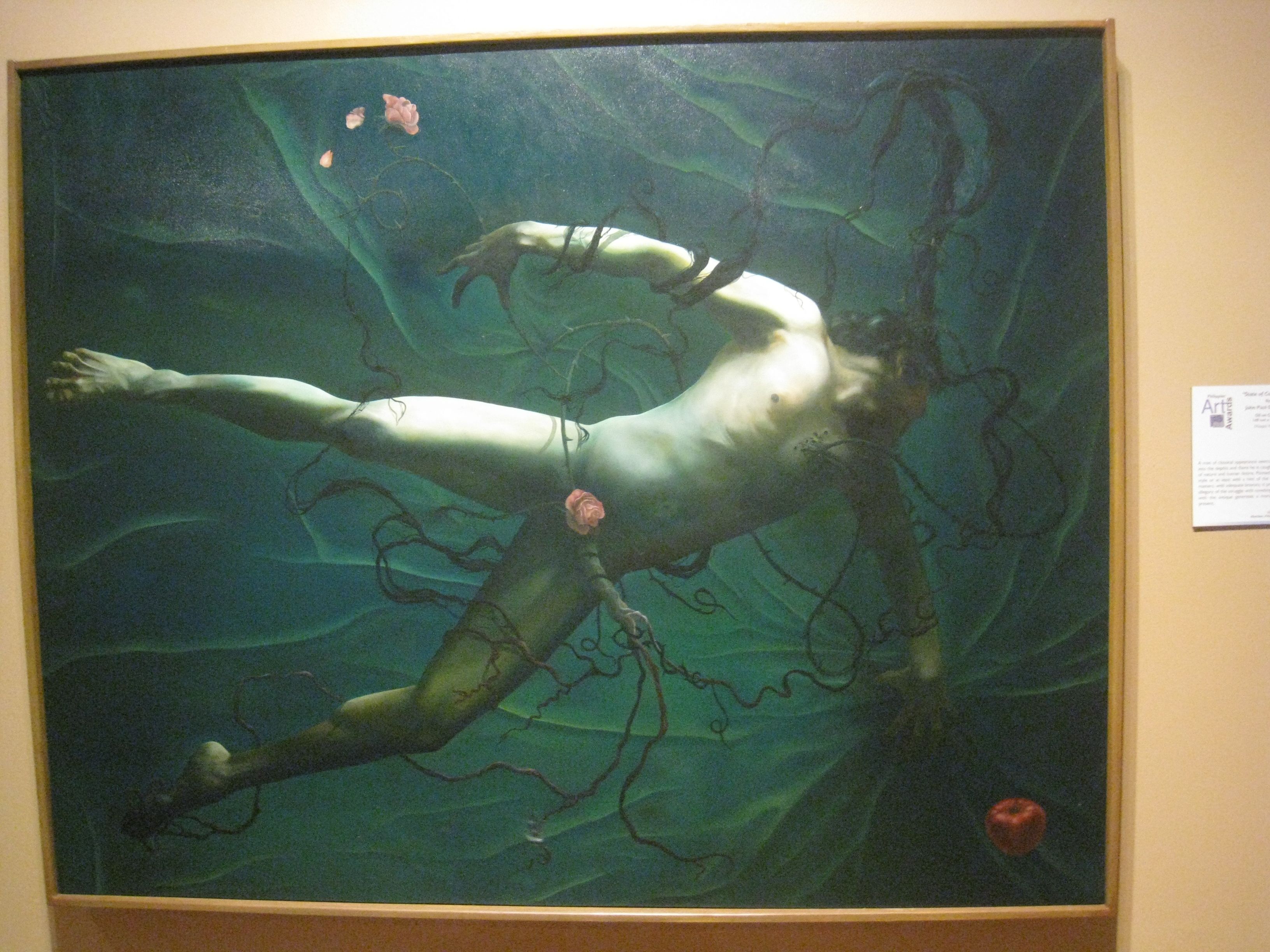
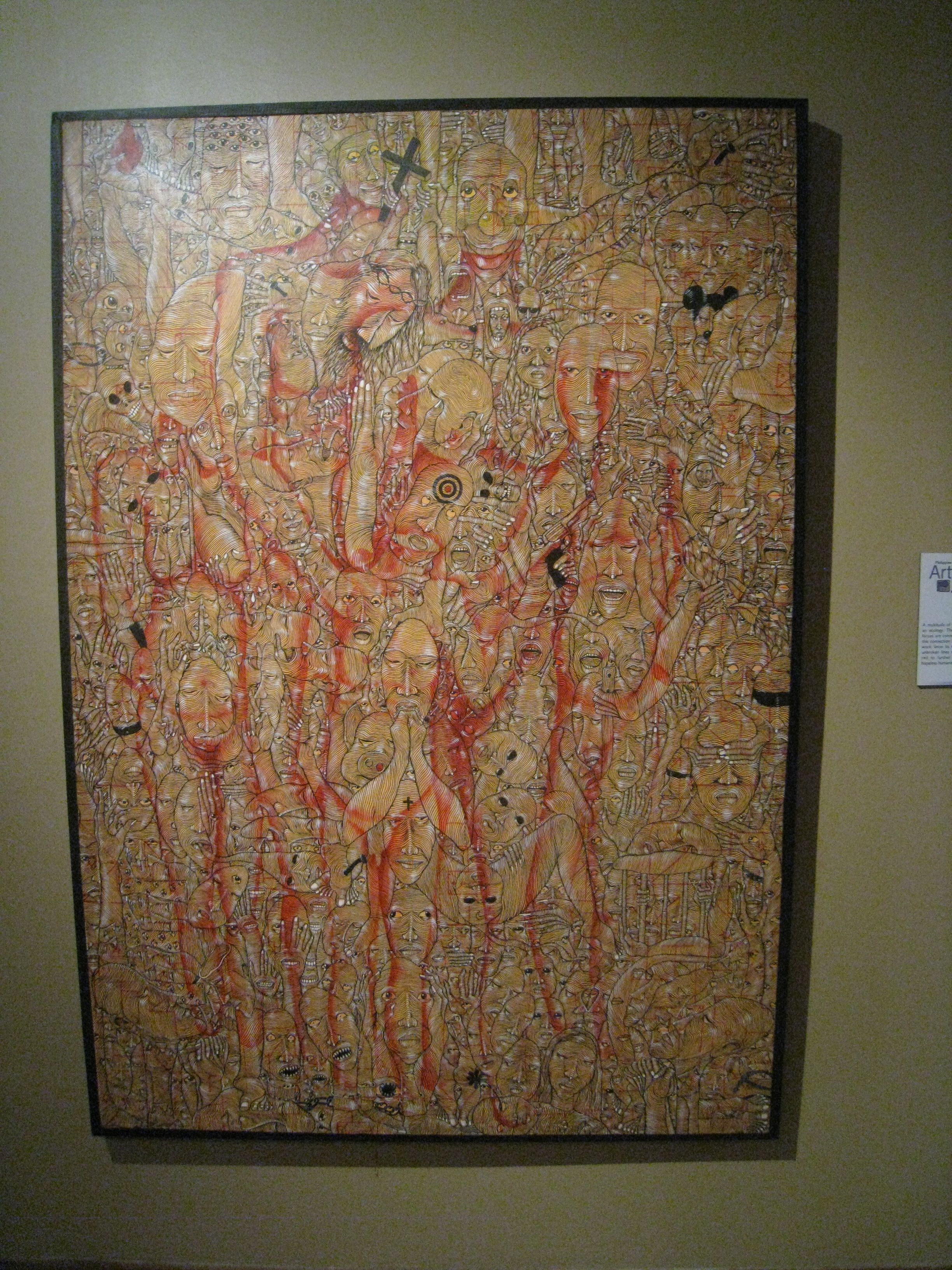
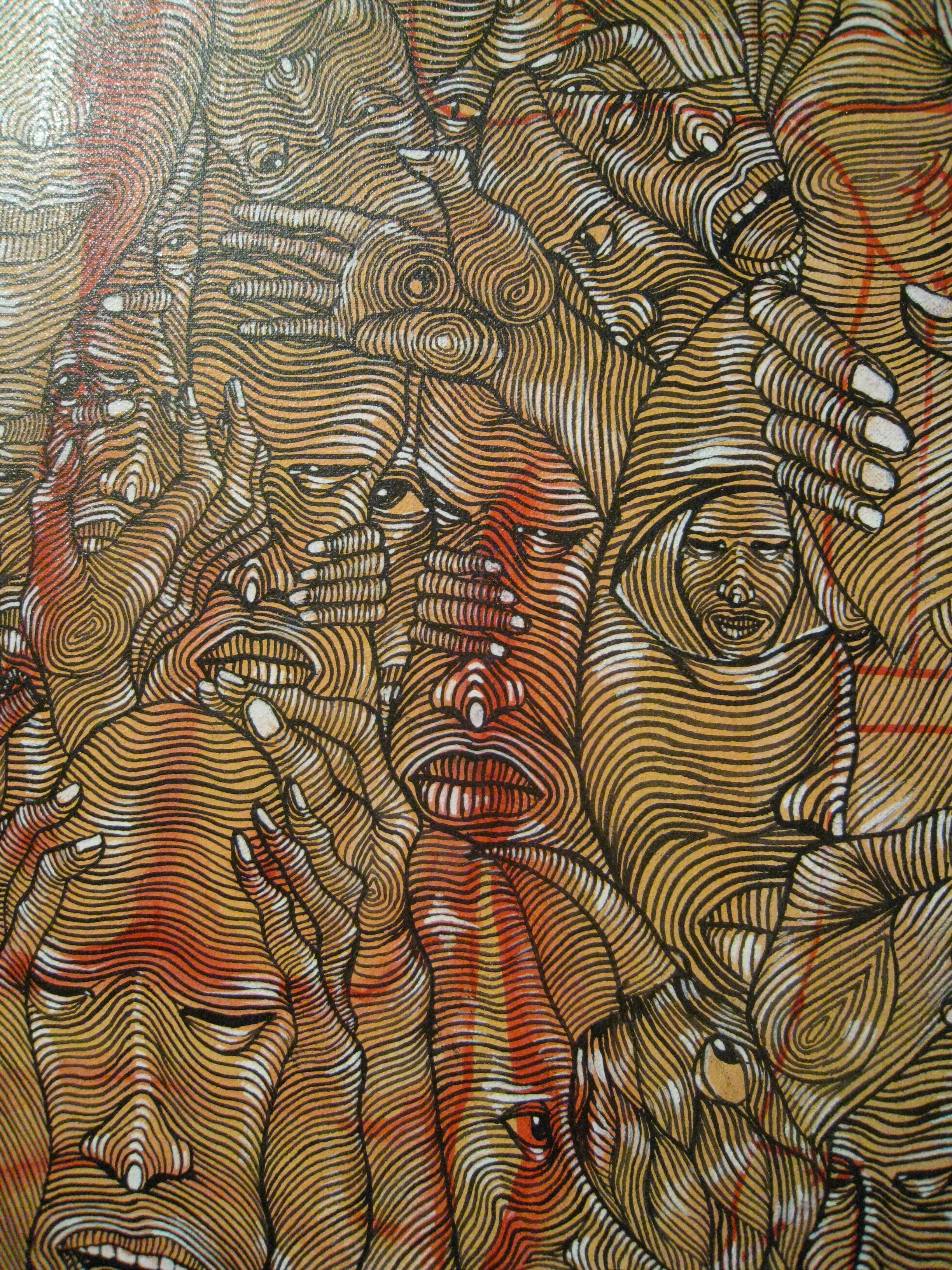
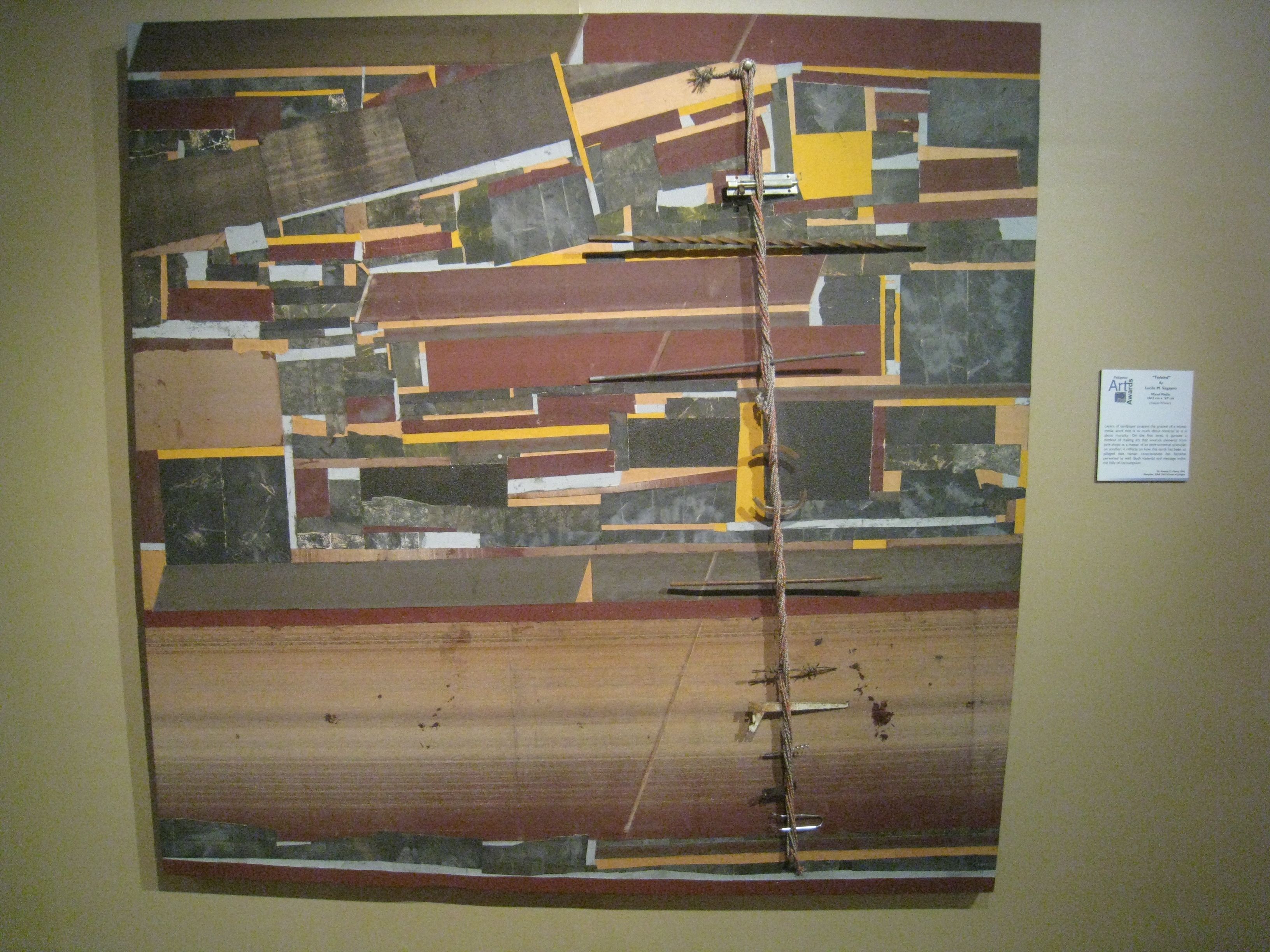
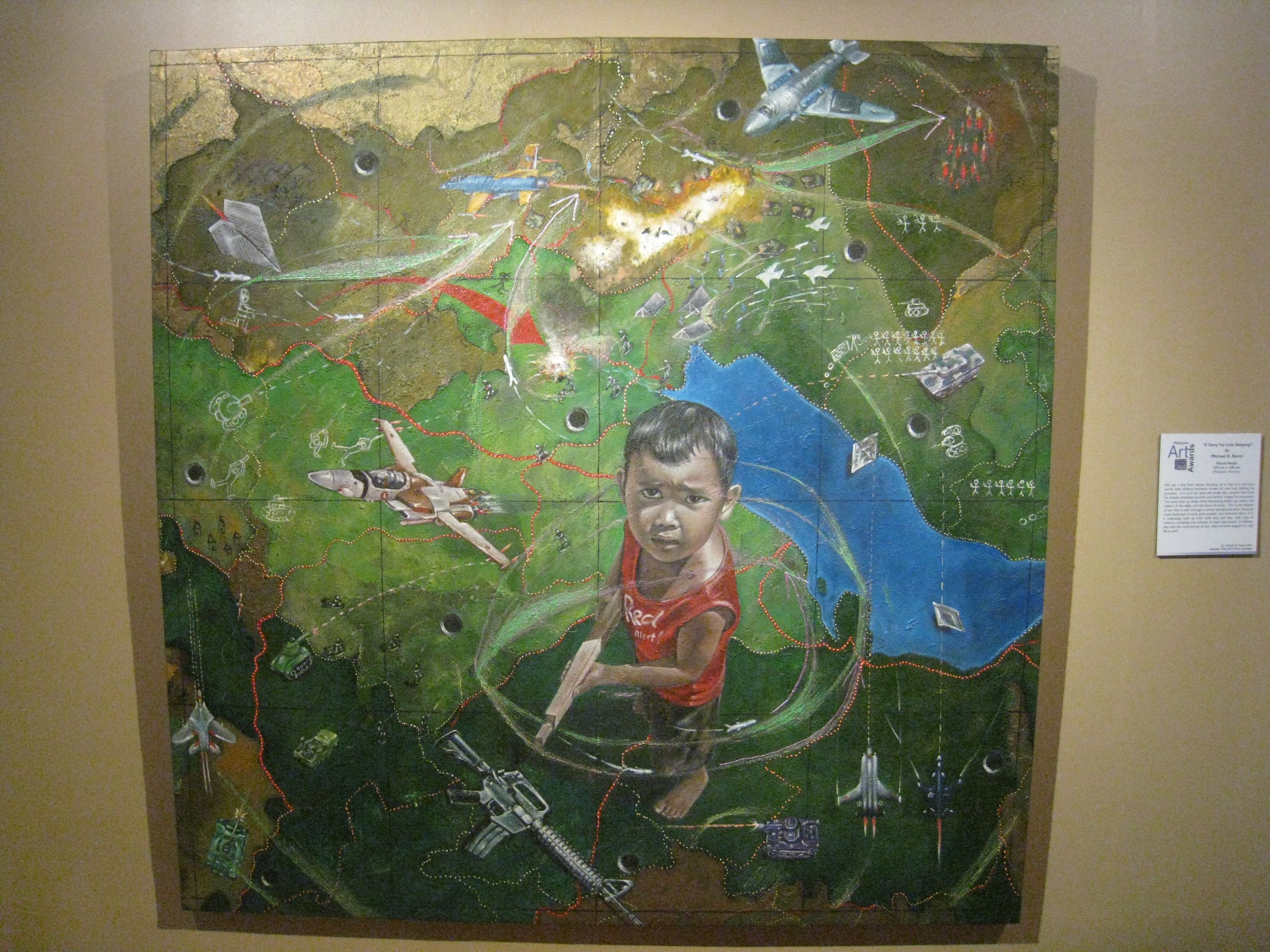
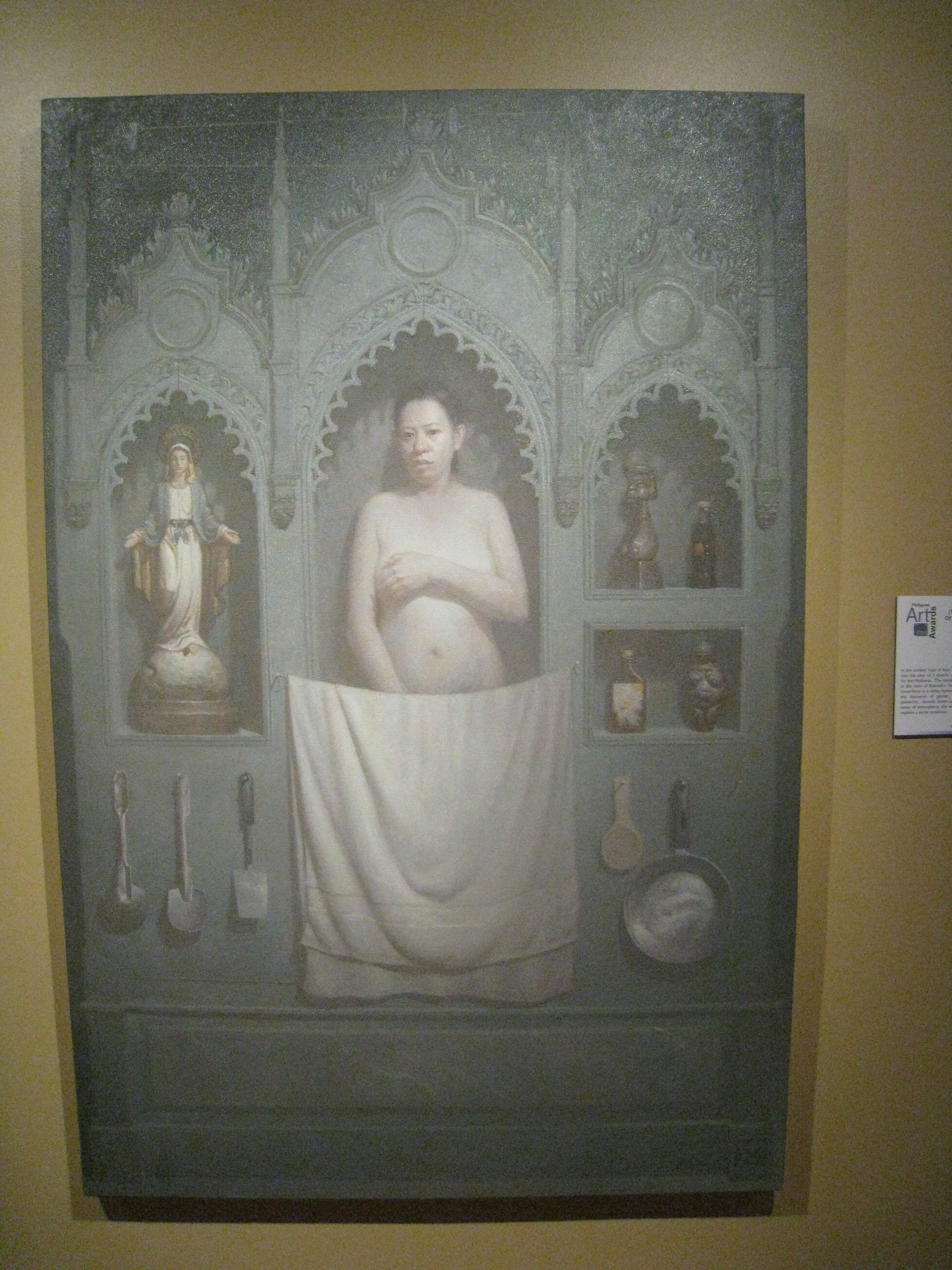
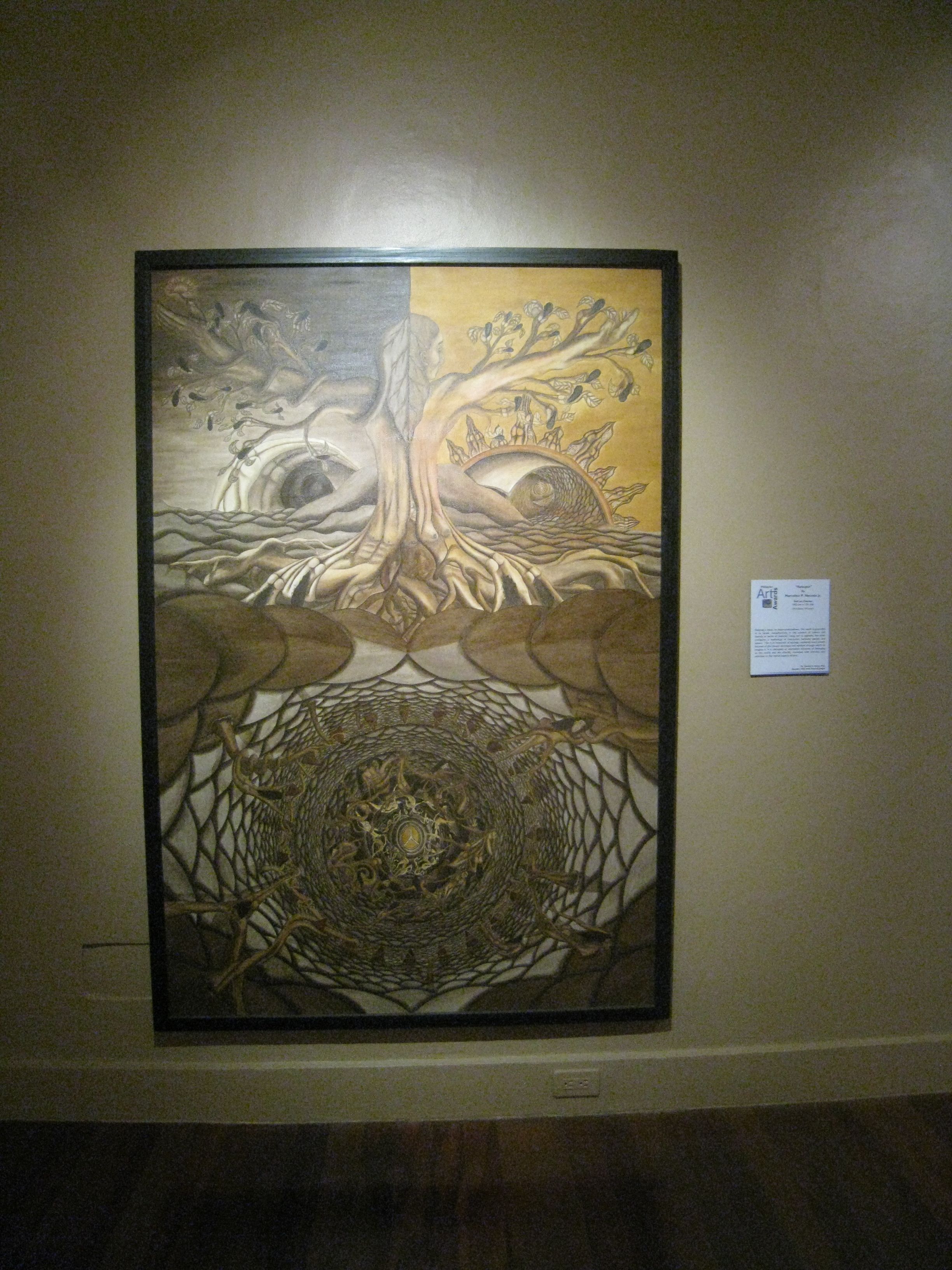
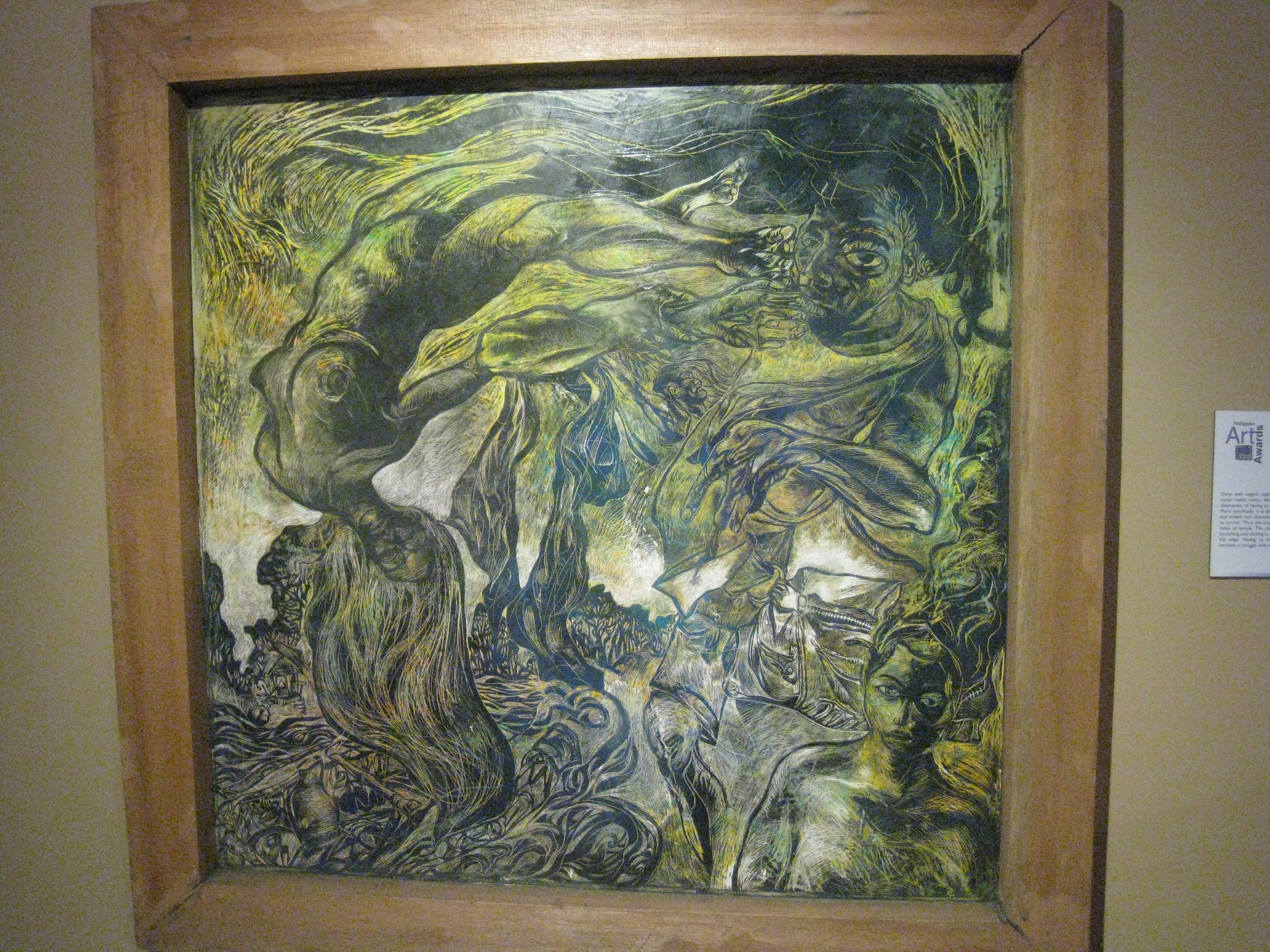
Ten finalists from Visayas and ten from Mindanao join the twenty finalists from Metro Manila and Luzon that had been presented to the public in December 2009. As expected, majority of the pieces are two-dimensional, with a smattering of small-scale sculpture. I really hope that artists get more daring the next time around. Perhaps the organizers ought to trumpet their acceptance of multi-dimensional pieces for the succeeding art awards. Still, the exhibit has been nicely laid out, with each piece provided a brief writeup from jurors Patrick Flores and Cid Reyes. And we see pieces employing a variety of media: digital prints, manipulated photographs, works fabricated from staples, or chicken feathers, or found fabric swatches. You even see a painting from soil!

Nicolas Aca Jr.,"People's Flower" , a portrait of President Cory Aquino from ukay ukay fabric cut into squares.
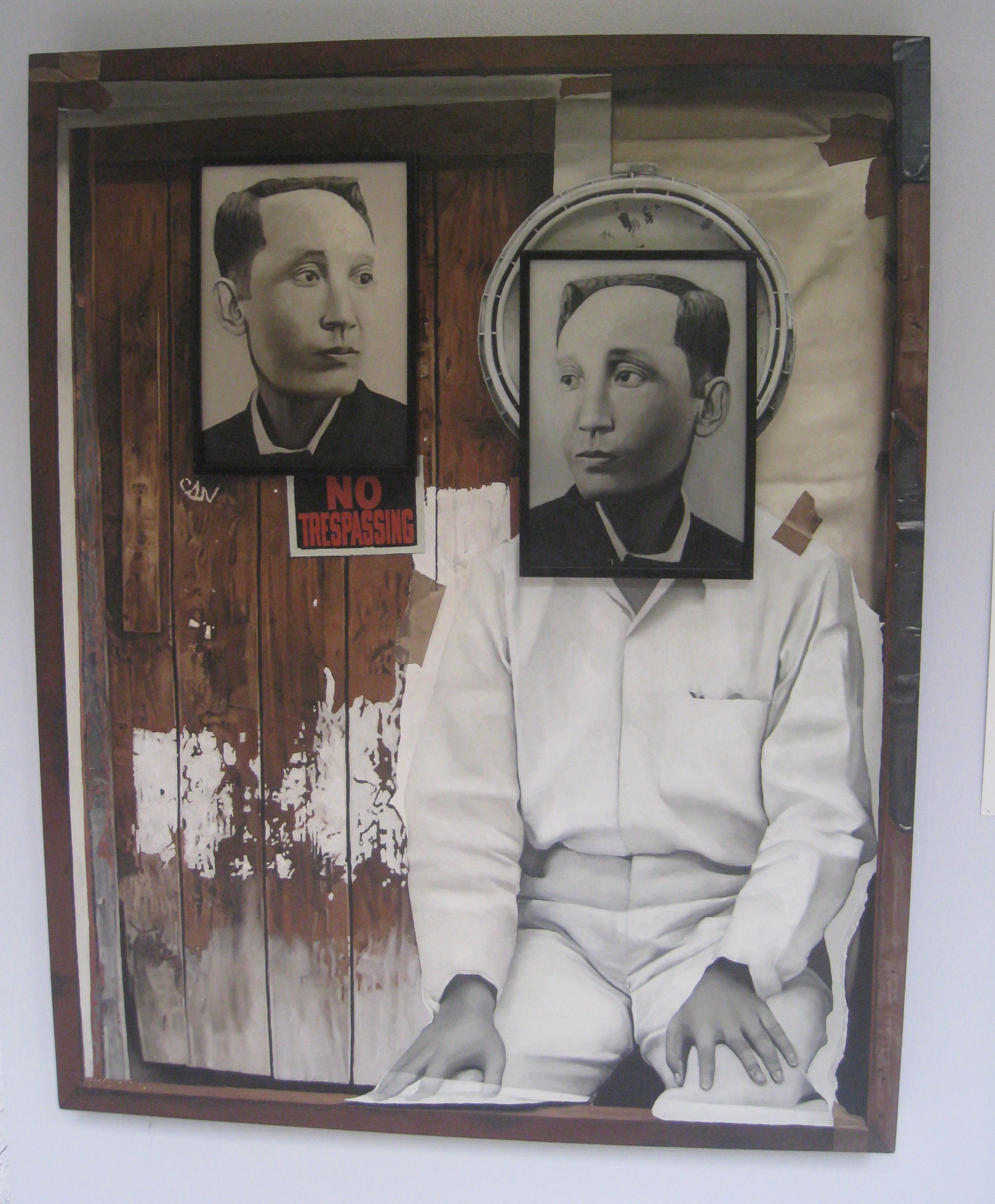
As a keen follower of the PAA, I couldn’t help but notice that we see the same names that had been short-listed before. In some cases, the works seem like extensions of their previous entries. Over all, with one or two exceptions, the works reflect local concerns, and feel very Pinoy. I actually found them a tad insular, parochial even, their mood too serious. If these had been stories, they would have been cautionary tales that end with moral lessons. They employ that sort of a tone. You don’t get experiments with whimsy or forays into the avant-garde. Clearly though, one cannot question the skill, workmanship, and attention to detail that went into the works. But if your tastes tend to the contemporary, you will not find it in this group. I did not get the vibrancy that came out of say, last year’s Thirteen Artists exhibit at the CCP, or that you see in the Ateneo Art Awards every year. Perhaps the last two batches of winners (2006 and 2008) just set the bar too high for me.
Could it be that the opportunities in a thriving and exciting local arts scene have robbed young artists of the time and inclination to work on pieces worthy of competition? That perhaps will be a challenge to the organizers of the PAA. Yet, Philip Morris should be lauded for their unceasing support for this project.

Michael P. Bauzon, "Bombings: Man's Cruelty Against Man", painted in the manner of the 1950s modern masters
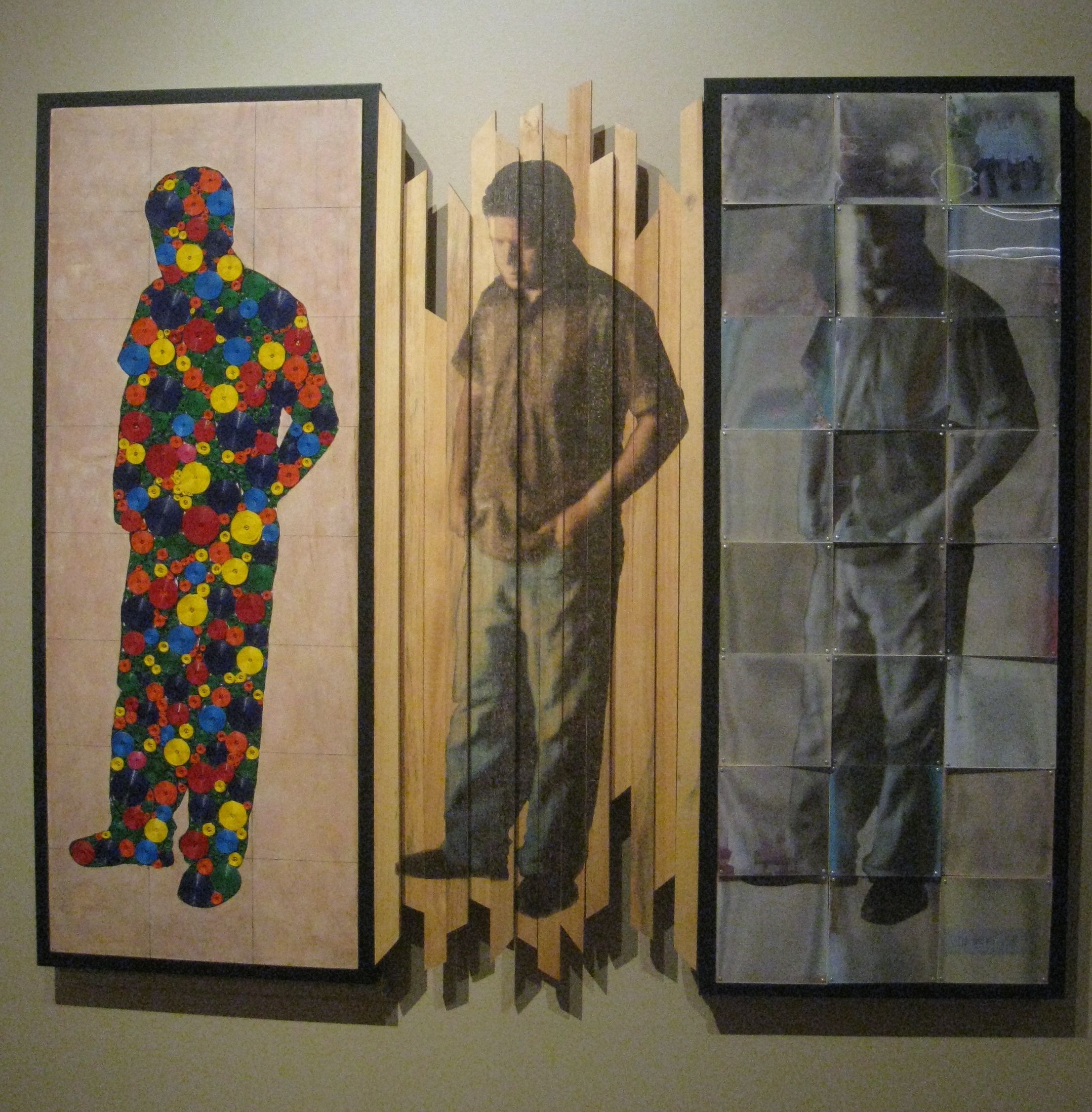
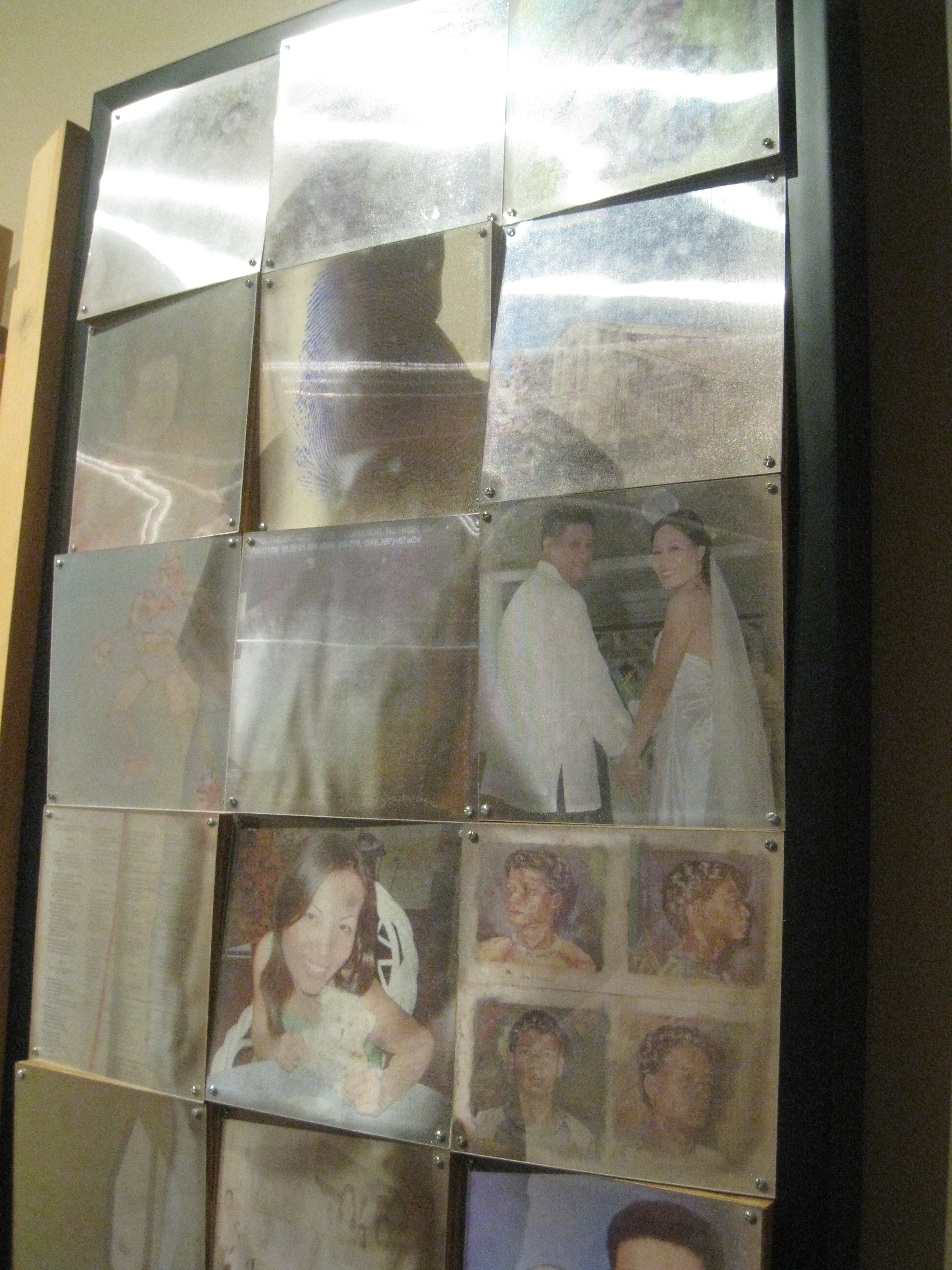
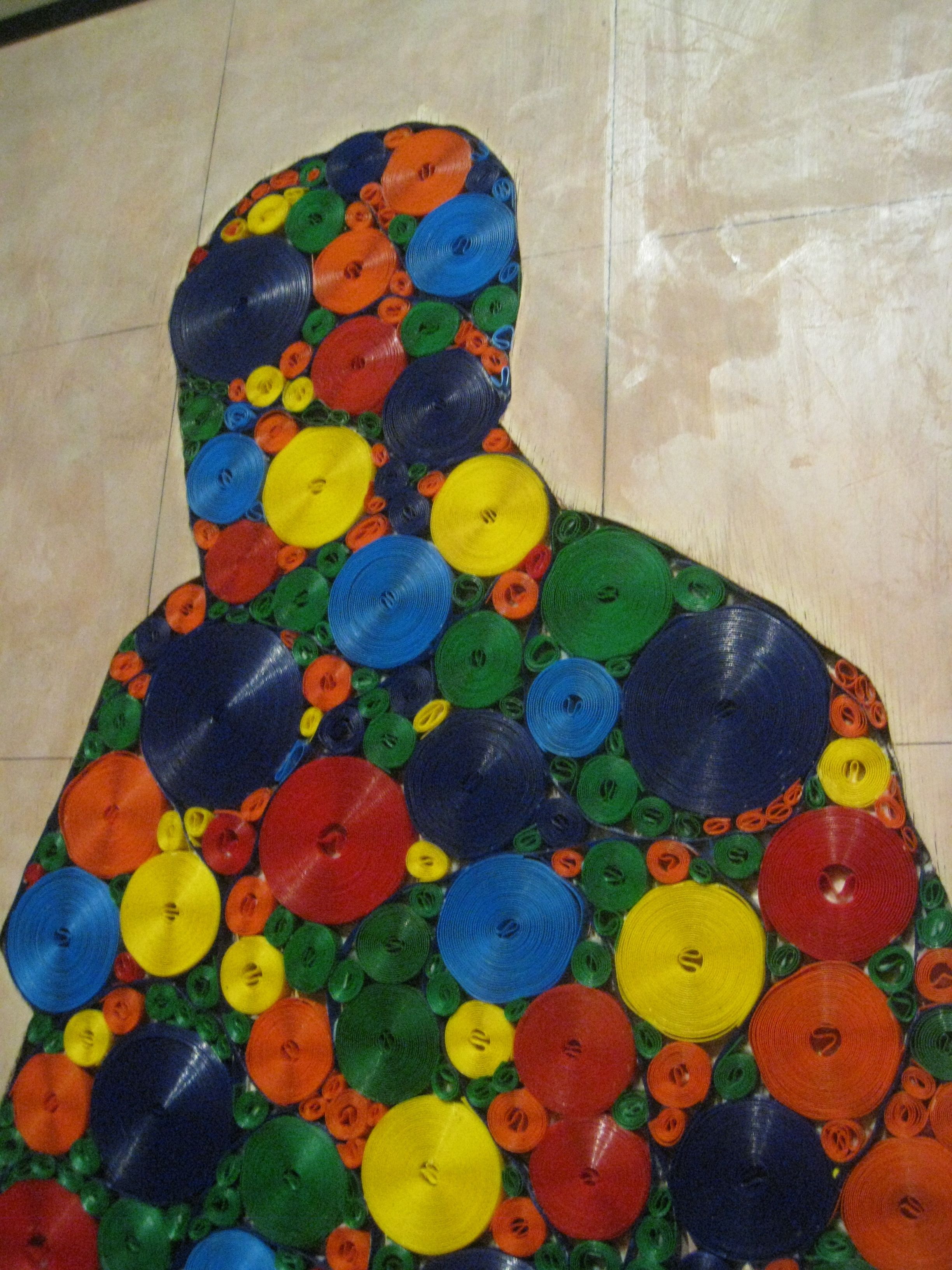
Having said all that, I did still find favorites among the forty finalists. I thought Oscar Floirendo’s self-portait the most interesting of all the pieces. In a triptych, we see three versions of himself. The first as his silhouette cut out and filled with multi-colored rolls of rattan strips. At the center, a photo transfer echoing that silhouette on thin slats of wood. At the rightmost, his personal history told through photographs that are also holograms. From an angle, you glimpse that same silhouette from the first two parts of the piece. If I didn’t know that he had made similar use of those holograms for his 2008 entry, I would have been even more impressed. Crown Him King, Joey Cobcobo’s painting, oozes with rich details that you want to look at again and again. To round out my top three, Art Sanchez and his Tragic Playground, a multimedia piece with oil on canvas and collage on mirror.
The finalists from Visayas are Lucilo Sagayno, Eliseo Libo-on Jr., John Paul Castillo, Frank Alexi Nobleza, Marvin Chito Natural, Nomer Milano, Jzy Tilos, Cezar Arro, Edmar Colmo, Jovito Hecita Jr. The winners from Mindanao are Michael Bauzon, Bryan Cabrera, Solimon Poonon, Michael Bacol, Edgar Carreon, Rodney Yap, Jericho Vamenta, Marcelino Necosia, Nicolas Aca, Oscar Floirendo.
Please refer to this blog’s archives of December 2009 for the Metro Manila and Luzon regional finalists.
The awarding of the Grand Prize and Jurors Choice winners of the Philip Morris Philippine Art Awards 2009-2010 will be on 16 July 2010 at the Museum of the Filipino People, Finance Road, Manila. For more information, visit http://www.philippineartawards.org
http://www.youtube.com/watch?v=TtfiFV_YrgY
http://www.youtube.com/watch?v=JR-0XjjyCQ0
Hyper Blast Abominations from Pow Martinez
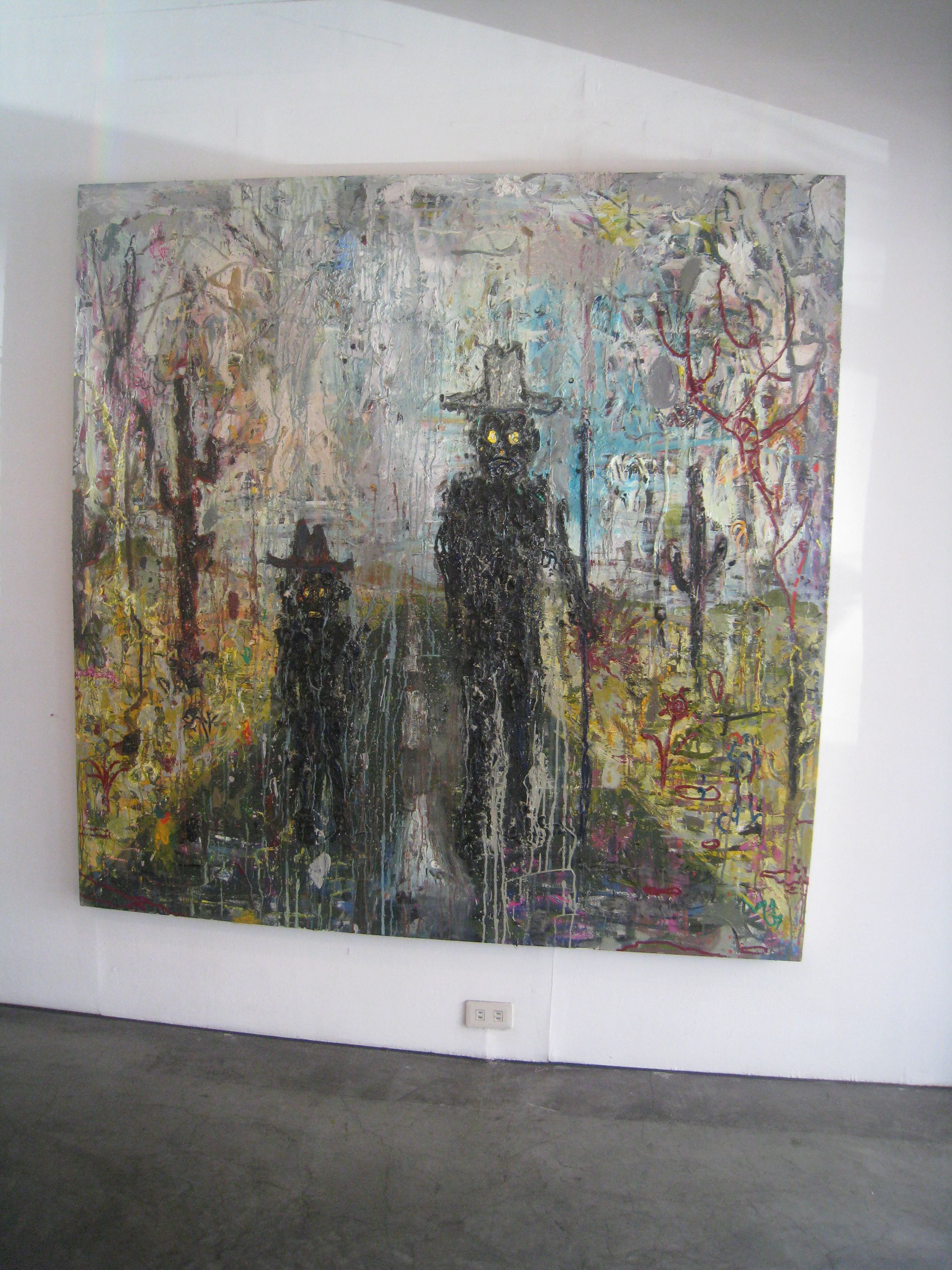
I find them quite amusing, these globs and squirts and drips that Pow Martinez uses for his paintings. I first came across his work a little less than a year ago at West Gallery. Aptly titled 1 Billion Years, that show introduced us to Pow’s unique way of rendering figures, somewhat like the crude illustrations of primitive man. He had small pieces, nothing bigger than 2ft x 2ft, or 2ft x 3 ft if I remember correctly, of faces made from smears and clumps of paint. The kind you could also imagine up on the walls of a kindergarten. Continue reading
Leslie de Chavez Lets Out A Big Sigh
In one of the narrow side streets that traverse the scenic town of Lucban, Quezon, Leslie de Chavez puts the finishing touches on four paintings. Continue reading
Dina Gadia Grabs You
As I walked around Blanc’s original space to view Dina Gadia’s current solo exhibit, I remembered a cramped hole in the wall
that I chanced upon two years ago in Hong Kong. Squeezed in between antique stores and art galleries in Hollywood Road, the tiny space sold vintage Chinese cinema banners and bundles of ancestor portraits. Dina’s current crop of paintings would have fit right in.
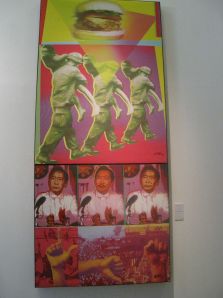
How Does That Grab You Darling takes off from Dina’s fascination with B-movie posters from the 1930s to the 1970s. She uses bright, even acidic, shades that give off a retro vibe. Her compositions, usually of various images and texts juxtaposed as if pasted atop each other in layers, look more like collages than painted images. Her background in advertising and graphic design comes out very strongly. As do her Pop Art influences.
You hear a bit of a buzz about Dina Gadia from art collectors these days. This show certainly provides sustenance to her fans.
How Does That Grab You Darling runs from 16 April to 8 May 2010 at Blanc Art Space, 2E Crown Tower, 170 HV Dela Costa St., Salcedo Village, Makati City. Phone(632)752-0032 or visit http://www.blanc.ph
http://www.youtube.com/watch?v=jKUKwX8WAKE
Utopia in the Age of You Tube
More than twenty years ago, writer and art critic Alice Guillermo defined social realism as “…a shared point of view which seeks
to expose or lay bare the true conditions of Philippine society as well as to point out solutions by which these conditions are changed…” Social Realism, or SR, has always had a strong presence in the Philippine art scene. Artists don’t exist in a vacuum. And just as in any community, some show more concern than others for politics and social justice.
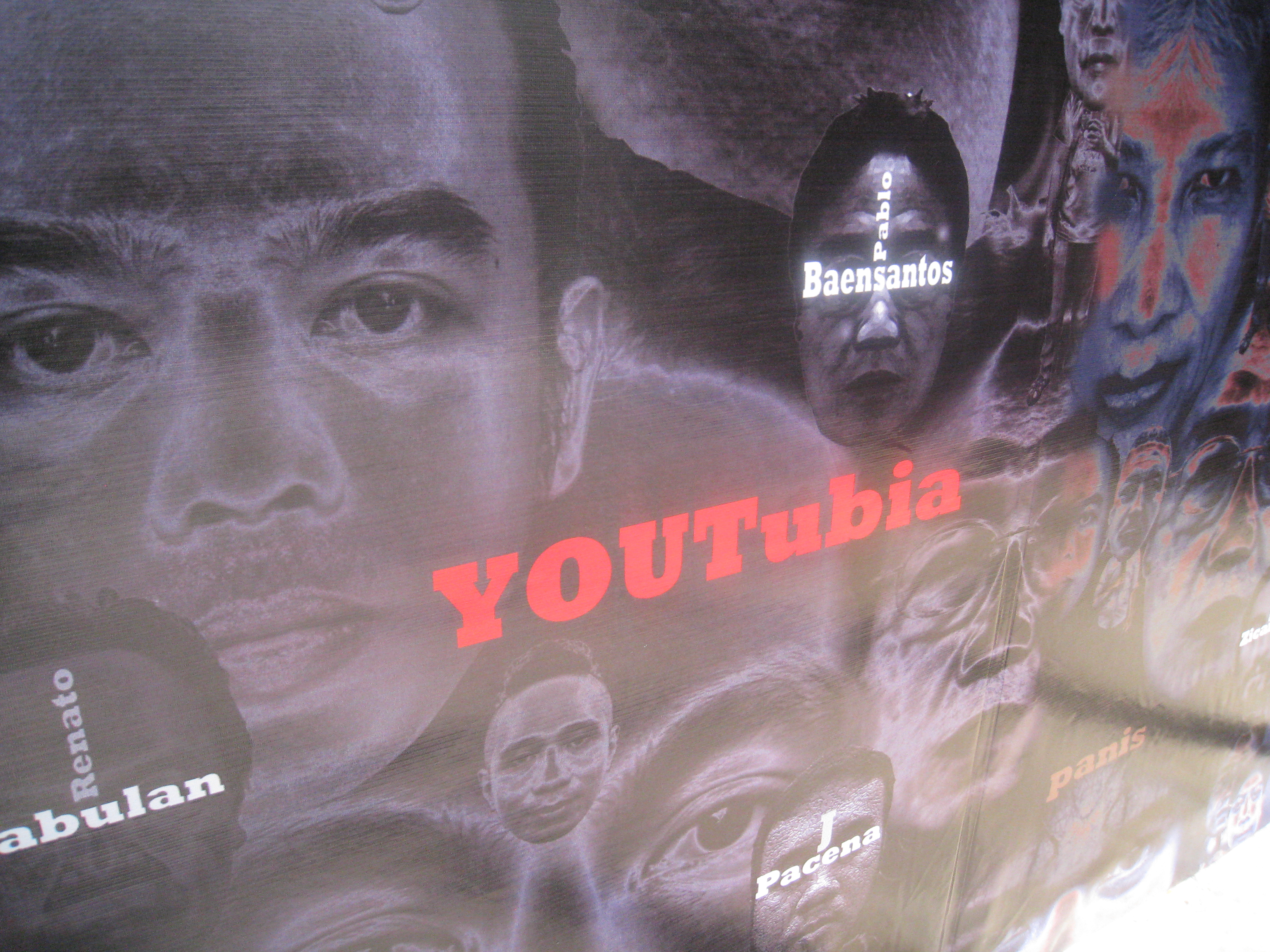
I have always looked forward to the group exhibits by the Social Realism stalwarts: Antipas Delotavo, Jose Tence Ruiz, Renato Habulan, and Pablo Baensantos. They come together on an almost annual basis, mounting shows of mostly large-scale paintings. I have seen some pretty important pieces come out of these SM Art Center displays. Among them, Biboy Delotavo’s unforgettable Diaspora, his 2007 mural on departing Filipino overseas workers, and Bogie Tence Ruiz’s first forays with the Kotillion in 2008.
YOUTubia continues this tradition of the SR barkada. The show’s title plays on the word utopia, the ideal social, political, and moral state. In this age of the internet and global interconnections, one’s concept of utopia has broadened to embrace technological advances. Social realism must also keep up with the times. Thus, aside from the Fab Four, this show includes work by Neil Doloricon, younger activist-artists Mideo Cruz, Iggy Rodriguez, and Buen Calubayan, as well as less militant contemporary art practitioners Tatong Recheta Torres, Constantino Zicarelli, Christina Quisumbing Ramilo, and Jay Pacena.
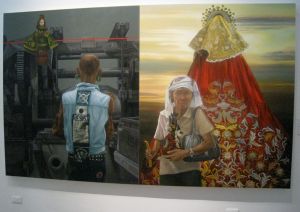
Bogie Tence Ruiz on curating the show: “I gave them no other brief other than think about the present, where You Tube has infected UTOPIA. It is not Dystopia, just YOUTubia, which is not a failure or a disappointment, but an eye-opener to a new reality, unfolding, mutating, intimidating, still untested and unqualified, but true and undeniably pervasive and contemporary, about as contemporary as all the Internet, Facebook, Twitter etcetera etcetra.”
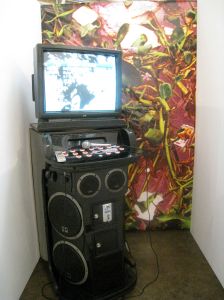
This unusual combination of artists actually works for me. It is perhaps a testament to the respect accorded to Bogie that the artists produced significant pieces. Not many group shows can boast that achievement. I especially enjoyed Ling Quisumbing Ramilo’s Karaoke Art Project. She altered the background images of karaoke songs to that of Philippine art pieces, uploading more than 4,000 photos from her colleagues. Through this project, she brings art to a new audience, those unable to visit galleries and art spaces.
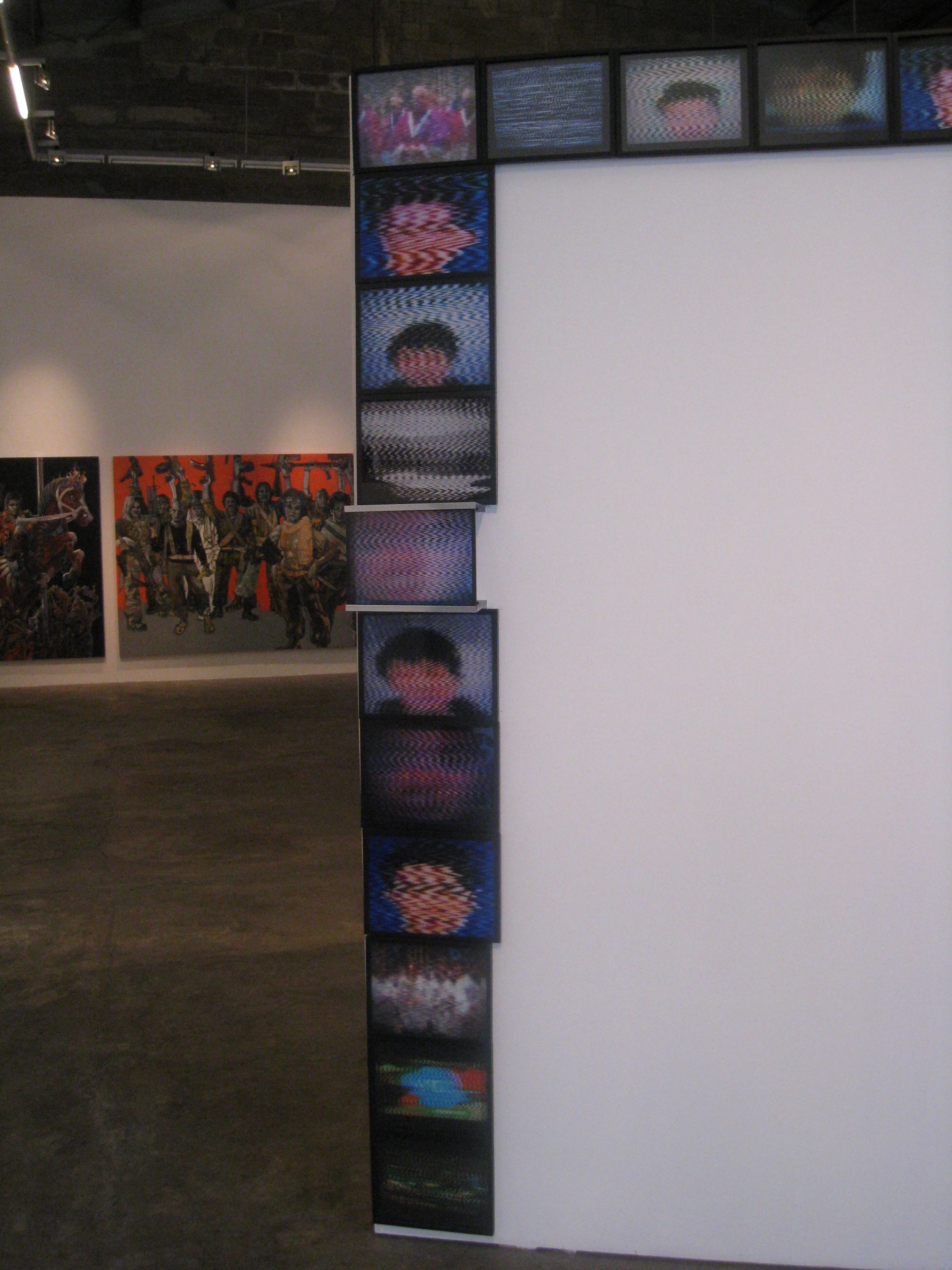
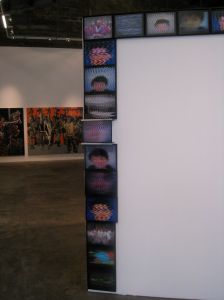
For Ling’s other piece, her Static Series, she spent hours in front of the t.v., waiting to photograph faces distorted by static. She arranged her photos to form a life-sized frame of an empty computer screen, a comment on today’s sensory and information overload.
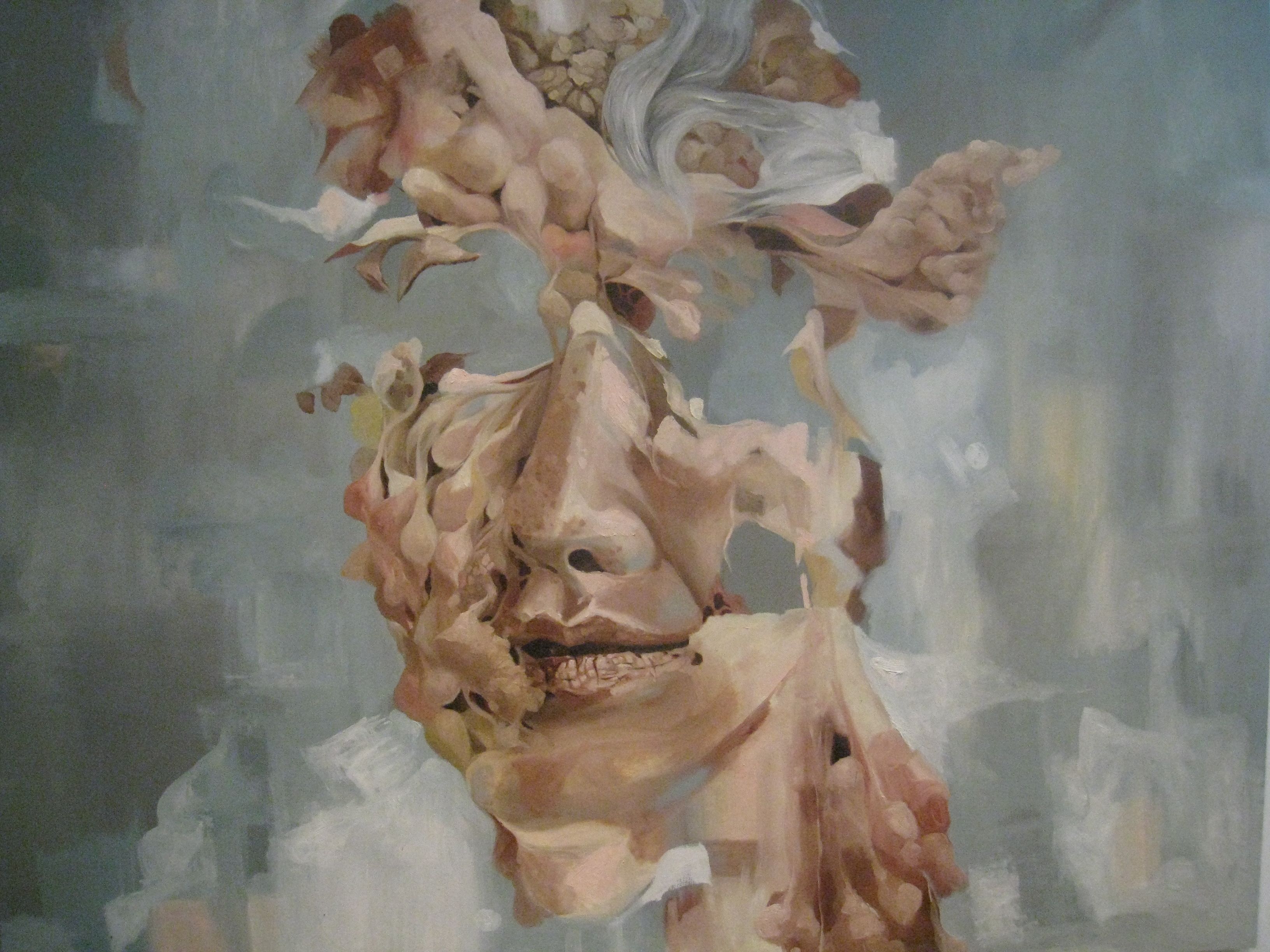
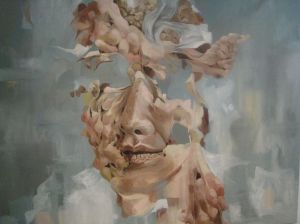
I also loved Tatong Recheta Torres’ untitled portrait of a disintegrated face. Frankly, I’m not sure how this relates to You Tube and Utopia, but it is a beautiful painting nevertheless. He pays tribute to a beloved father figure who passed away last year. Tatong also reveals that with this piece, he went back to his original process, painting without photo references or grids.
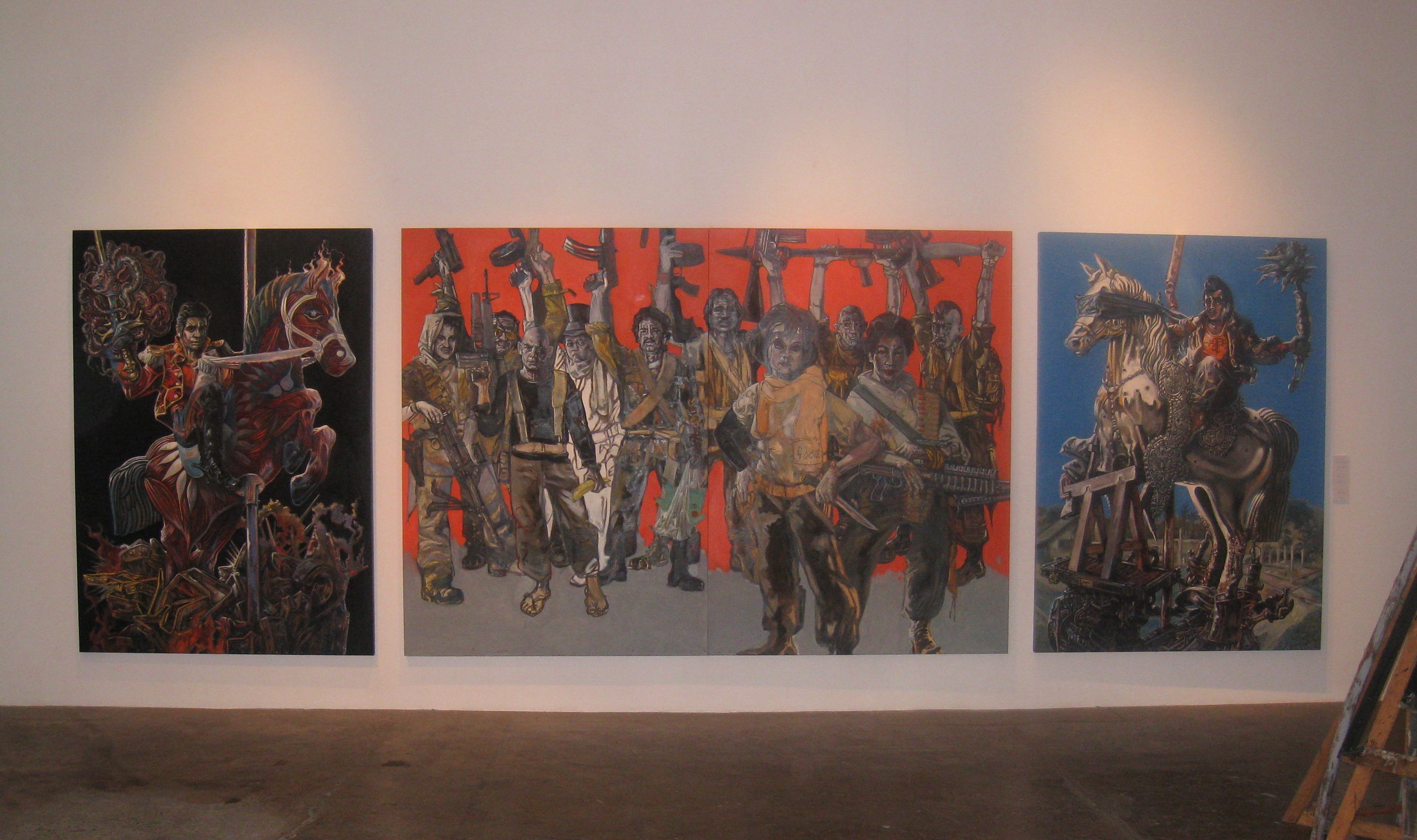
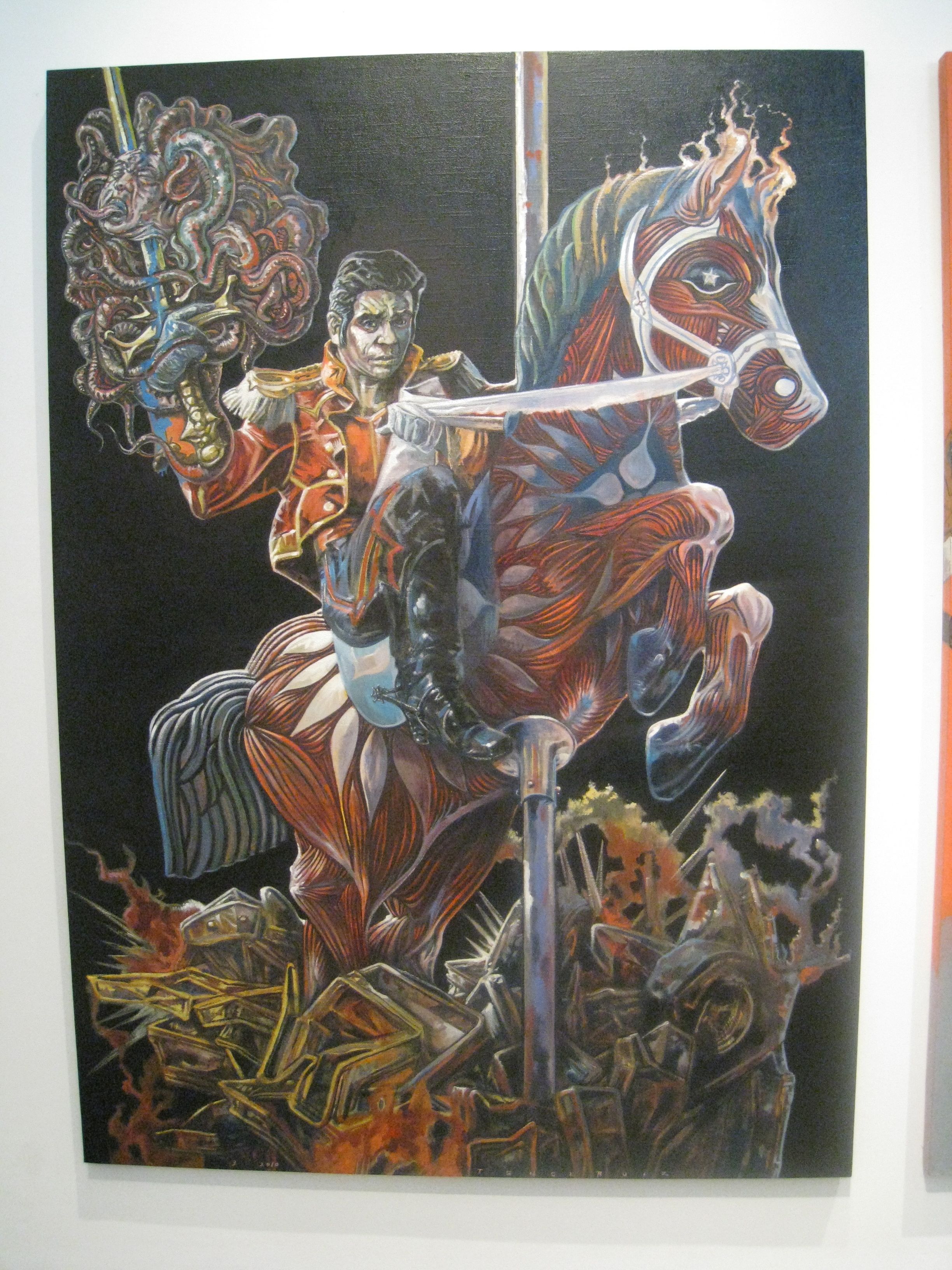
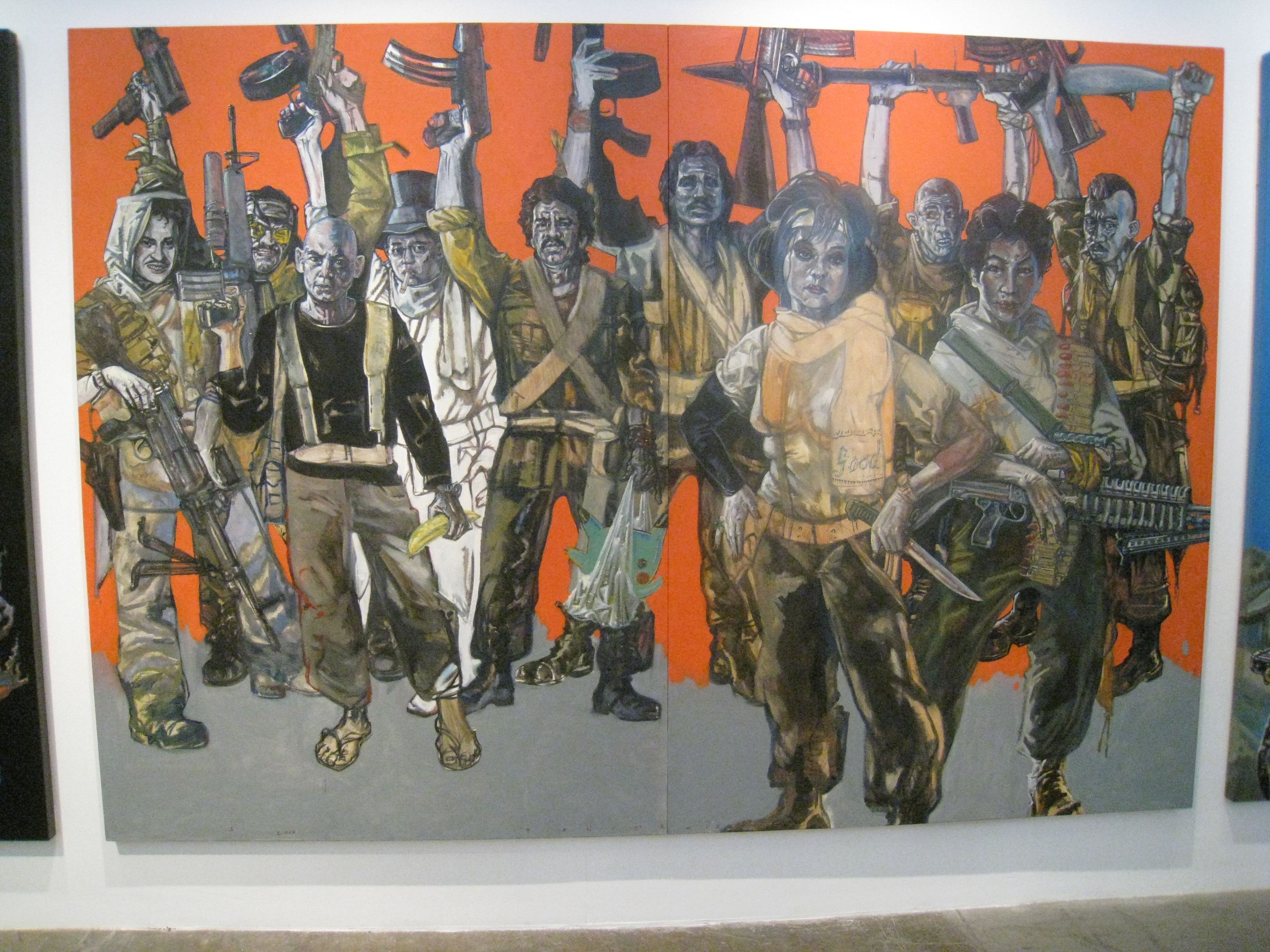
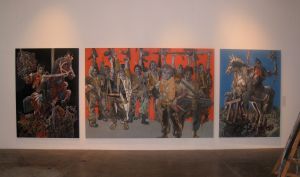
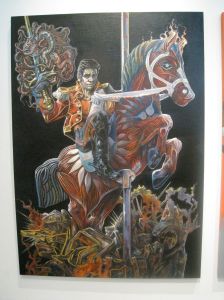
Bogie introduces his caballeros, solo paintings of FPJ and Erap borne by steeds. They flank a diptych of a mob of movie villains, contravidas slain by the two movie idols in the course of their cinematic careers. Unfortunately, their prowess could not extend to life beyond the big screen. Both of them have been browbeaten by a petite adversary, the head of state who takes pride in her resemblance to Nora Aunor. No description can do justice to Bogie’s wonderful use of colors for these three pieces.
A protest cannot be complete without a burning effigy, and sure enough, EfPIDGEE, burns close by.
There’s a good reason why we’re missing Biboy Delotavo’s murals for this show. At the end of April, he brings a show of large-scale paintings to the National University of Singapore (NUS). What we see here are two pieces from his 2008 Artesan show, also in Singapore. I had only seen photos of these before, and enjoyed this chance to see them in the flesh.
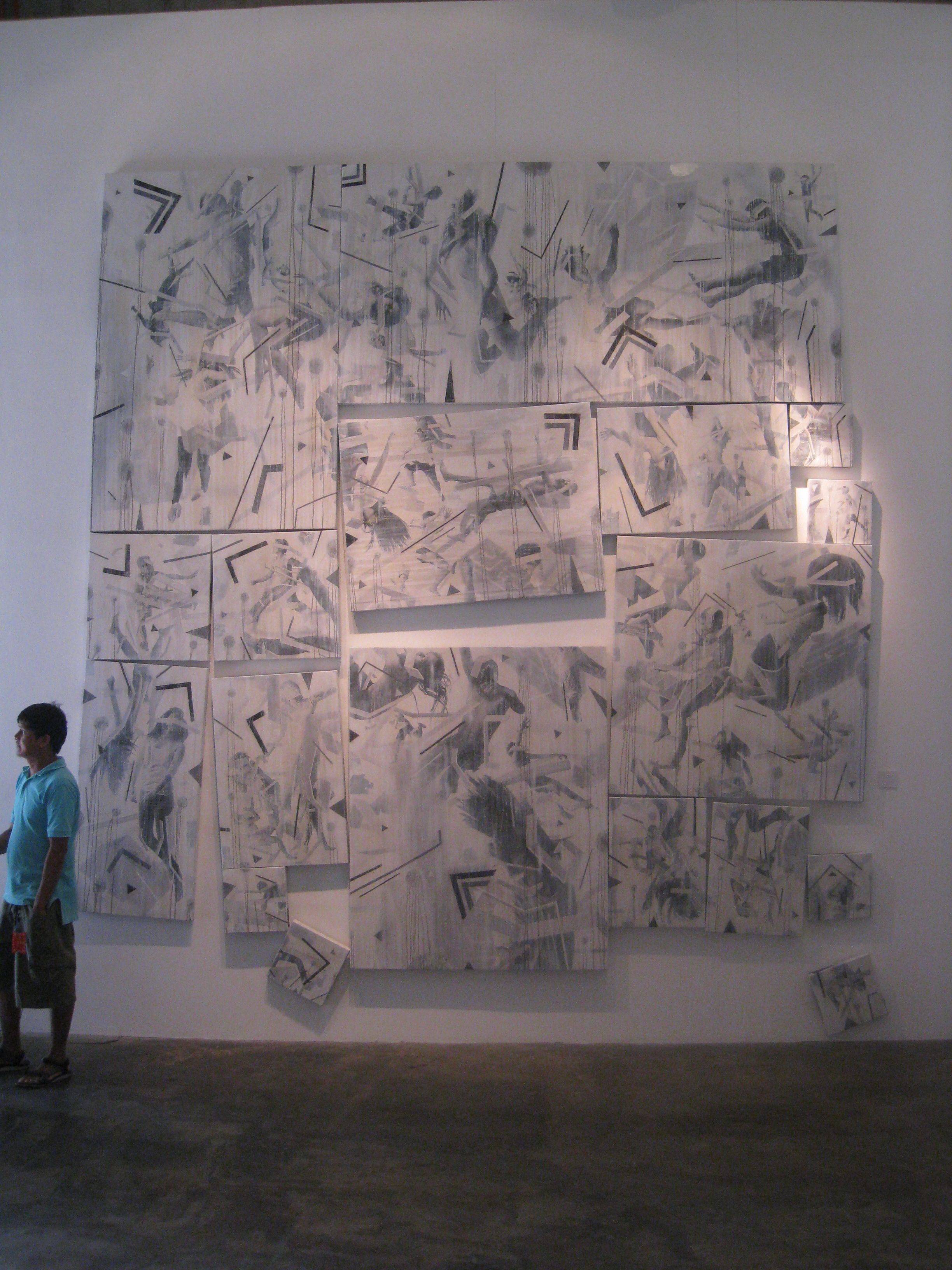
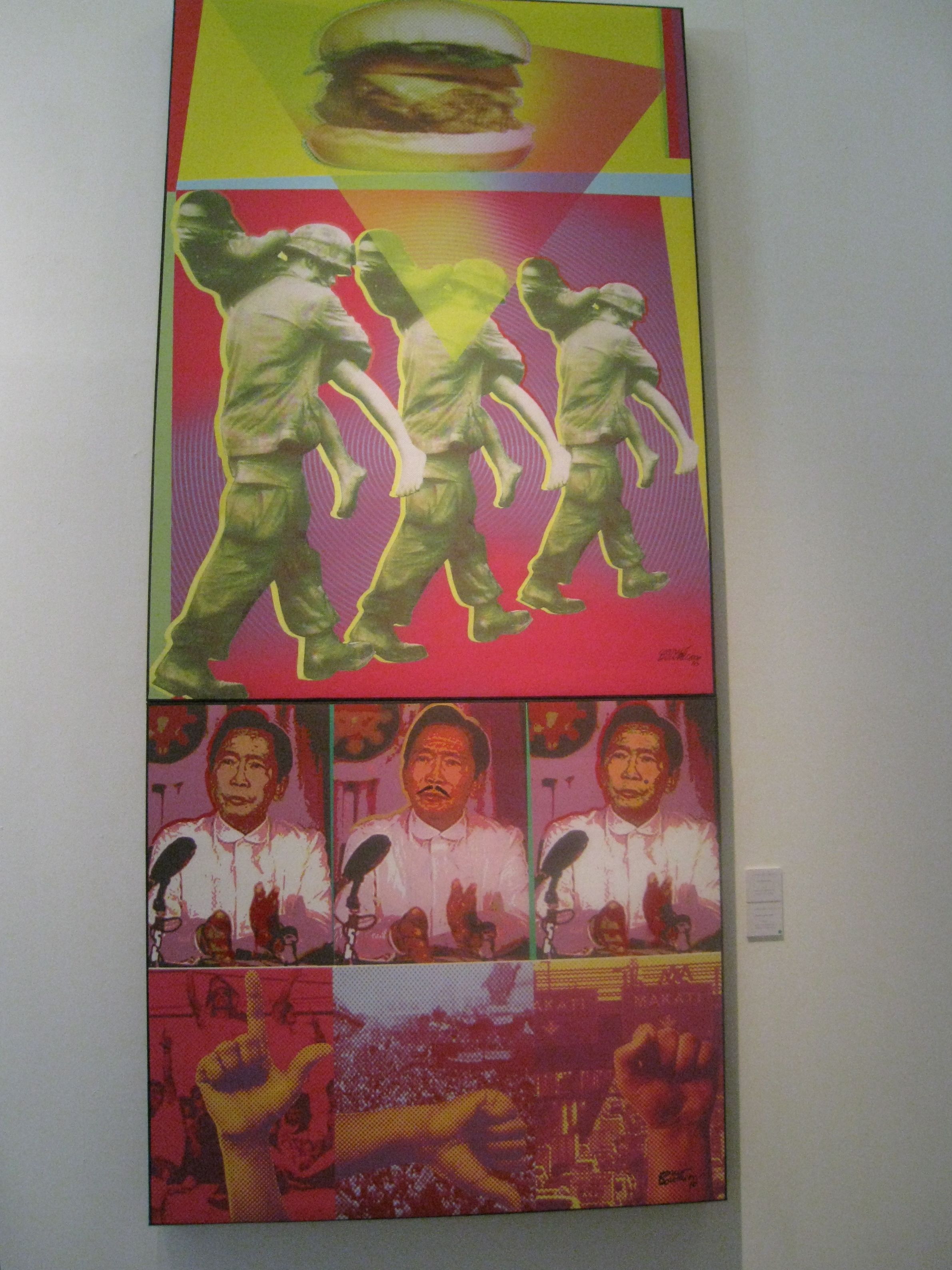
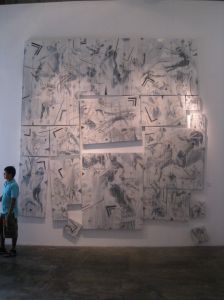
Jay Pacena mounts an impressive assemblage of his painted digital prints of subjects on a freefall. Neil Doloricon also uses digital prints painted over with acrylic for U.S. Diplomacy and Na-Edsahan Tayo. Unlike Jay’s monochromatic grays, he has chosen neon colors to give his pieces a pop, graphic feel.
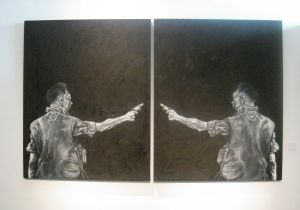
Mideo Cruz paints! His Laissez-Faire shows mirror images of the iconic Eddie Adams photograph of a South Vietnamese general executing his Vietcong prisoner. Portraying a horrific act twice makes it ubiquitous, and consigns it to the commonplace. We viewers becomes inured to such despicable deeds.
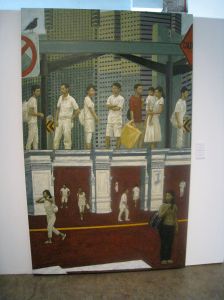
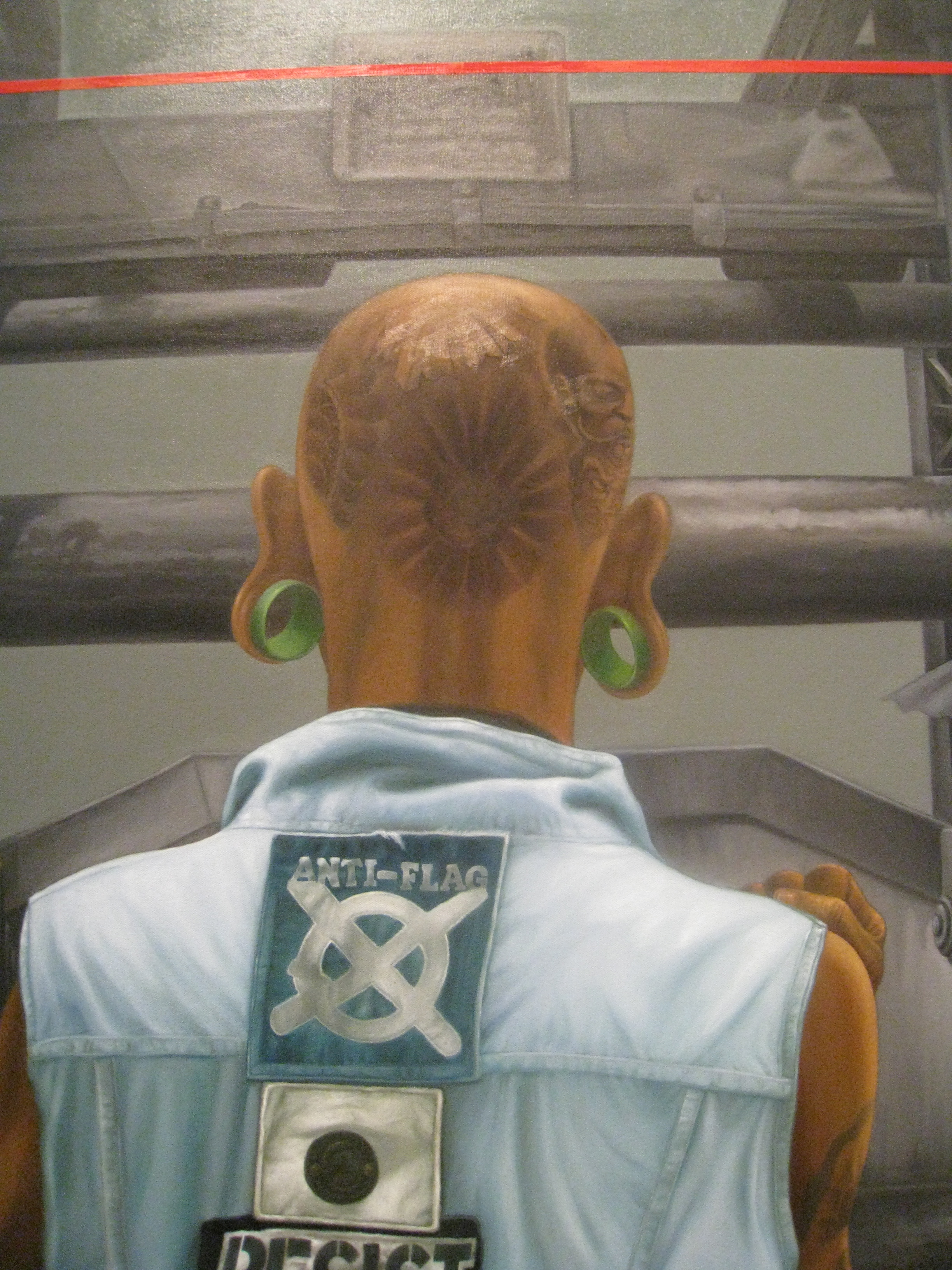
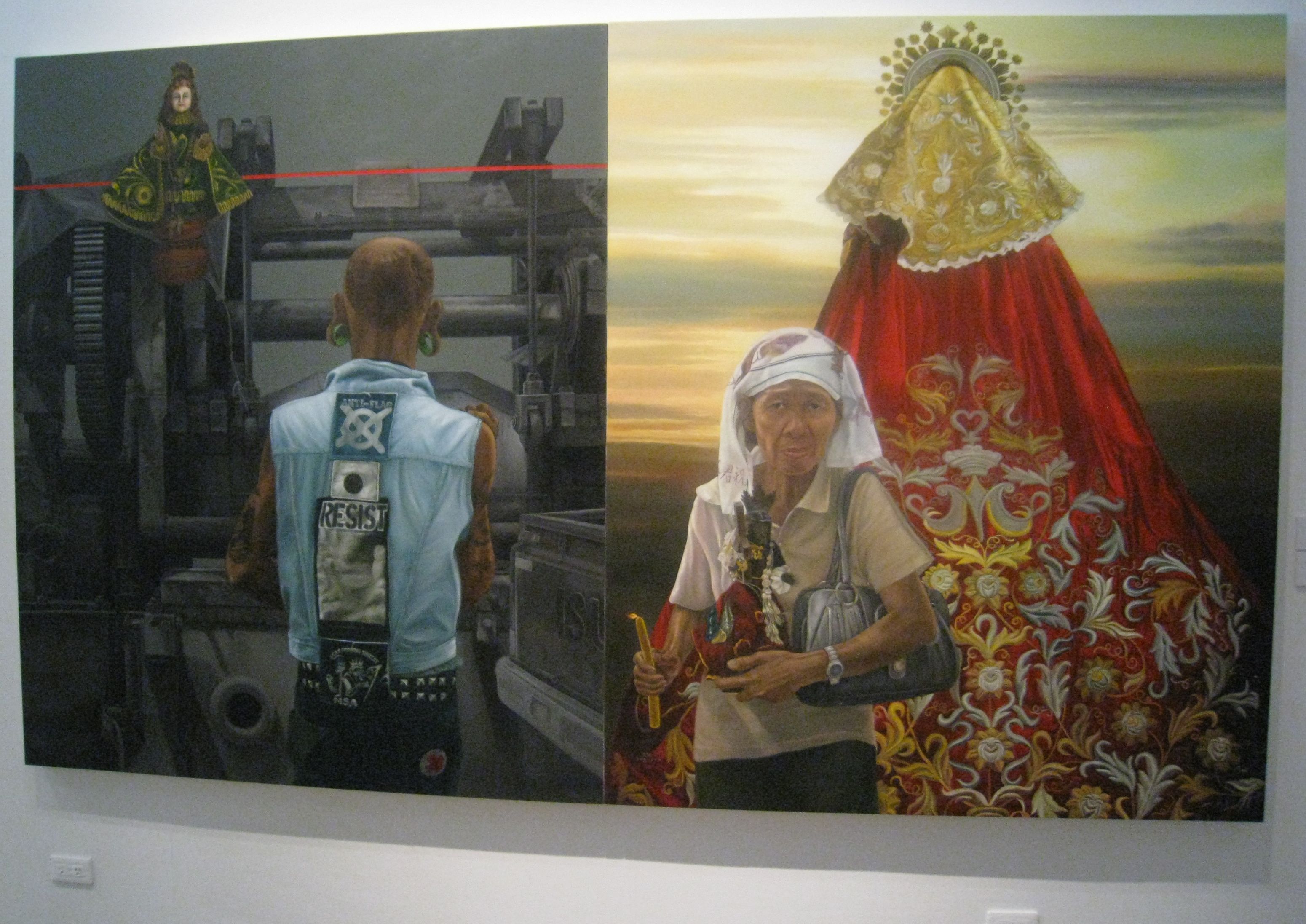
My only complaint about the Pablo Baensantos piece, Labor and Monkey Business, on monkeys as politicians (or are the politicians monkeys?) swinging from an LRT station is that it was mounted high on the wall; too high to get a good view of its details. Fortunately, you do not encounter the same problem with Renato Habulan’s Liwanag 1. You can relish every tattoo on his skinhead’s sinewy arm .
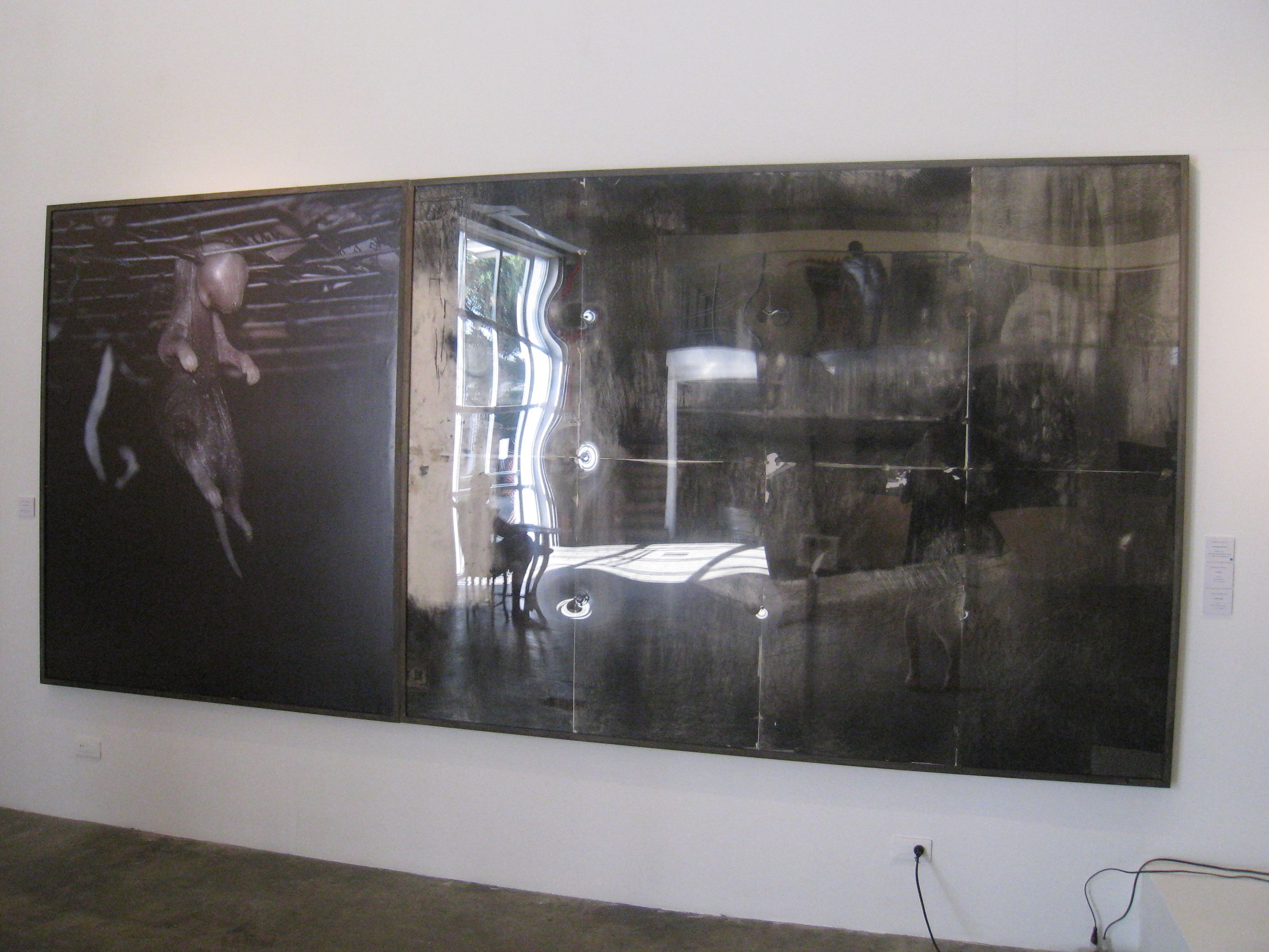
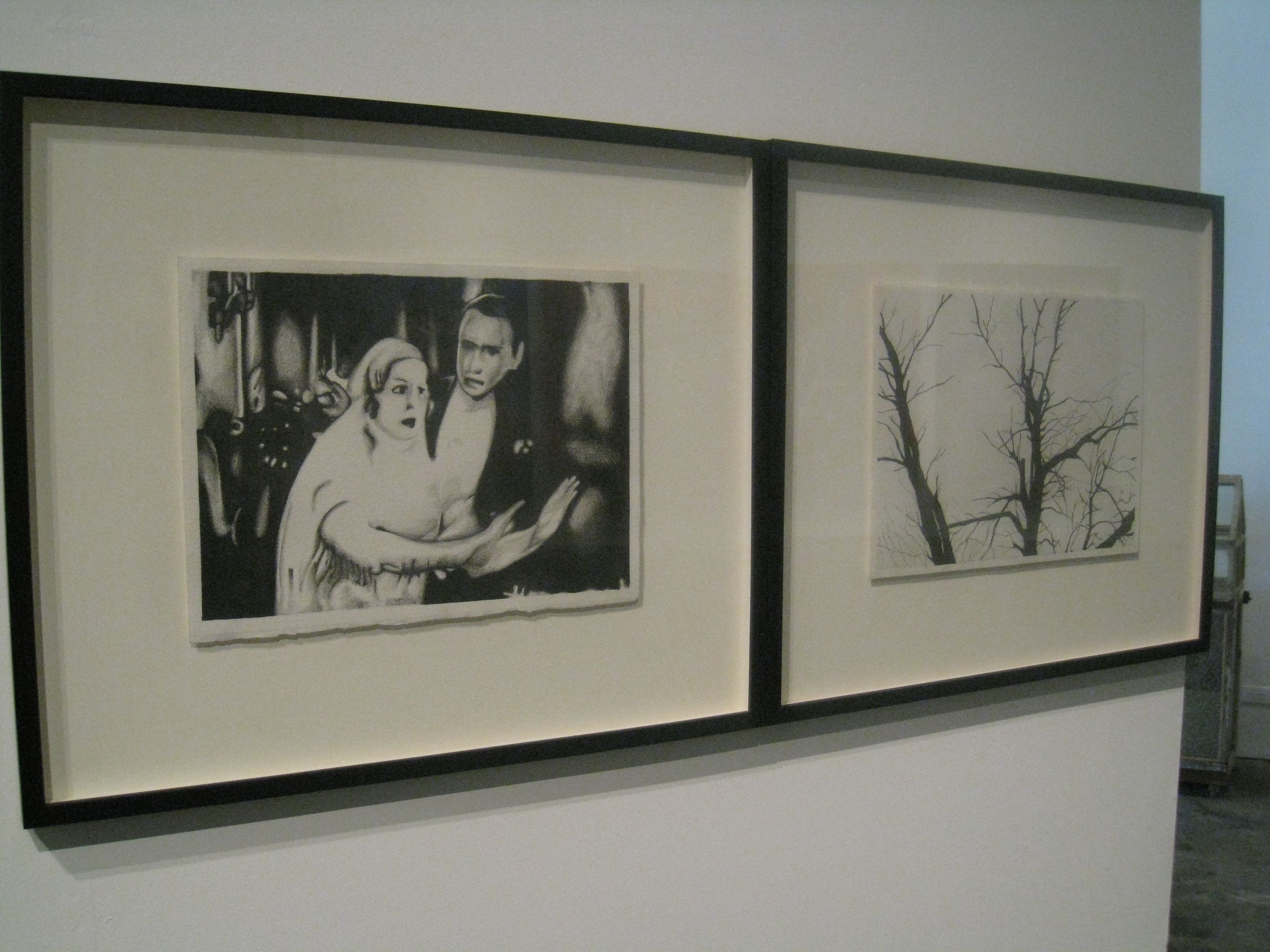
Cos Zicarelli’s two works on paper seem like movie stills to me. From Bogie: “Iggy Rodriguez’s painting is about the powerful moloch lording over the destruction of the small and weak. Buen Calubayan presents a cycle of death, consumption, and tribute with his images of dead laboratory mice, wakes, and a video of a boa constrictor devouring another mouse.”
In YouTubia, you get a blend of the traditional and the more contemporary, various interpretations that somehow gel into a satisfying mix. SR moves on.
YOUTubia New Works, Effigies, and Videoke runs from 8 April to 2 May 2010 at the Finale Art File, Warehouse 17, La Fuerza Compound, 2241 Pasong Tamo (Chino Roces Ave.), Makati. Phone (632) 813-2310 or visit http://www.finaleartfile.com
http://www.youtube.com/watch?v=ZVuf6cz–So

Bryan Quesada Separates Shadows
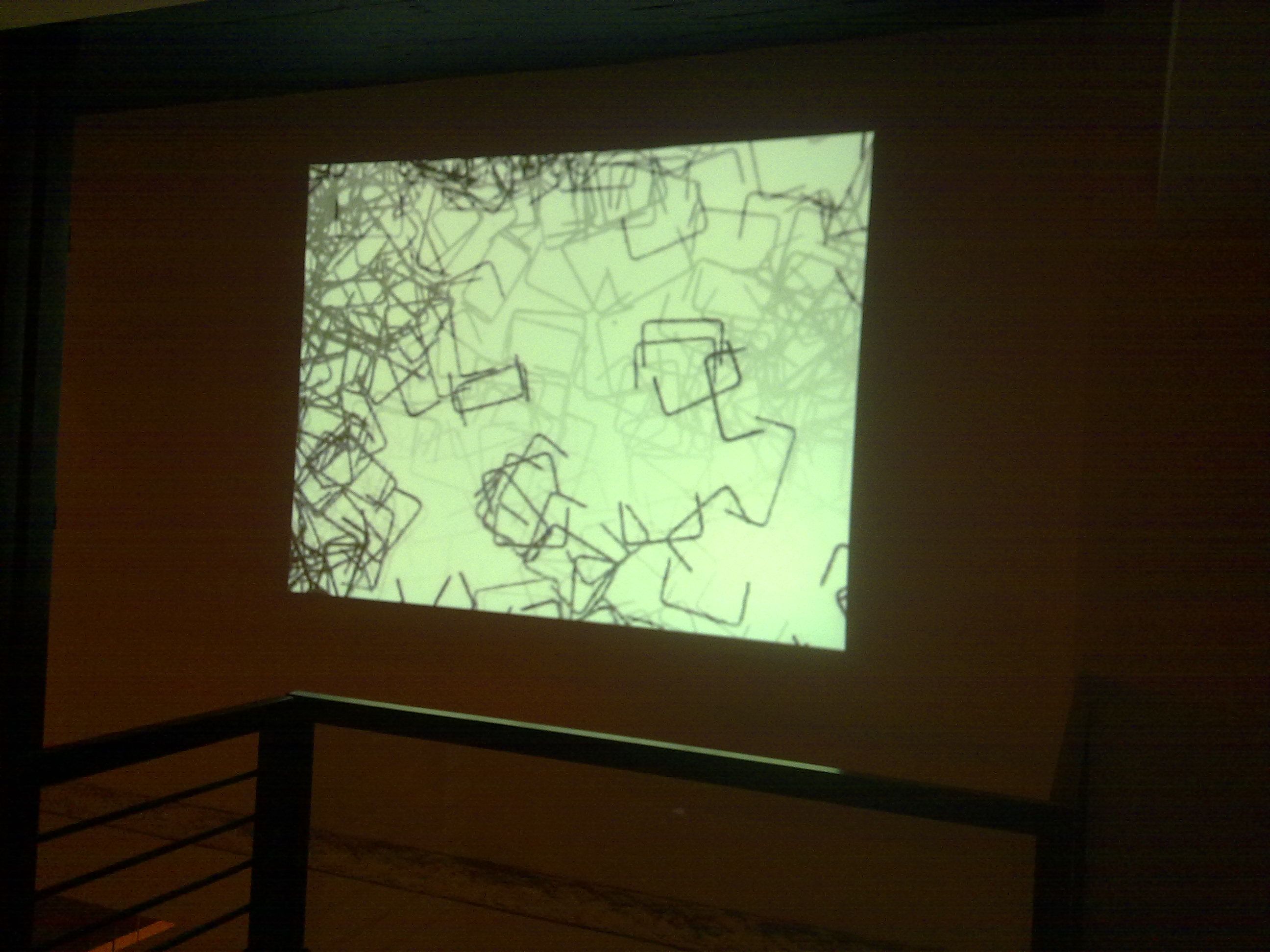
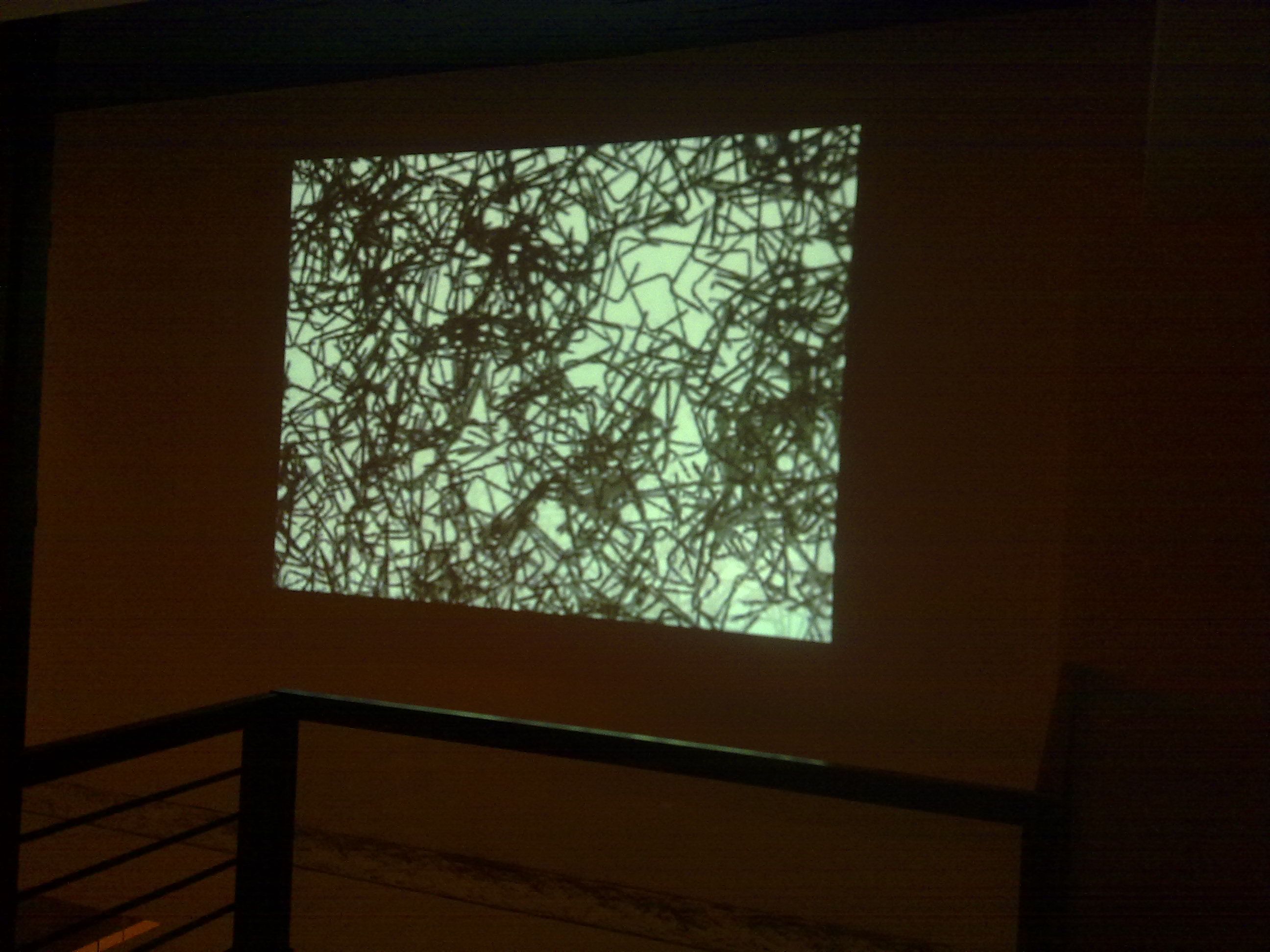
If you happen to be around for lunch or happy hour at the Picasso Boutique Serviced Residences in Salcedo Village, make it a point to hang out in the lobby. Twice a day, the double-story wall opposite the hotel’s reception desk turns into the screen for viewing an engaging video by Bryan Quesada. The piece first came out in 2007 as part of Bryan’s first solo show, Pagtatagpi, at the Cultural Center of the Philippines. Here he reprises Act 1: Separating Shadows/ One Channel Video/ Six Minutes.
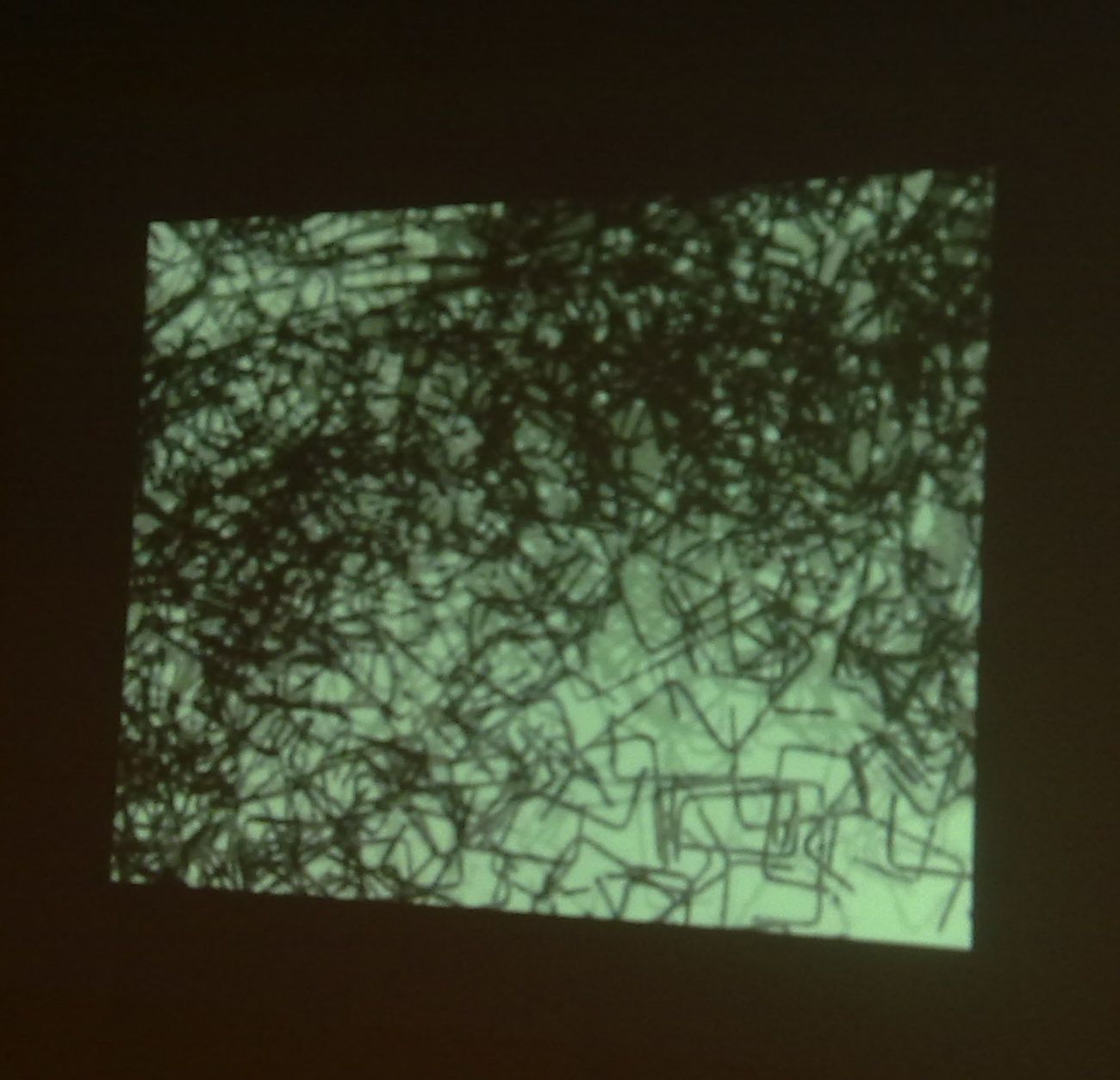
At first I thought the piece made a loop of the spastic images that we see at the end of old movies. You know, the portion right before the spool of film ends abruptly. Or that, perhaps, he had recorded scribbles from a black ball point pen. It turns out, Bryan’s piece uses kilos of staples, both used and unused wires, that he has been collecting since 2002. He put these images together in the manner of an animated film. Knowing what you are looking at adds an extra dimension to enjoying the video.
I have to admit, I know zilch about creating short films. All that matters is that I like the finished piece. If you add to the mix the extra bit of finding good art in a pretty unique space, then Bryan’s piece delivers quite an interesting experience.
The 30-year -old film major is currently undertaking some graduate courses in the UP College of Fine Arts. Bryan Quesada seems to bear watching.
Act 1: Separating Shadows/ One Channel Video/ Six Minutes plays at the Lobby area of the Picasso Boutique Service Residences until 17 May 2010, 119 Leviste St., Salcedo Village, Makati City. Phone (632) 828-4774 or visit http://www.picassomakati.com or http://www.artcabinetphilippines.com
http://www.youtube.com/watch?v=EOyQ9p5FxQ4