Maxine Syjuco Reconstructs Constructions

When cross-disciplinary artist Maxine Syjuco started conceptualizing her piece, She May After Drinking You Sink Quickly Or
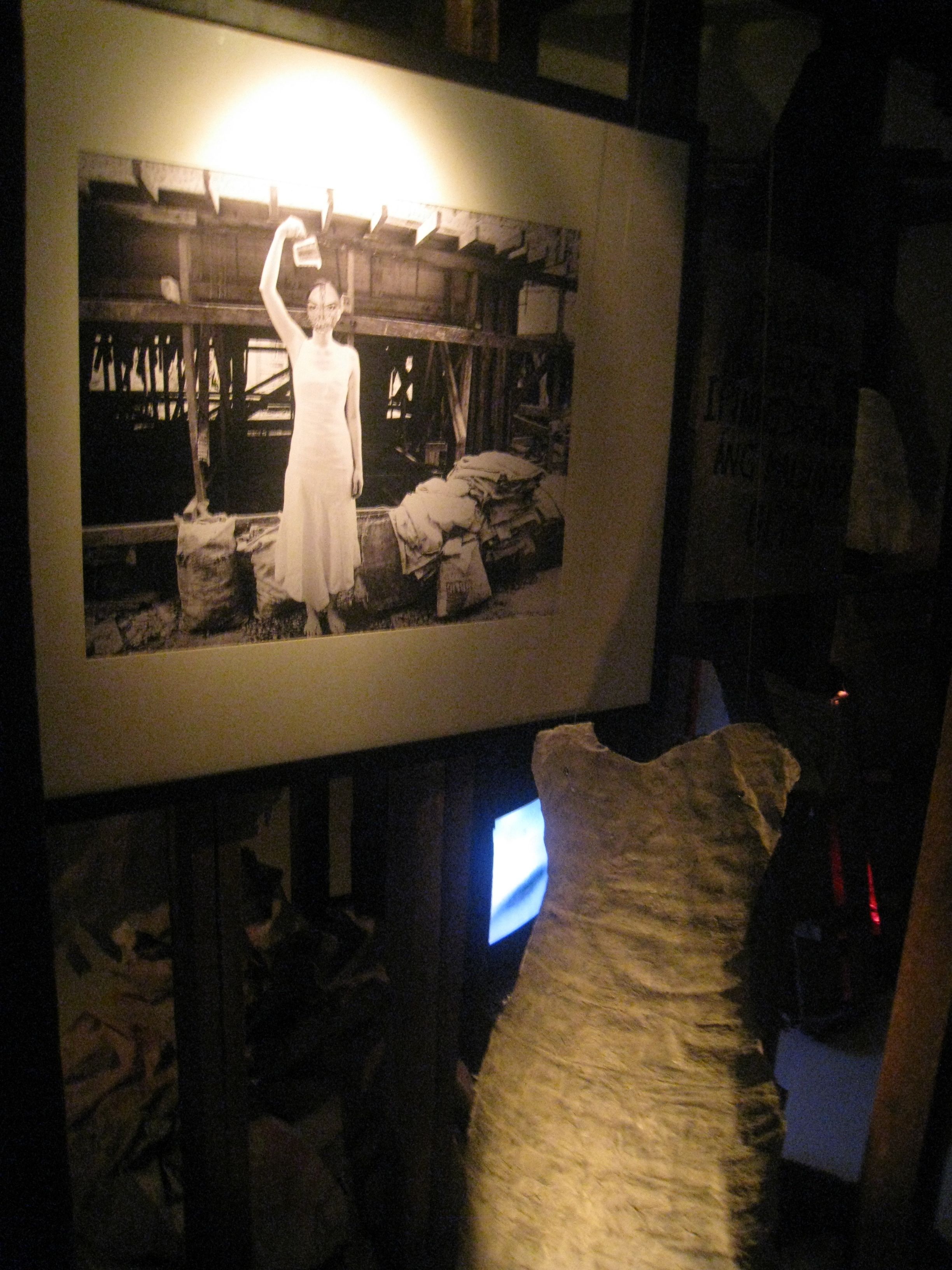
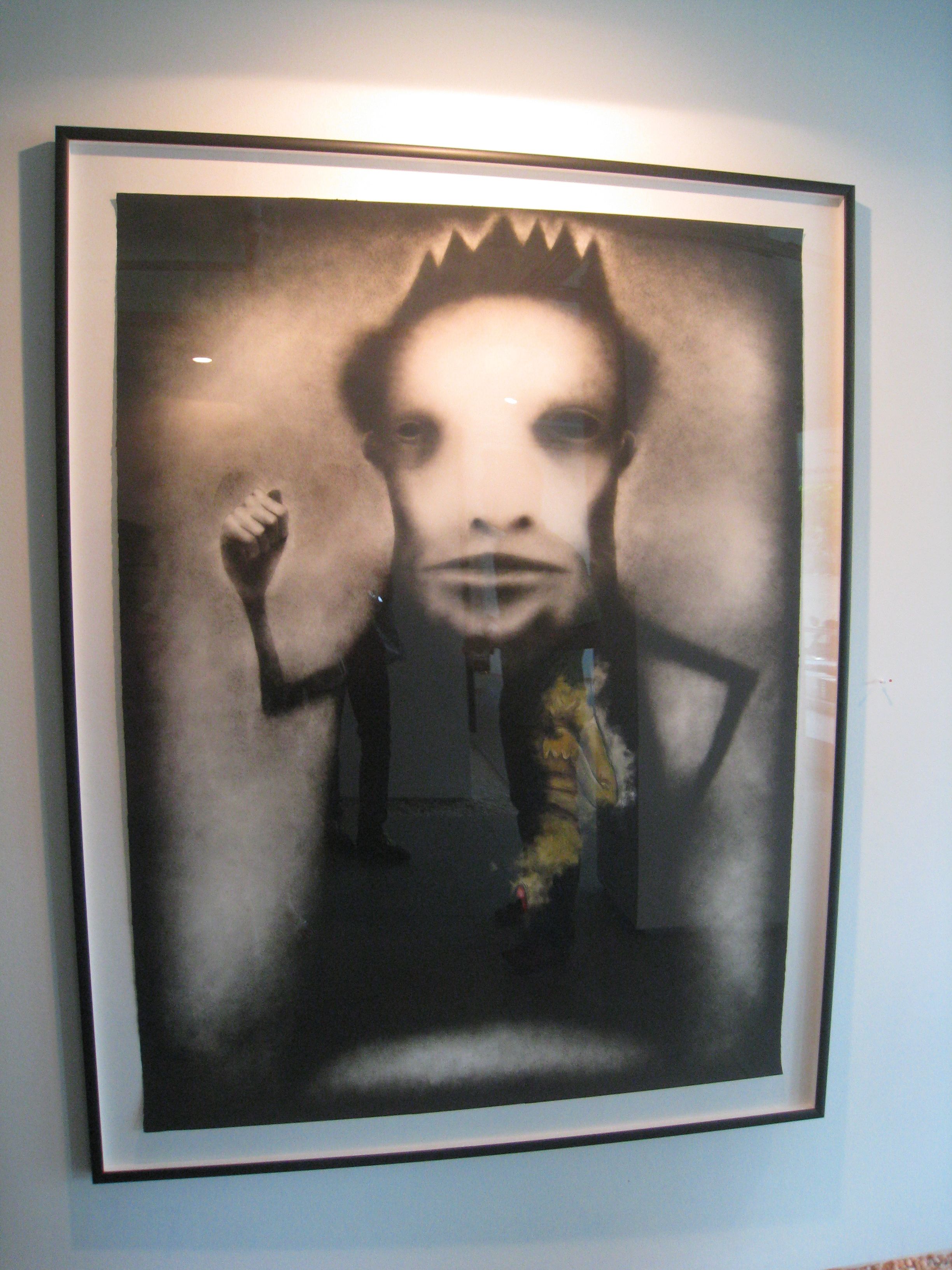
Maxine Syjuco, performance photo collage and papier mache dress from her installation, " She May After Drinking You Sink Quickly And Drown"

Drown, she shuttled between two construction sites.  Outside her bedroom window she would track the progress, and hear the inevitable noises, that came with building a small structure, one that would eventually house a studio for her parents, artists Cesare and Jean Marie Syjuco.  At the same time, the space that had been earmarked for her work, what had just been designated as the new gallery space of The Picasso Boutique Serviced Residences, was also in the process of being refitted.  It would open just in time for the Syjuco family’s exhibit at the hotel.
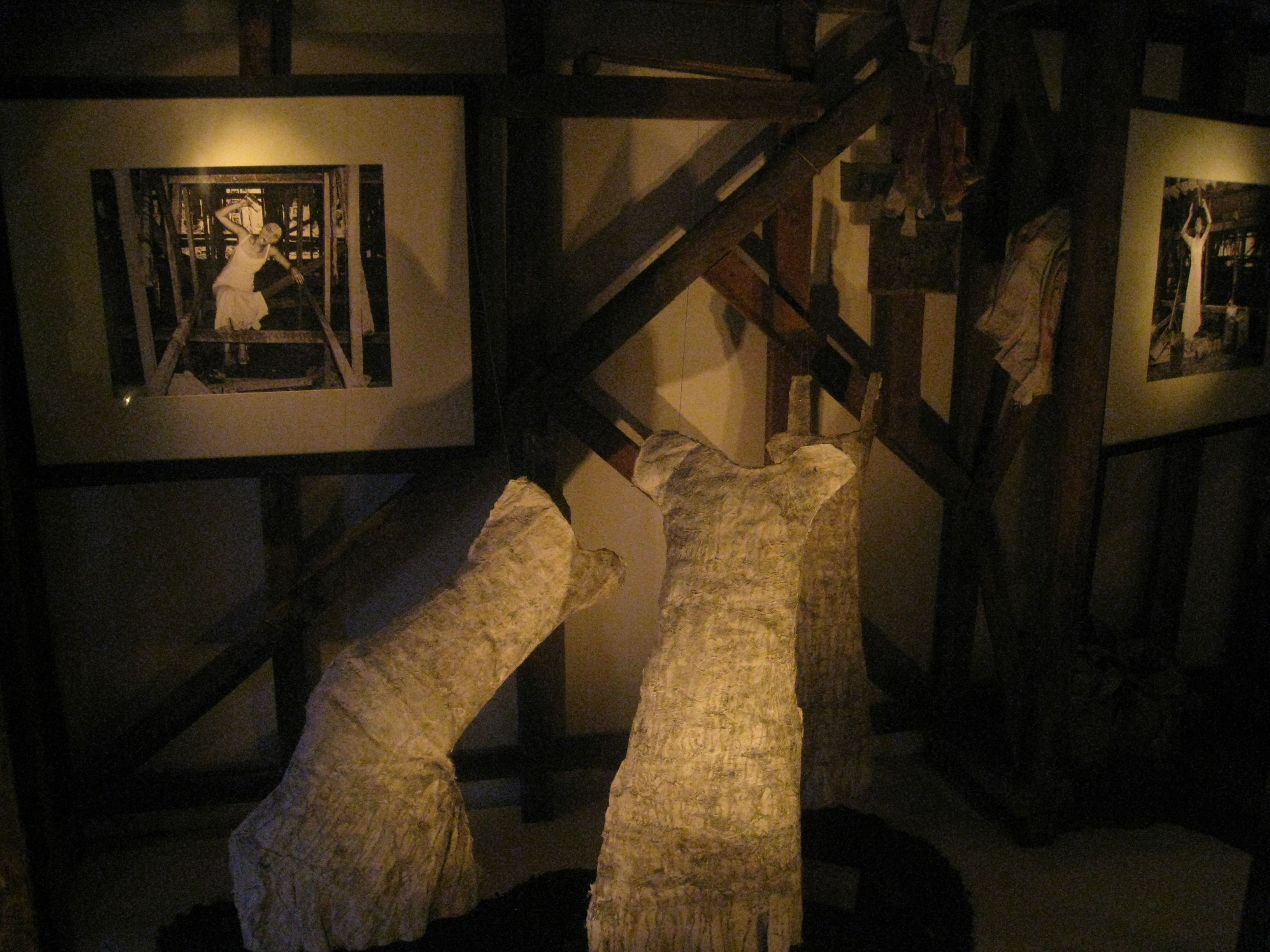
By Maxine Syjuco

Maxine’s installation recreates the construction site of her parents’ studio inside the newly opened gallery.  She uses it as remembrance to both what the gallery space had just gone through, and what had been a constant presence in the vicinity of her personal space.  She recycles materials salvaged from the site in her home and transforms them, thereby reflecting and continuing the creative process that went on before in both places.

Waste materials have been given new life:  the coco-timber used for the studio’s scaffolding has been reused here; they form
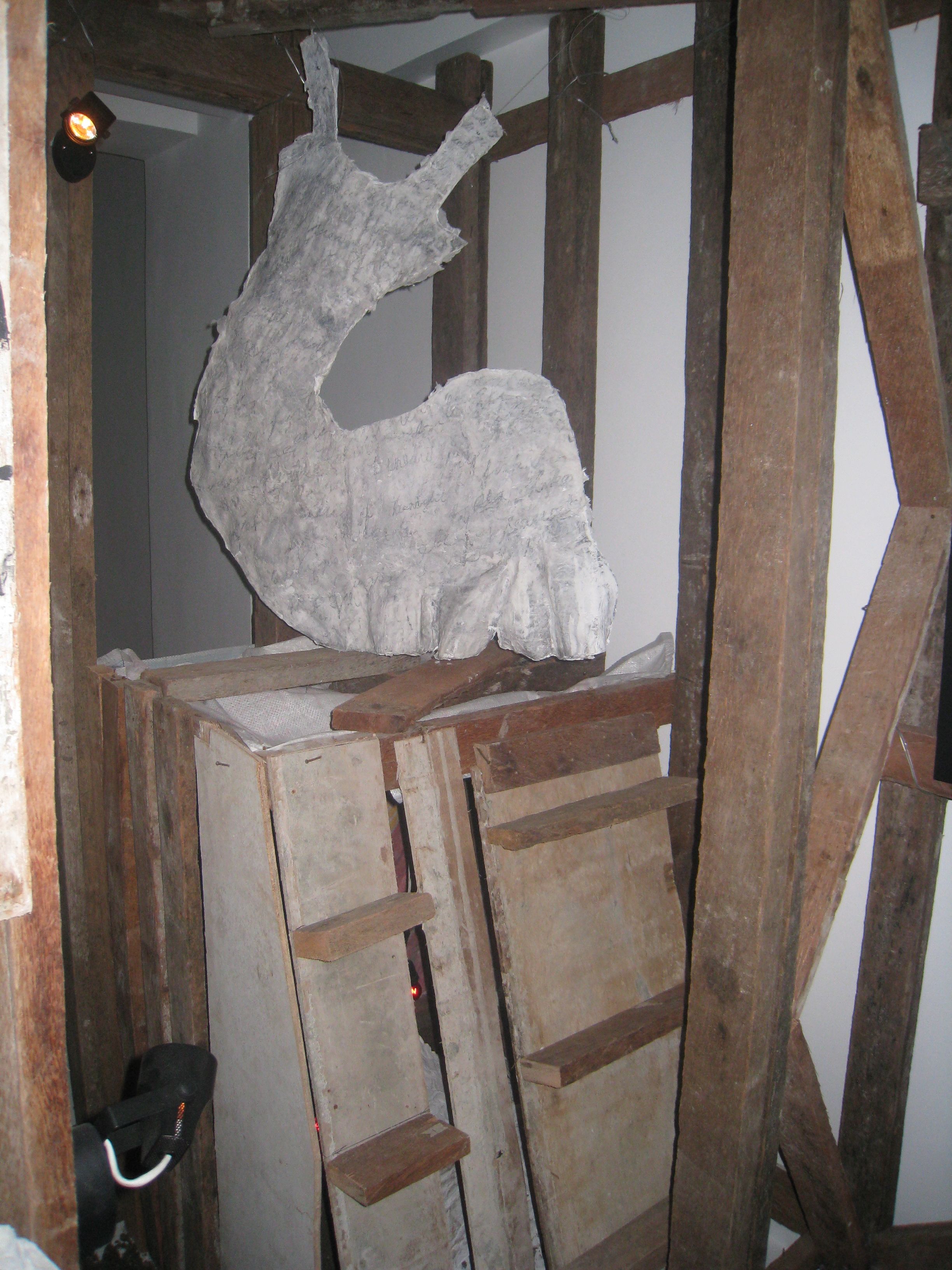
By Maxine Syjuco

the structure that anchors the entire piece.  Maxine fabricated long and flowy dresses from the paper sacks that had contained gravel and cement.  She finishes these dresses by scribbling lines from her poems that she had previously

By Maxine Syjuco

rejected as not being good enough.

Maxine hangs several photographs within her interactive piece.  She describes these black and white pieces as recycled artworks.  To put them together, she started off with old photographs of her performance pieces salvaged from albums that had been damaged by flood.  She took new photos of these damaged photos, and then superimposed them on new photographs taken of the construction site.  It is from these images of herself that the patterns of the papier mache dresses have been taken from.
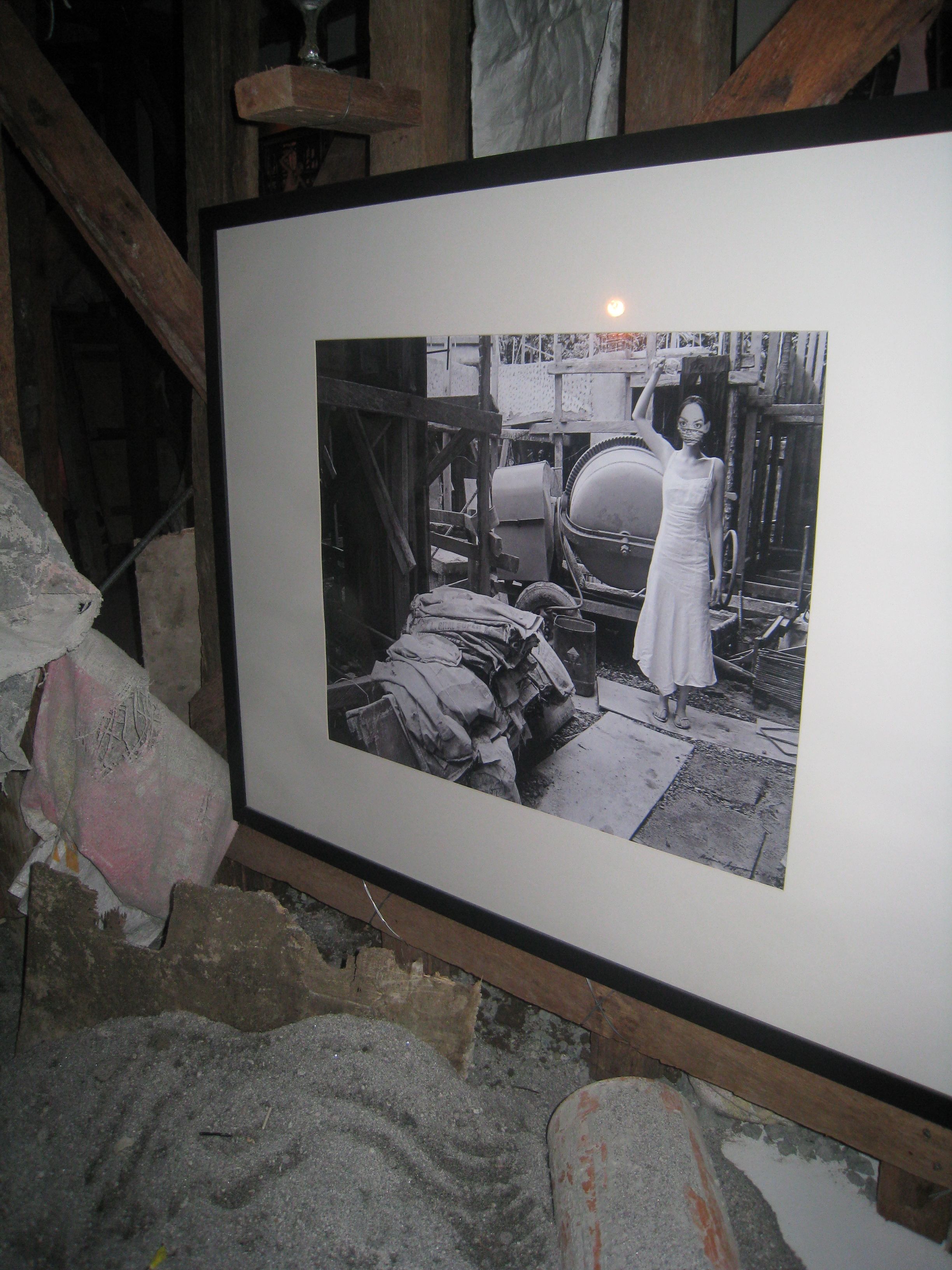
Photo collage from Maxine Syjuco

The title of this installation echoes the process that these photographs had gone through. Previously drowned photos have been drowned again in the process of redeveloping them.

Maxine’s artist statement injects a tribute to the overseas worker within the piece.  I thought that added  unnecessary complexity to a piece that already contains so much food for thought.  On its own, it already delivers a visual punch.
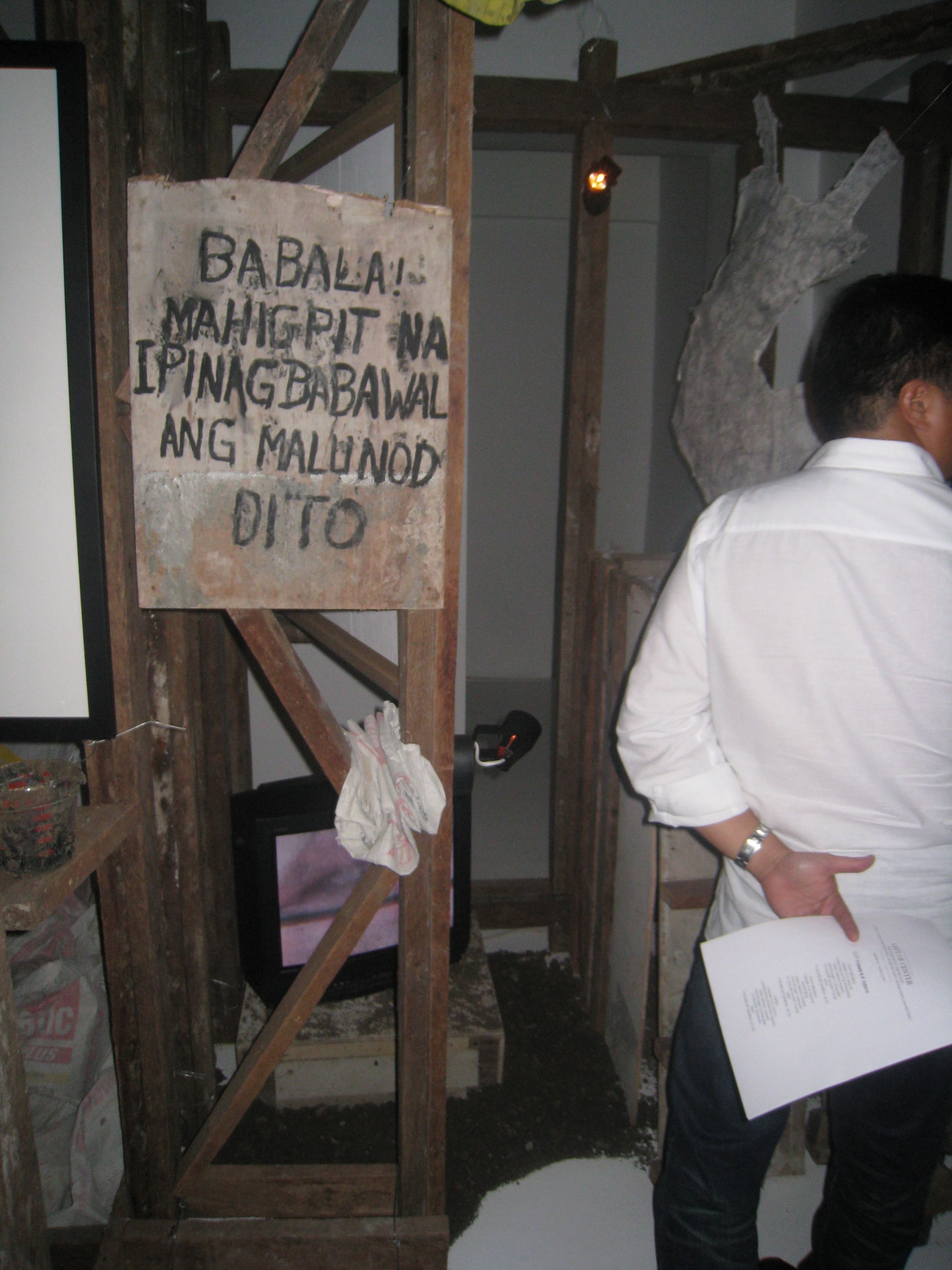
Inside Maxine Syjuco's installation

The Syjuco family exhibit, Left of Center, is spread out over all the public areas of the hotel.  The photo collages of patriarch Cesare, with its hilarious lines and witty images, grace the hotel’s entrance and lobby, as well as the elevator lobbies of all floors.  Jean Marie has an installation piece at the lounge area. Also at the main lobby, by the elevators, Michelline Syjuco resurrects her embellished wooden horse from the 2009 Sungduan exhibit at the National Museum. It is her commentary on globalization as a Trojan horse for developing countries.  Trixie’s (Beatrix) video plays on the second floor lobby’s main wall.

Maxine and Michelline Syjuco

While Maxine’s piece is undoubtedly the major work in this exhibit, you can’t help but imbibe the creative energy of this talented family. They often work together, and it shows in how their pieces gel.  Their household must be so much fun!

At the main lobby, Cesare AX Syjuco, "Weird Birds"

Left Of Center with Cesare A.X. Syjuco, Jean Marie Syjuco, Michelline Syjuco, Maxine Syjuco, and Beatrix Syjuco  runs from 24 September to 24 October 2010 at The Picasso Boutique Serviced Residences, 119 LP Leviste St., Makati City, Philippines.  Phone (632) 828-4774 or visit http://www.picassomakati.com or http://www.artcabinetphilippines.com
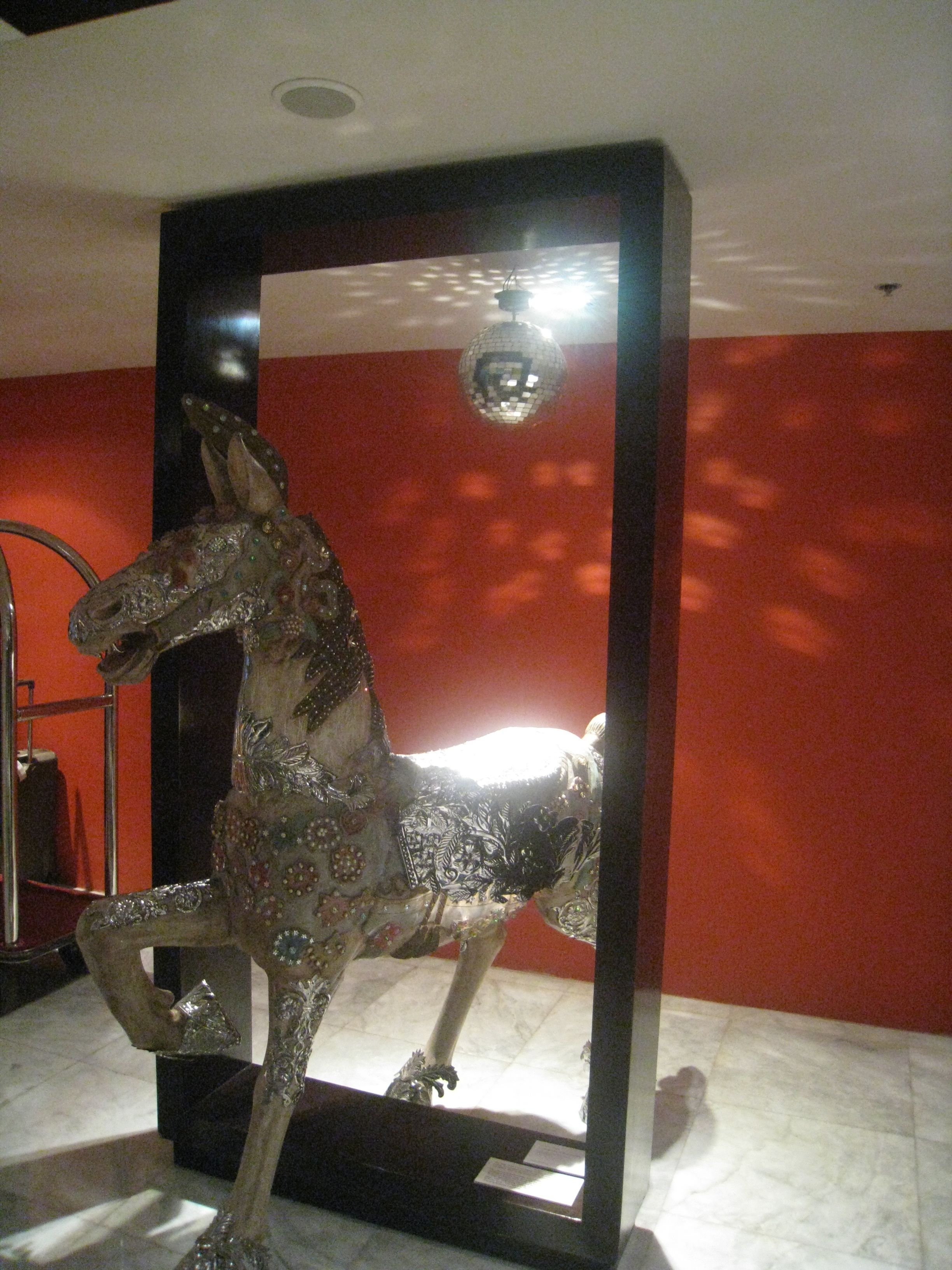
Michelline Syjuco, "Globalization: A Trojan Horse"

Maxine Syjuco, "Self Portraits"

http://www.youtube.com/watch?v=Fw0gIXtrhnY


Happy Landings With Lena Cobangbang

Lena Cobangbang, "A Thousand, A Thousand, A Thousand...(Schema After Rilke)"

The appeal of Lena Cobangbang’s show, Velvet Landings, now on its last few days at MO Space in Bonifacio High Street, comes from its quirkiness.  What strikes me as various tableaux lie spread out over the gallery’s main space, each scene set atop a rectangular light brown carpet.  They all possess the appearance of grade school art projects—raw and handmade, the antithesis of the slick and sleek industrial pieces produced in the workshops of say, Damien Hirst and Jeff Koons.  You see the humor in the construction of Lena’s pieces, in her use of

Lena Cobangbang, "A Cloud That's Flat of Angles"

accessible materials, readily available from National Bookstore.

What does not become apparent until you read the notes provided by the gallery is that they pertain to landings.  Sort of.  A Thousand, A Thousand, A Thousand…(Schema After Rilke) takes inspiration from the poem by Rainer Maria Rilke that describes a panther trapped in a cage.  Lena has camouflaged a stuffed panther in orange and green felt strips, cut to simulate grass.  When ready to pounce, a panther lands quick and quiet on its feet.

Lena Cobangbang, "The Speed of the Last Clap"

A lightning bolt strikes down a floppy harlequin in The Speed Of The Last Clap, metaphor for a joke that falls flat.  In A Cloud That’s Flat Of Angles, you see the figure of a beast scorched on the carpet, as if it had been squashed and has left its imprint.

I can’t pretend to understand all of Lena’s work.  I don’t really know how the colored felt strips (the same ones used to cover the panther) scattered to spell out “Pantera” in The Art Of Shredding fits in.  Or even Woolwood, where she rolled up one of the

Lena Cobangbang, "The Art of Sh/r/edding"

carpets to simulate a felled log with a small growth of greens.  For Ravishing Colossus, installed inside the gallery’s small room, she worked with wax drips to put together a group of cone shapes that mimicked snowcapped mountains; they emit a neon glow when hit by black lights.

Lena Cobangbang, "Revising Colossus"

I first saw Lena’s work two years ago at the 2008 Singapore Biennale (See this blog’s archives, October 2008). Terrible Landscapes documented through photographs her recreations of disaster areas using food.  Even then she had built miniature tableaux using everyday materials in a most unexpected manner:  parsley sprigs turned into foliage, slices of blue cheese stood in for wrecked homes.  Just as it was for those pieces, what registers with Lena’s newest work is her departure from the usual art exhibit offerings—kooky, but definitely not boring.

Lena Cobangbang, "Woolwood"

Velvet Landings runs until 26 September 2010 at MOs Space, Bonifacio High Street, Taguig.  Phone (632) 856-2748 or visit http://www.mo-space.net

http://www.youtube.com/watch?v=ugIDse_hv0o


Troy Ignacio Scratches Beneath The Surface

On some days, Troy Ignacio sits on a park bench at the center of Makati, an unobtrusive observer of the people around him .  He

Troy Ignacio, "Da King", oil on paper, 5ft x 4ft

quietly sketches what he sees.  It could be the working stiff laughing loudly at some unknown joke or a lady scurrying to complete an errand.  Like all kibitzers, he wonders at the stories that each person carries beneath their visages.  What secrets do their frames contain? Continue reading


Reconstructions from Bea Camacho

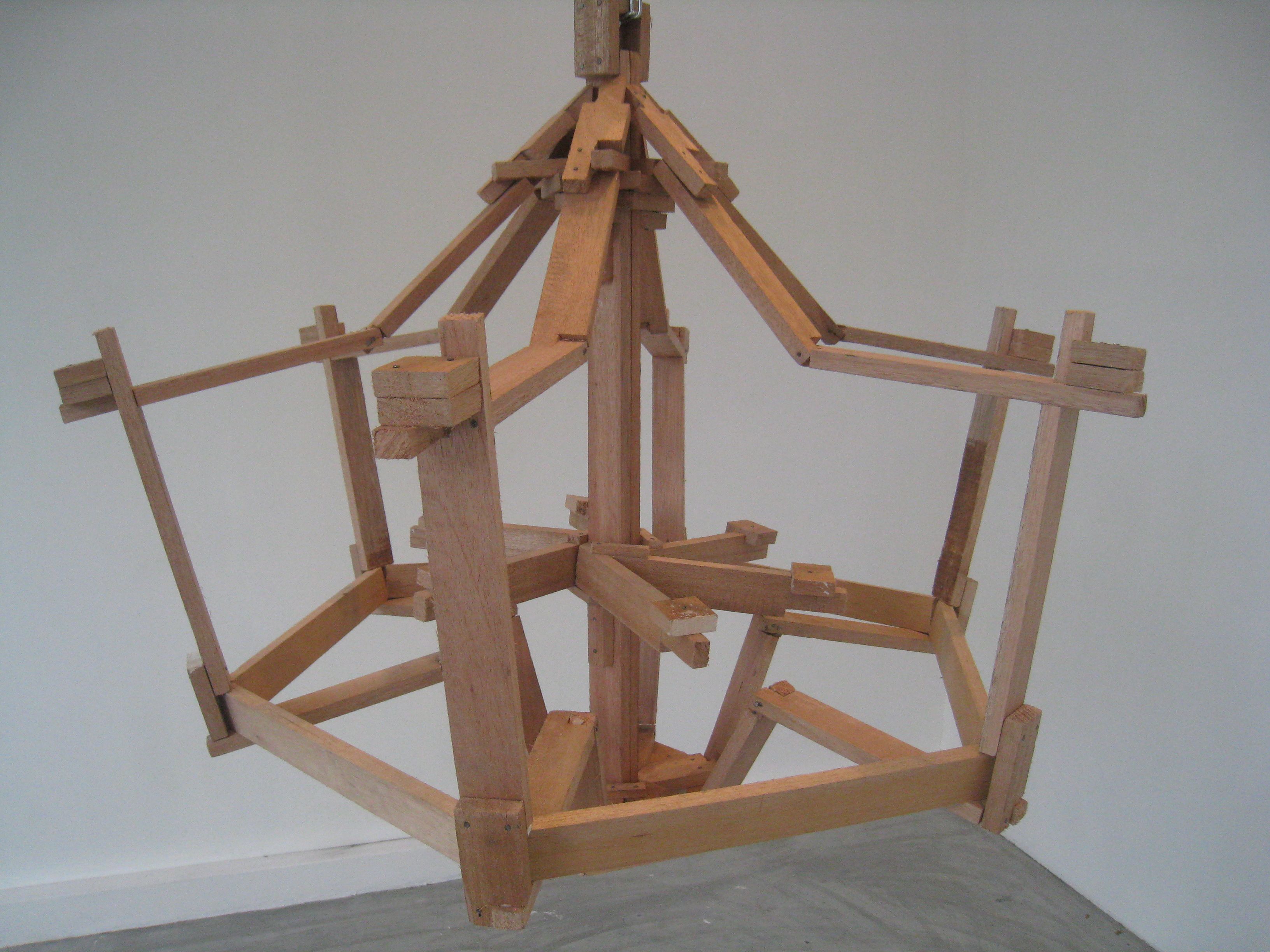
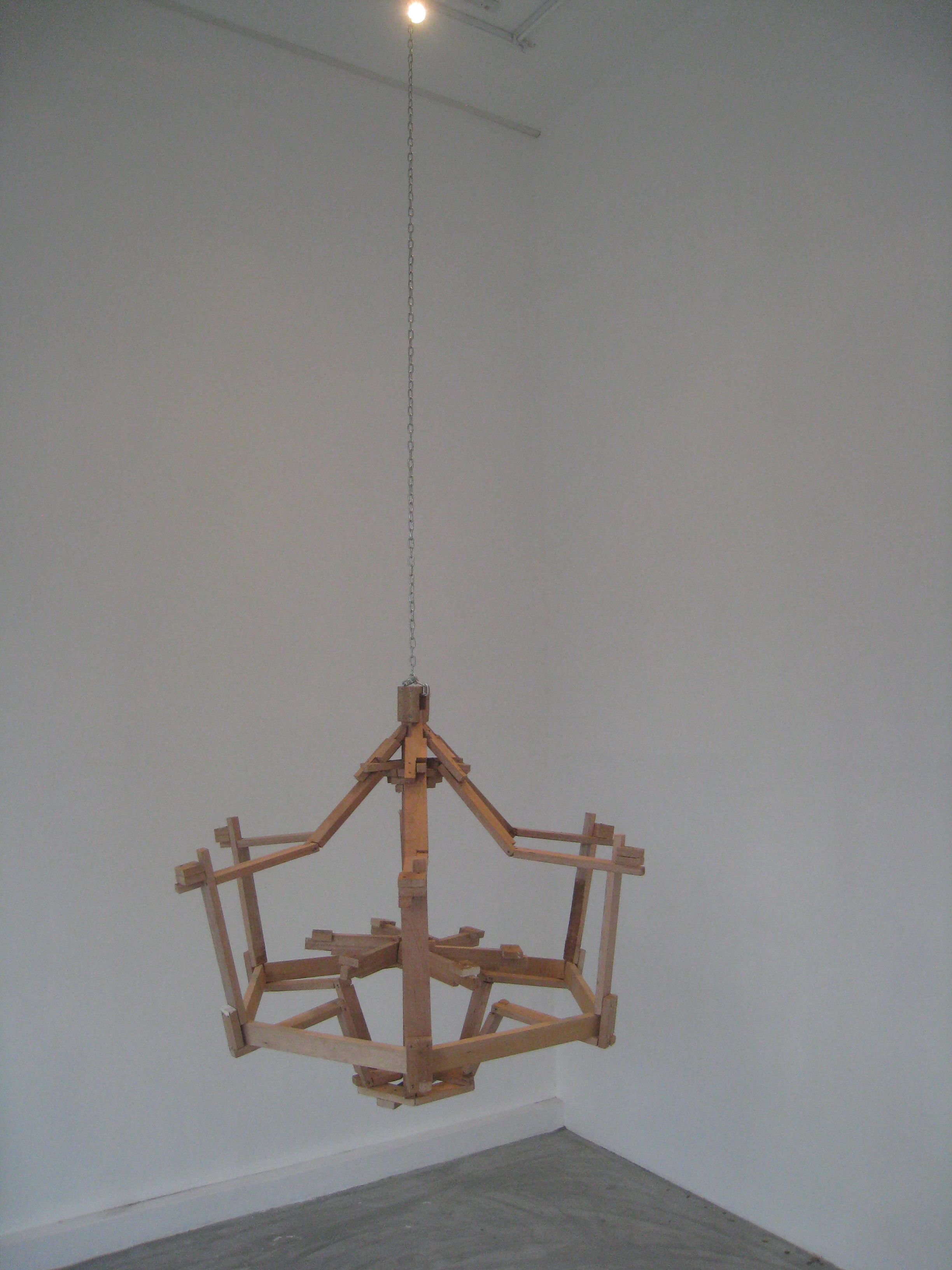
Bea Camacho's reconstruction of a chandelier

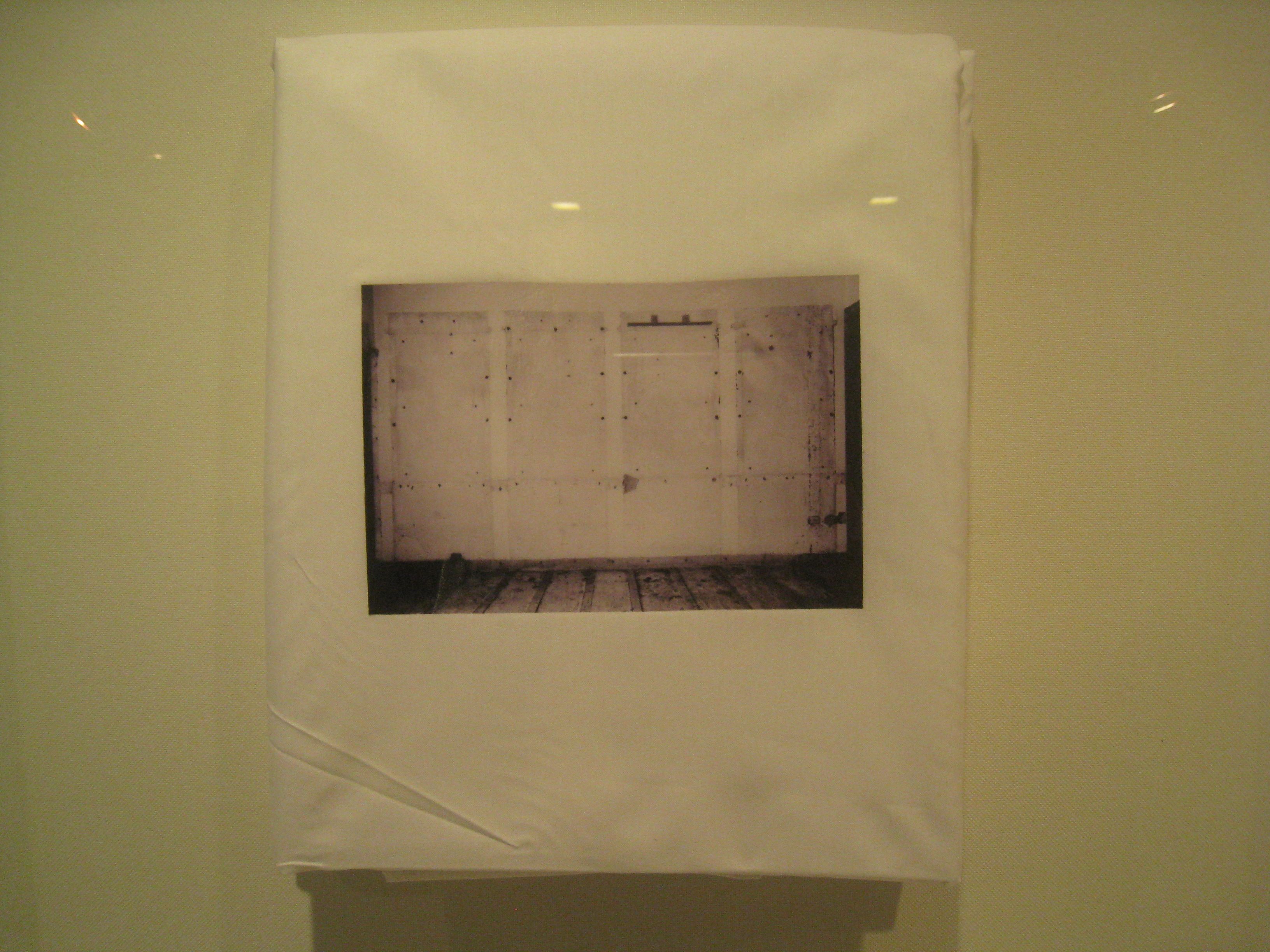
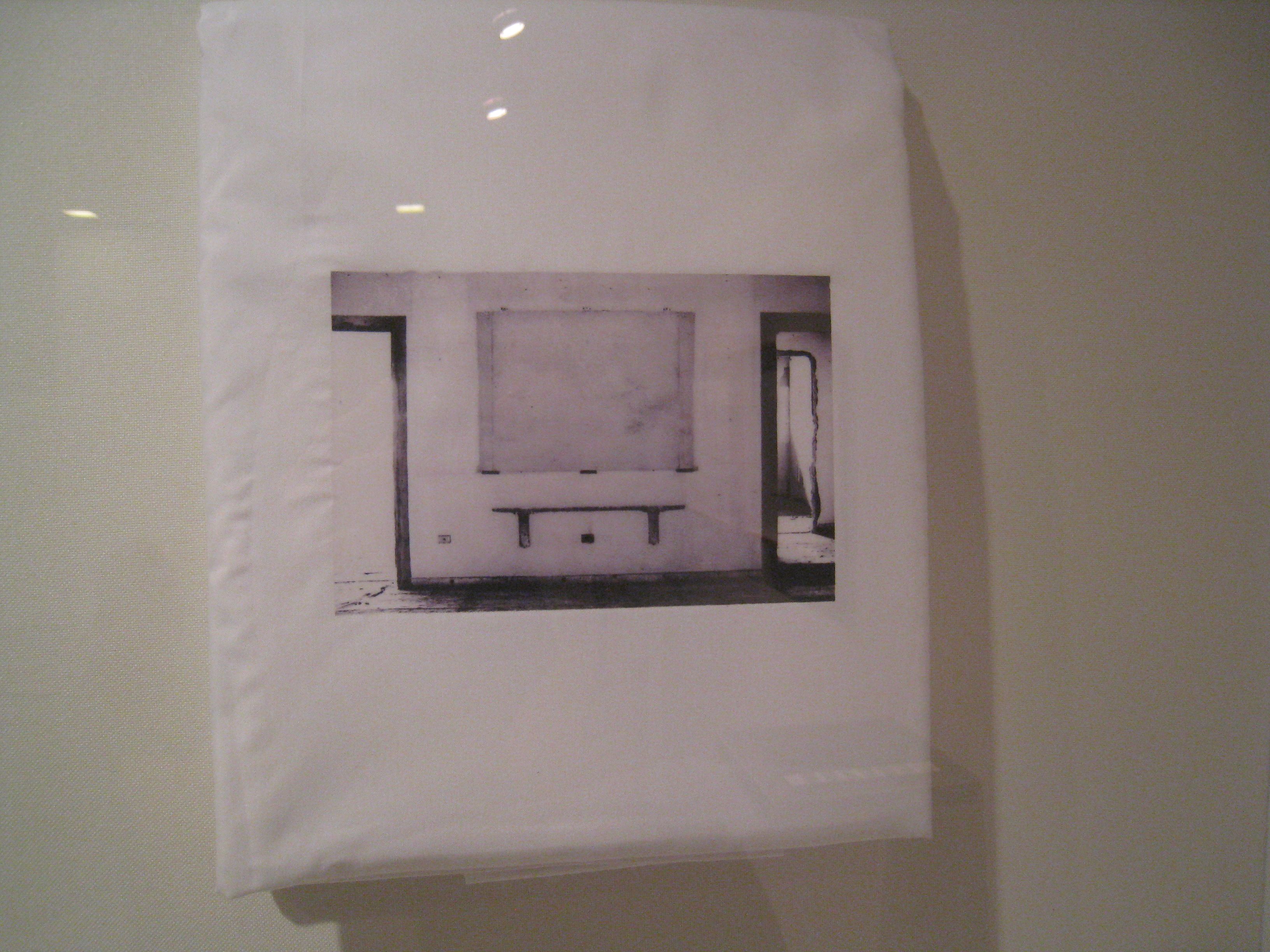
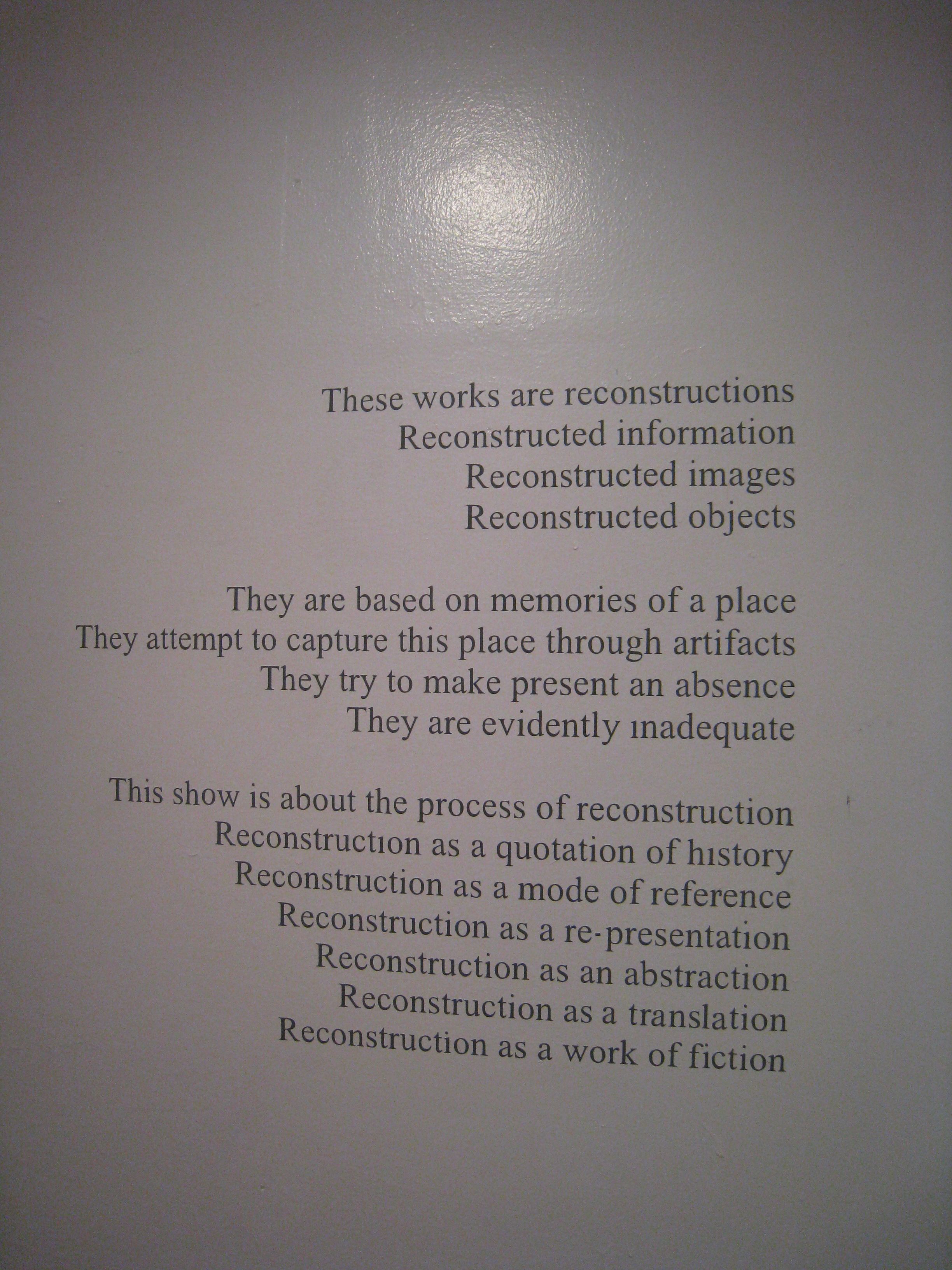
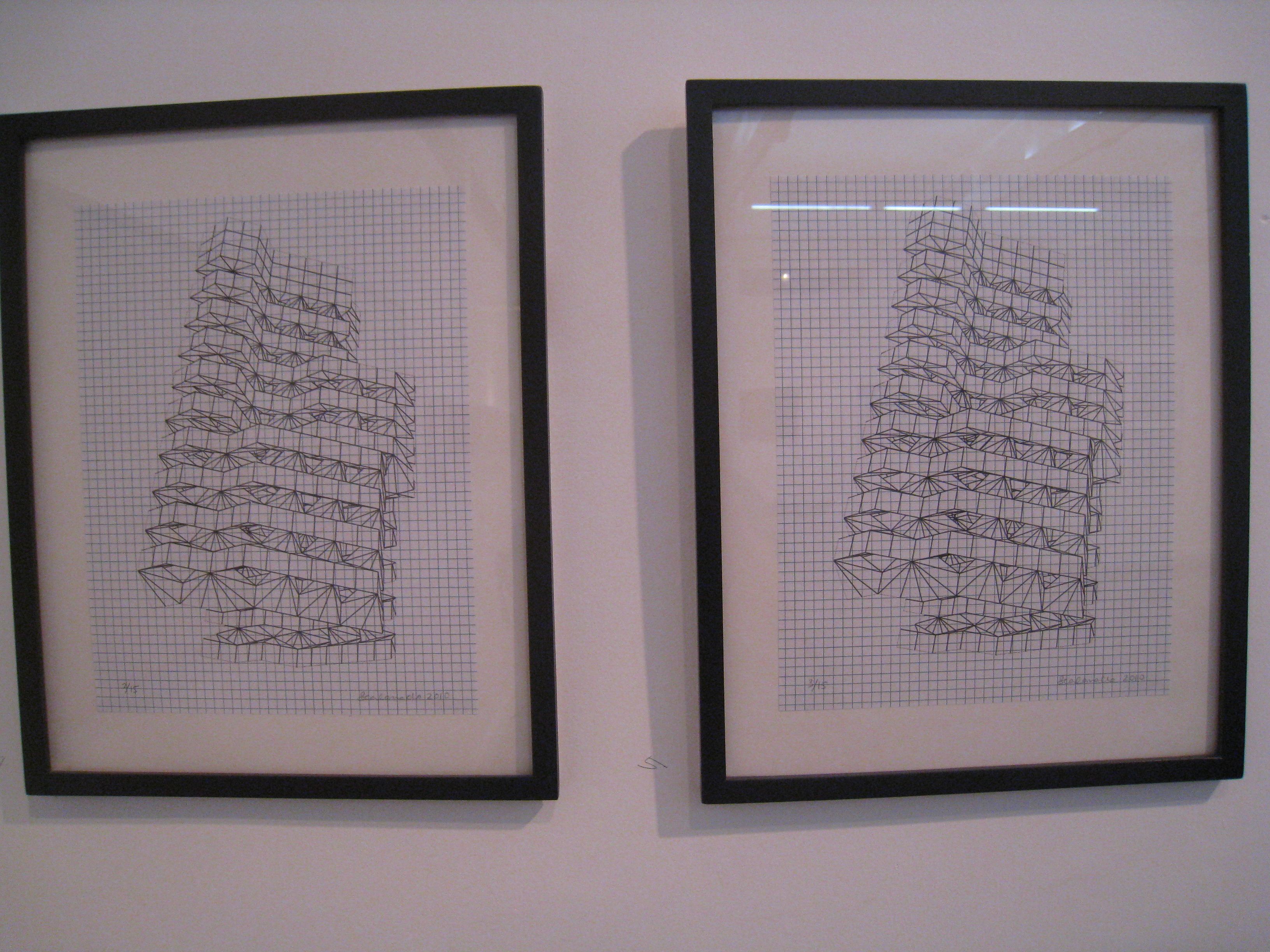
Predictably, Bea Camacho mounts a spare, austere show at Pablo.  With Standard Fiction, as she has done before, she trims off the fat and fluff, leaving the viewer with work that’s picked clean, sans whimsy, but full of content and meaning.  Bea’s work frequently culls from her family’s story, but told bereft of sentiment and emotion.  She reduces life-changing events to clinical, antiseptic, measurable units—blocks on a graph, or indentations on paper.  Here she attempts to recapture memories and impressions of their family home as it undergoes demolition and renovation. Bea presents us with the idea that once an object is destructed, attempts to reassemble it will result in another object,  not what it originally was.  Reconstruction does not give us back what we lost, but rather something else altogether.

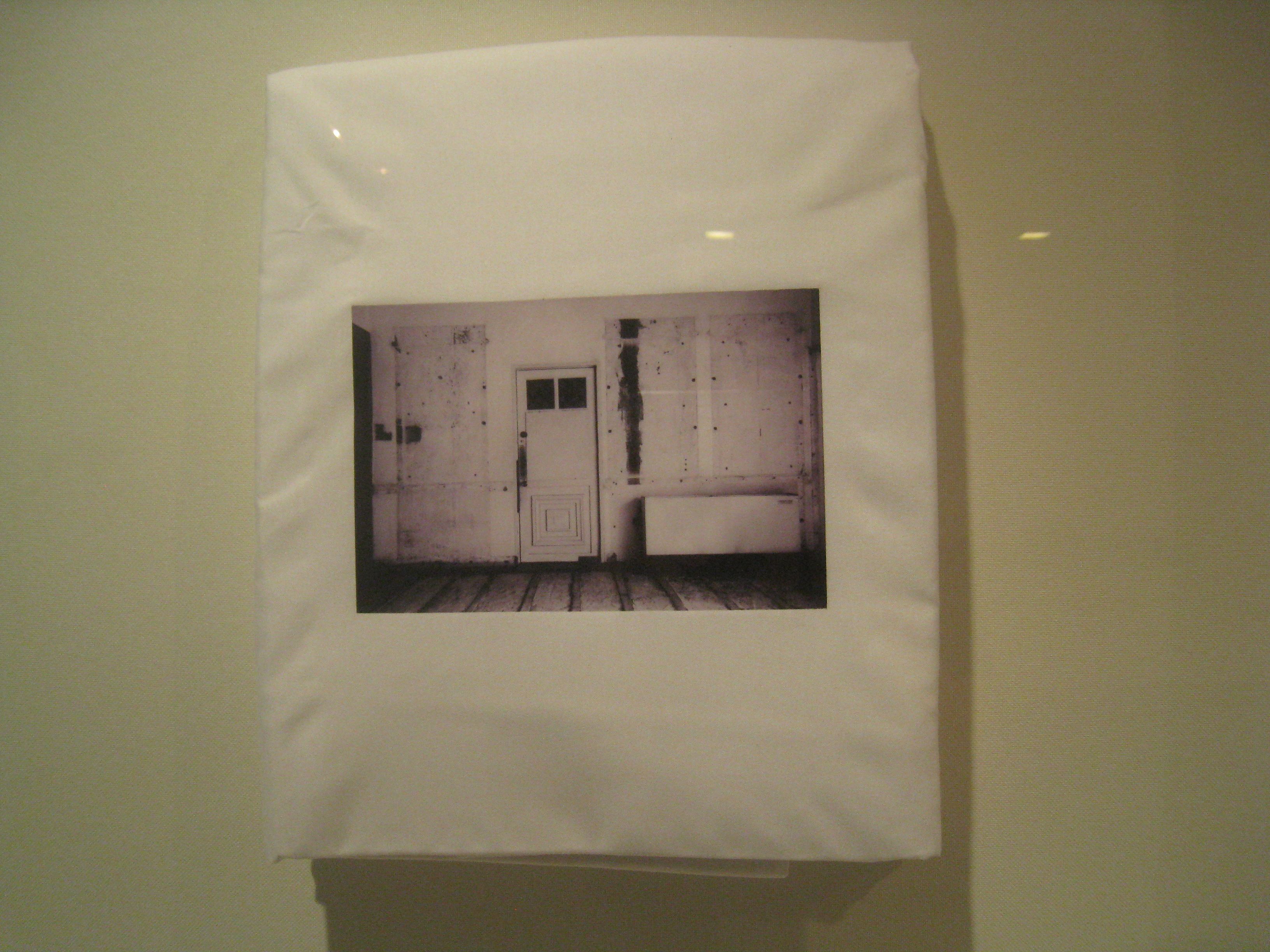
Bea Camcho reconstructs a room, photo transfer on folded bedsheet

As we enter Pablo, we are confronted with a clumsy, wooden chandelier hanging in the middle of the space.  This is the first of Bea’s reconstructions, an attempt to bring back some form of the light fixture that used to grace their home.  By choosing to remember it in another material, she leaves us with its crude facsimile.

In the gallery’s loft, she fills the walls with more reconstructions.  Bea

Another attempt to reconstruct a room, photo transfer on folded bedsheet

transfers four photographs of empty rooms onto crisp, white bedsheets.  The sheets have been folded and encased beneath glass.  The photos show four rooms stripped bare, even the fixtures that once had been nailed to its walls have been torn down.  The photos capture their outlines, mere traces of the originals.

Another photo transfer on a folded bed sheet

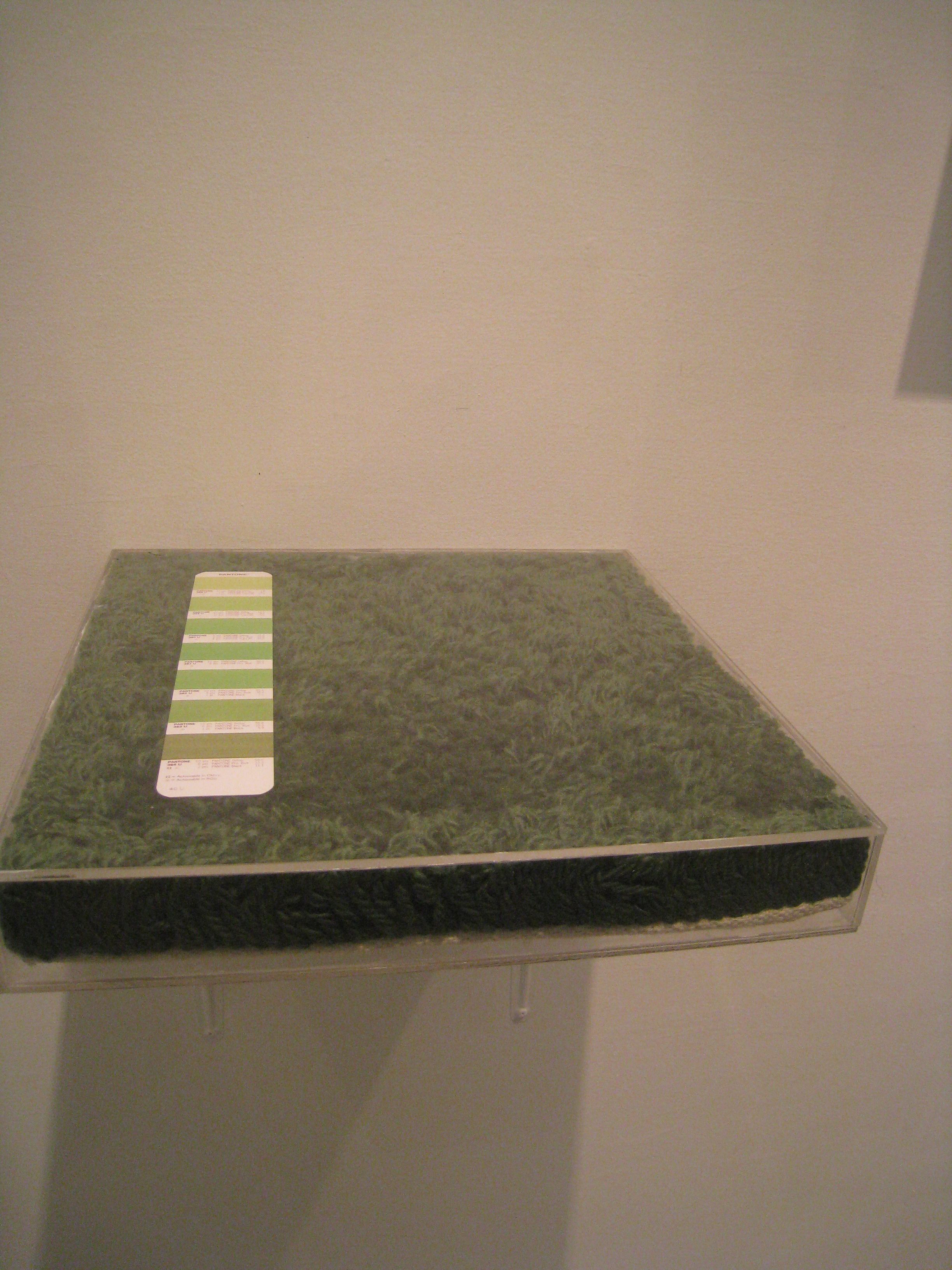
Bea underscores the impossibility of exact reconstructions in her attempt to reproduce a carpet that lingers in her memory.  She encases a forest green swatch along with a strip from a photocopied Pantone guide.  Because a  cheap photocopy from a sidewalk copier fails to translate the color faithfully, the carpet cannot be cloned.  None of the presented shades of green capture its color.

Recontstructing a carpet from memory

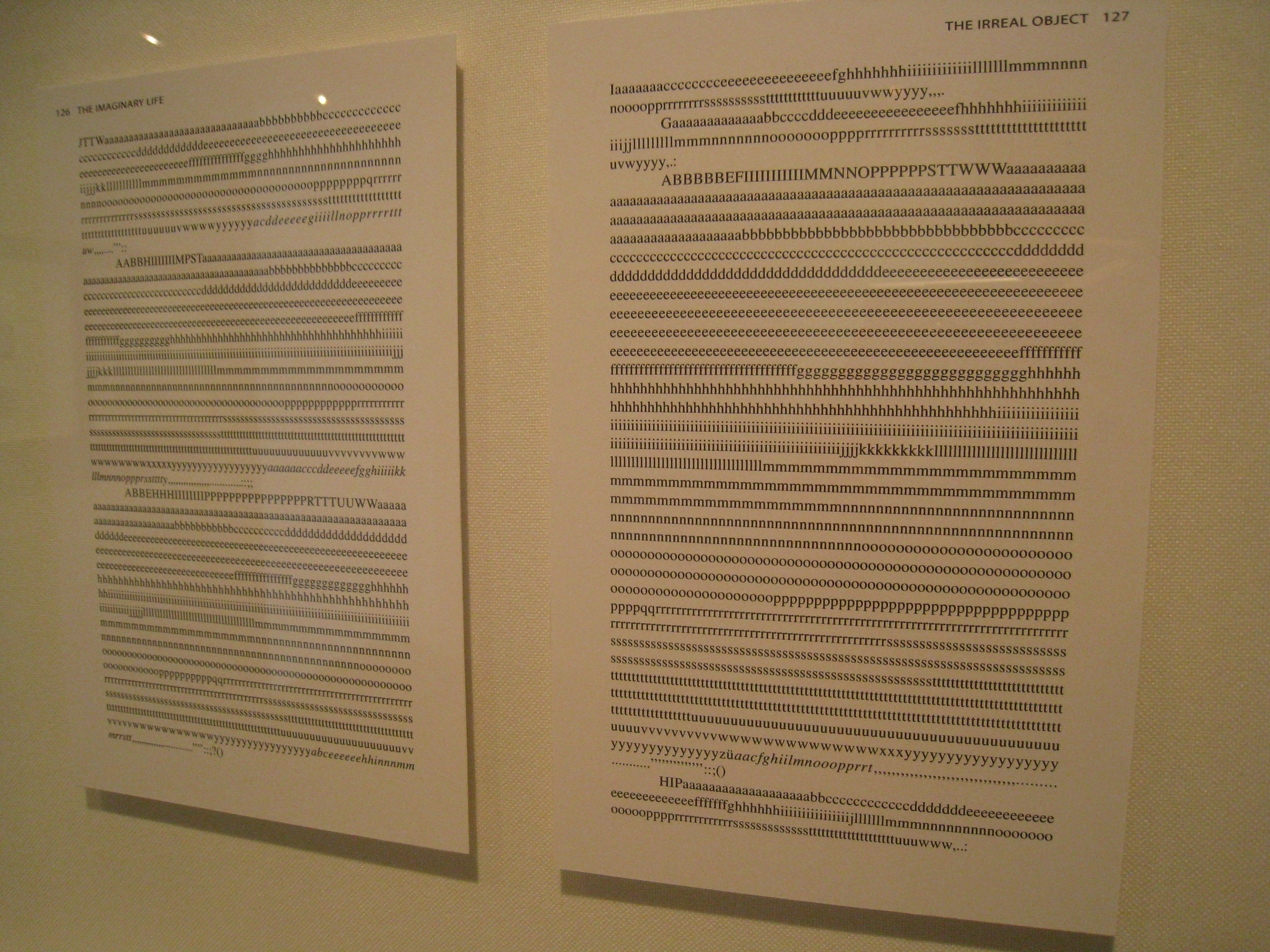
Next to this, Bea hangs two framed works, each holding two typed up sheets of paper formatted like pages from a book. . These show Bea’s attempts to reconstruct pages 126-127 and 128-129 of  Jean-Paul Sartre’s novel, The Imaginary based, I surmise, on some mnemonic code.  This yields, inevitably, to gibberish.

Reconstructing Sartre

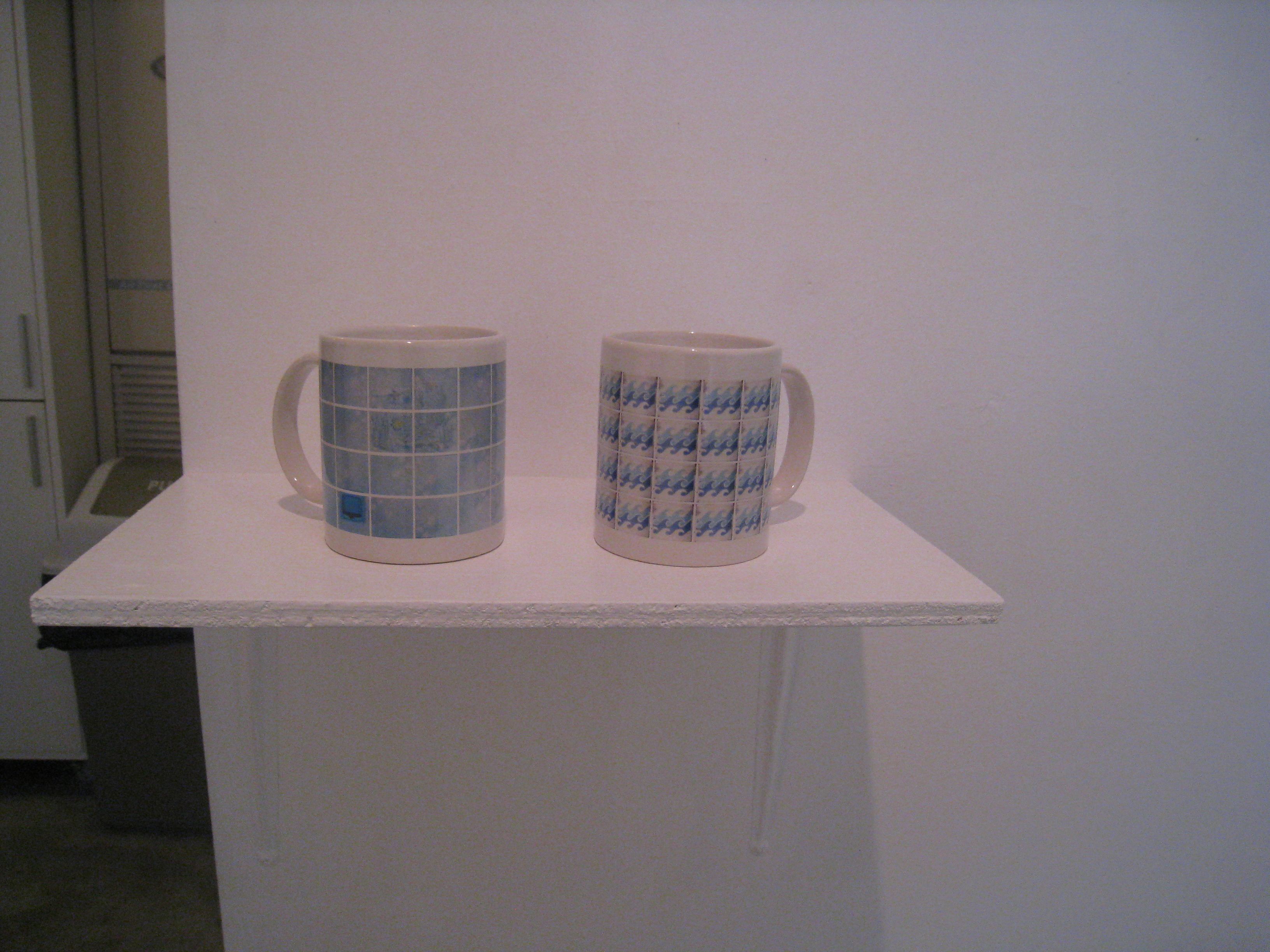
It can be argued that in today’s high-tech world of instants, Bea’s premises fall flat, especially when used for inanimate objects.  What she actually examines is the concept of reconstruction as transformation.  The two white ceramic mugs, perched almost unnoticed on the gallery’s narrow wall, show this best.  The mugs each sport a pattern taken from bathroom and swimming pool tiles from the family home.  Bea produced the mugs in the same material as the tiles (ceramic), mimicking, to a certain degree, their original function (as receptacles of water).  However, they have been resurrected—totally transformed— into completely different objects.  Memory and imagination have interfered with the process of re-creation.  Fact has been reconstructed into fiction.

Transforming tile patterns into coffee mugs

Standard Fiction runs from 28 August to 9 October 2010 at Pablo Fort, Unit C-11 South of Market Condominium, Fort Bonifacio Global City, (632)506-0602 or visit http://www.pablogalleries.com

http://www.youtube.com/watch?v=4gWXpUOmKj4


Noell El Farol's Bibliography

It comes as no surprise that Bibliography, Noell El Farol’s ongoing show at Art Informal, evinces a scholarly air.  You only have

Noell El Farol, "Diptera"

to meet the slight, soft-spoken, and bespectacled artist, who also happens to be a university professor, and you can imagine that he approaches the creation of his art in the same way he practices archeology:  careful, deliberate, exact.  His list of academic degrees, which include a Bachelor or Arts in Architecture from the UST College of Fine Arts, and a Diploma in Art Education from the Graduate School of Shizuoka University in

Noell El Farol, "Ophiogompus Susbecha (Series No. 2)

Japan,  reads just as long as  his list of art awards.  Last year, Noell received the Metrobank Art and Design Excellence (MADE) Award for Achievement in Sculpture, a recognition of both his small-scale and public art pieces.

Noell’s work in glass and steel have always reflected his interest in

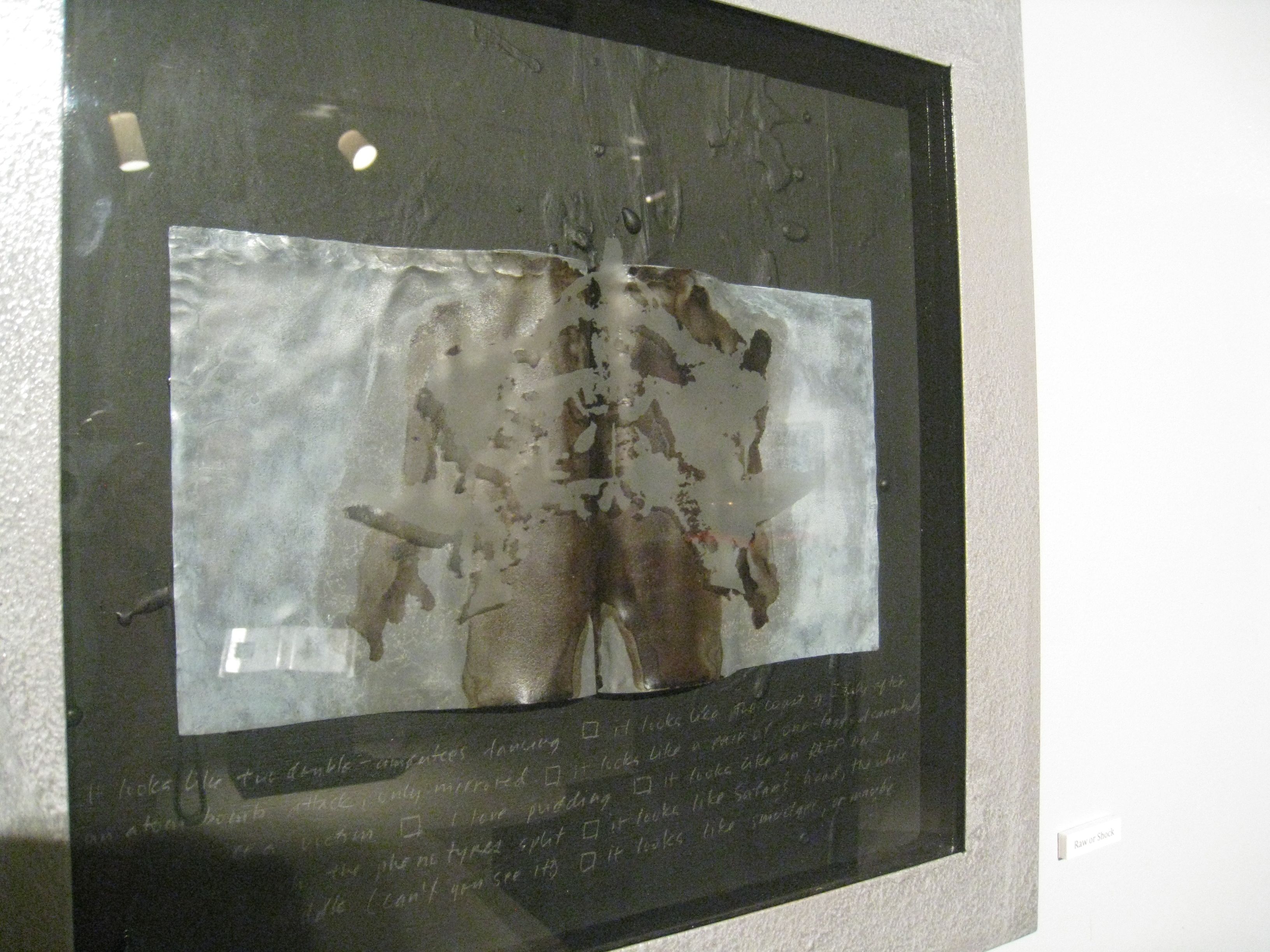
Noell El Farol, "Raw Or Shock"

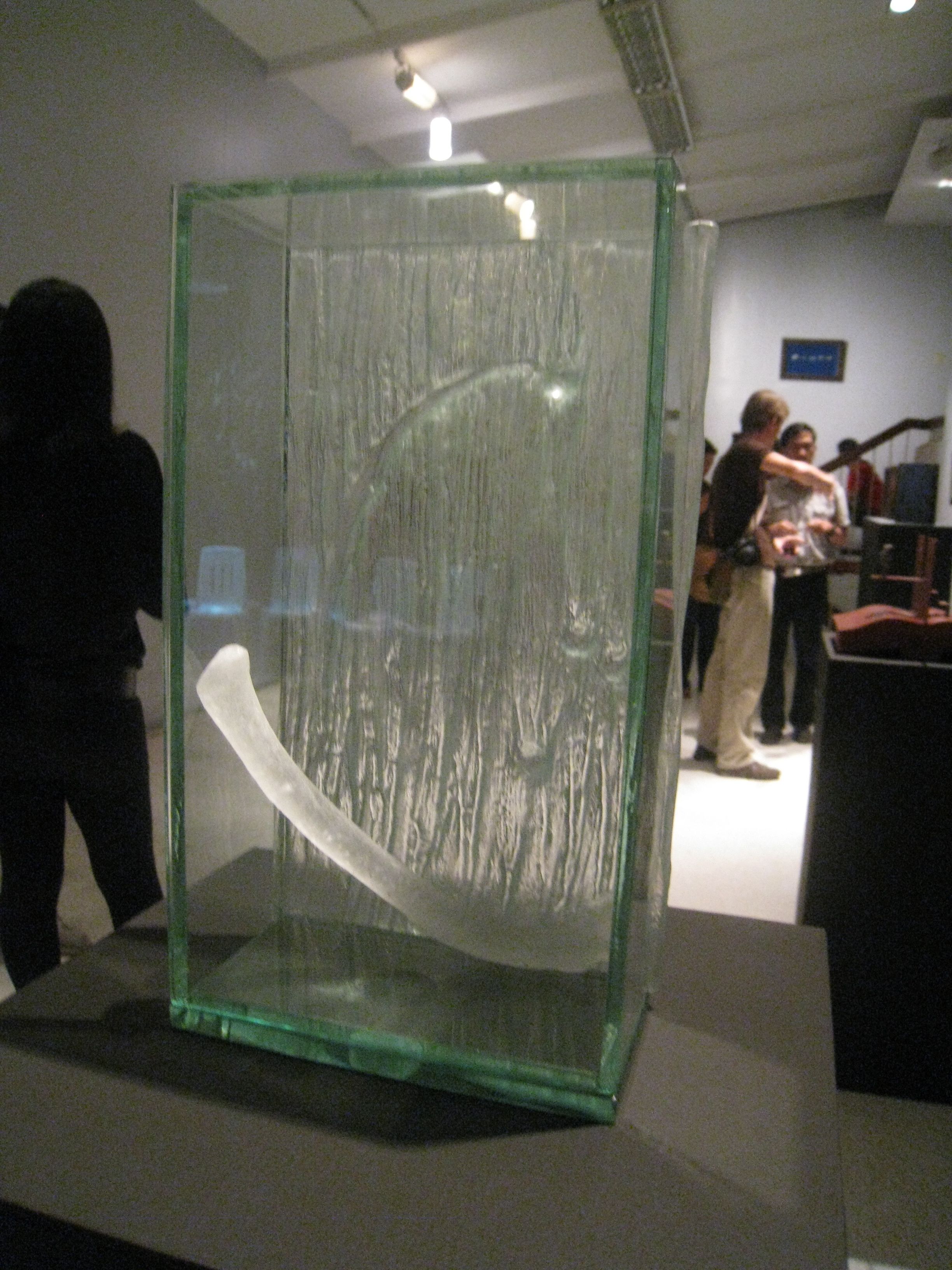
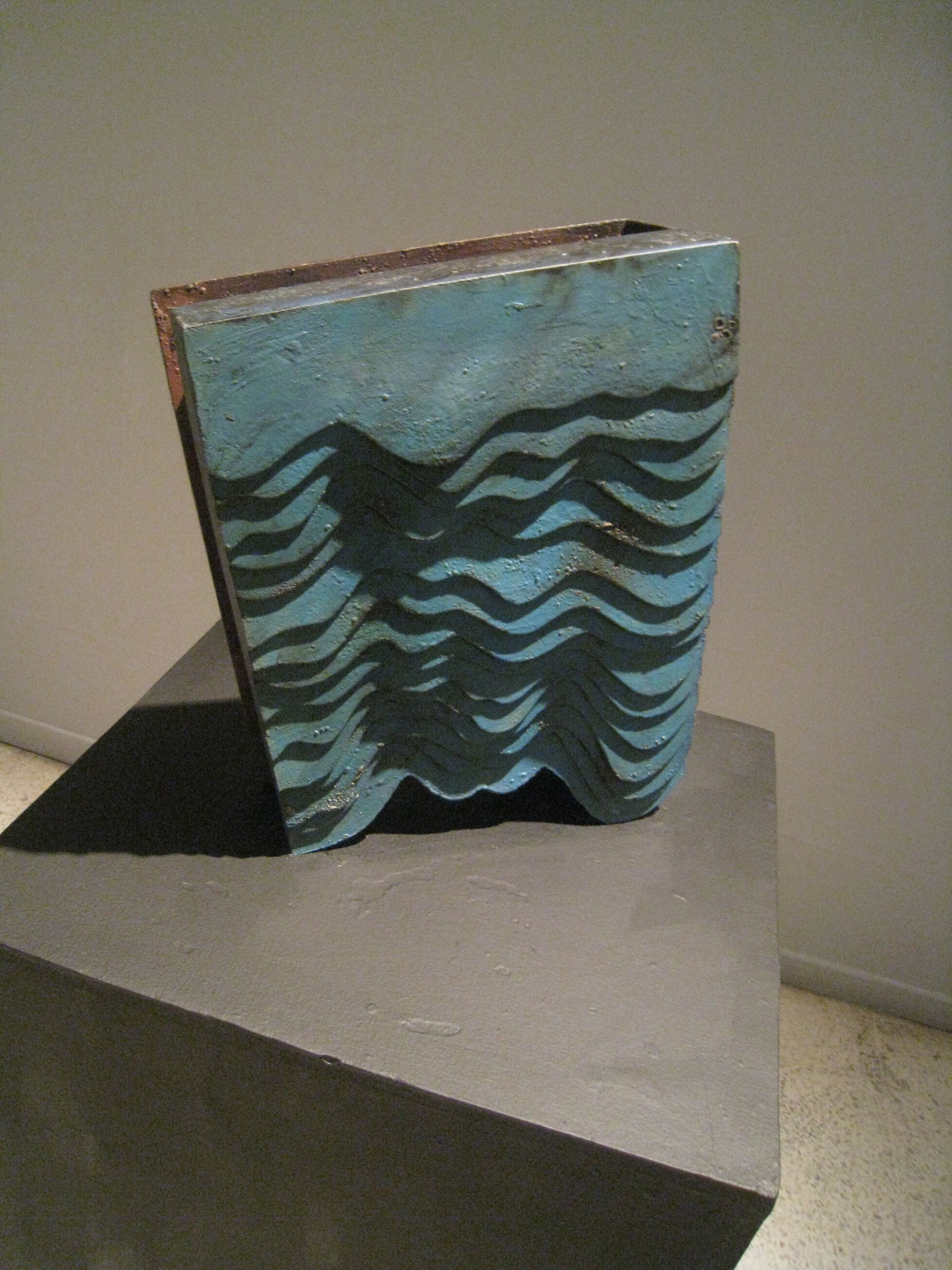
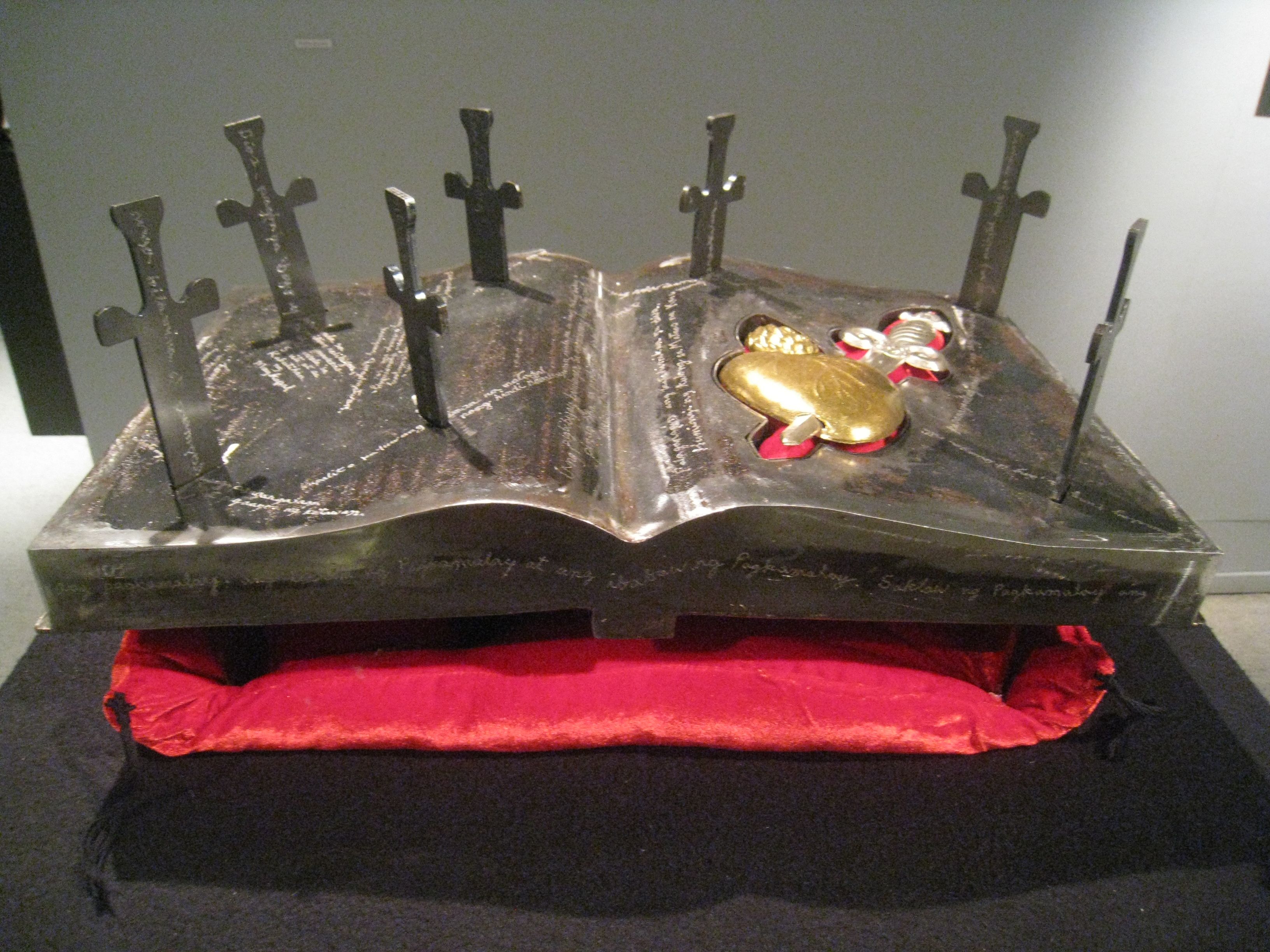
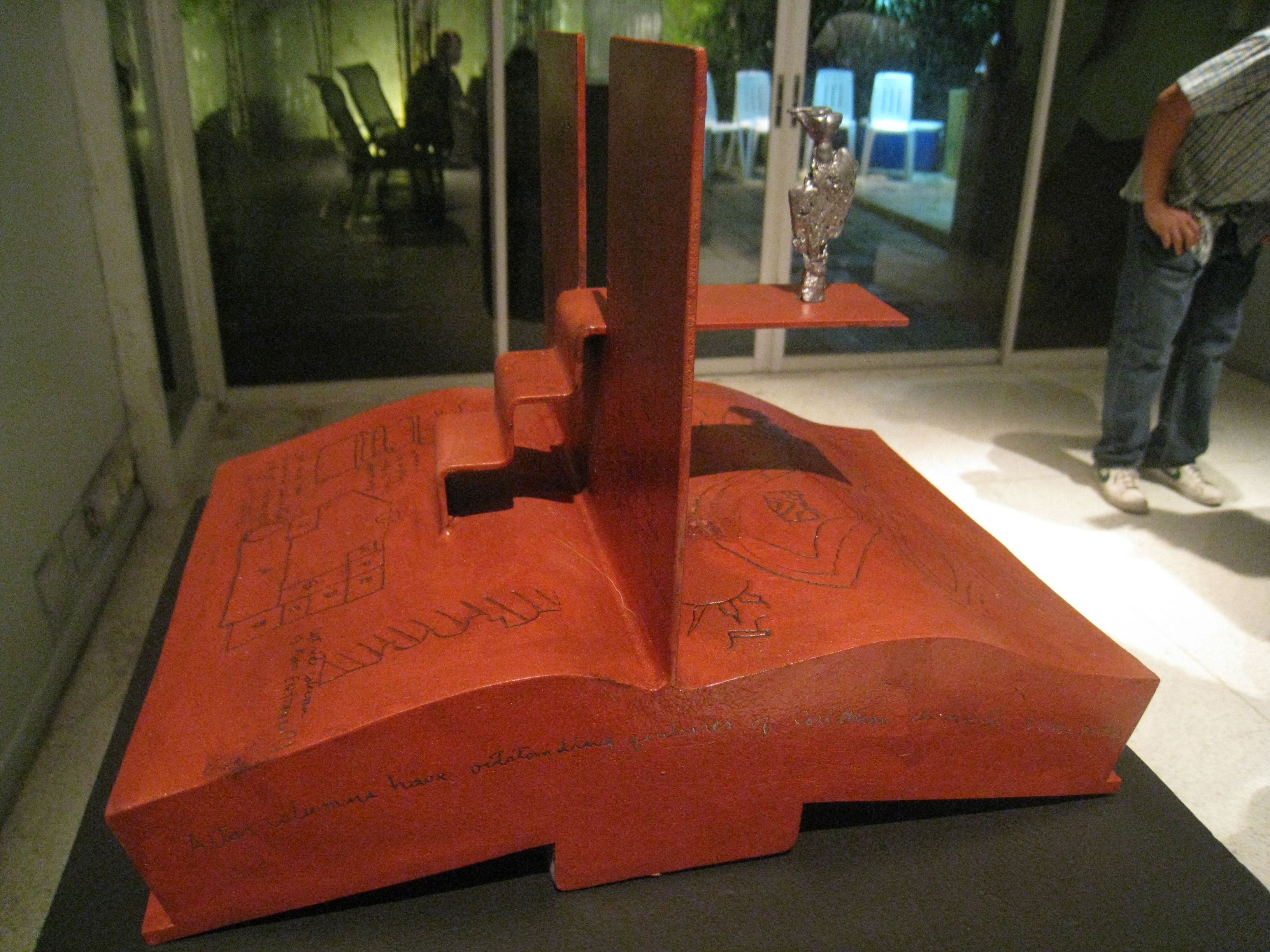
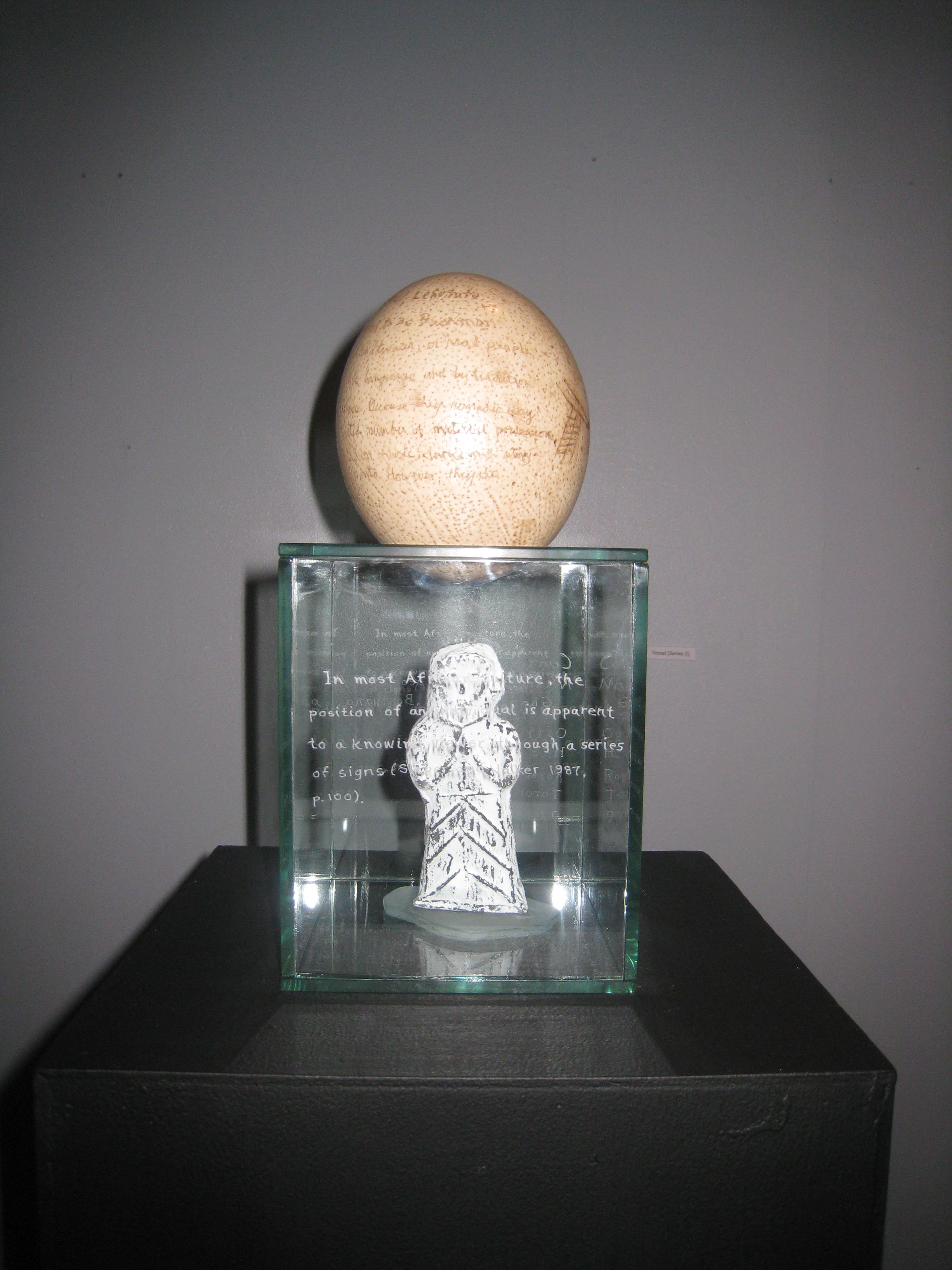
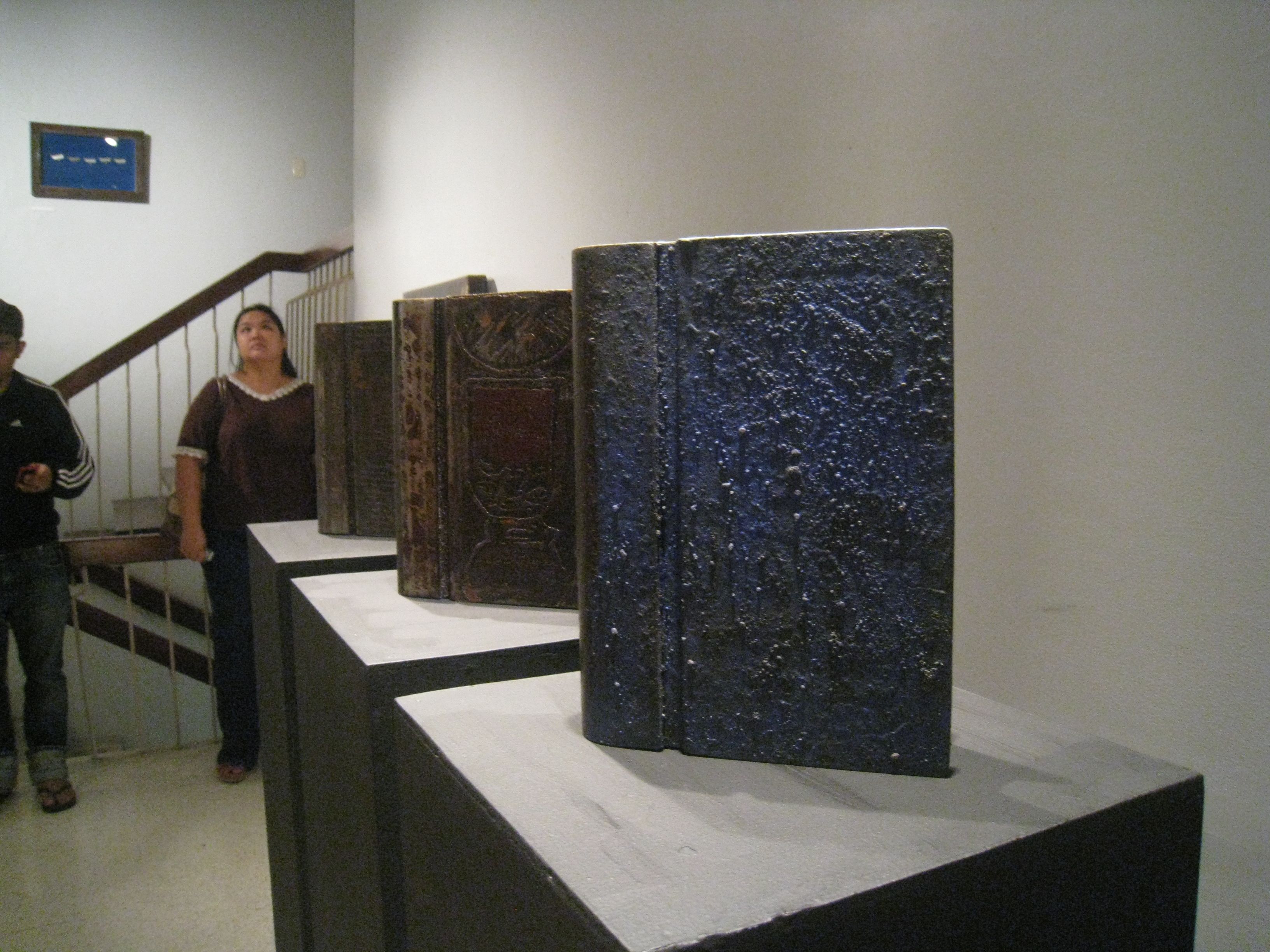
archeological excavations.  He mounts his pieces like museum specimens, frequently encasing them in glass boxes, treating them like found relics.  In this show, we see him cross over to his interest in books, the scholar’s frequent companion.  He uses wrought iron to fabricate book replicas, engraving these with text, and accenting them with glass details.  The exhibit presents mostly free-standing books.  But I thought the most impressive work were done

Noell El Farol, "Arachnids and Insects"

with the wall-bound pieces, the recreations of reference materials.

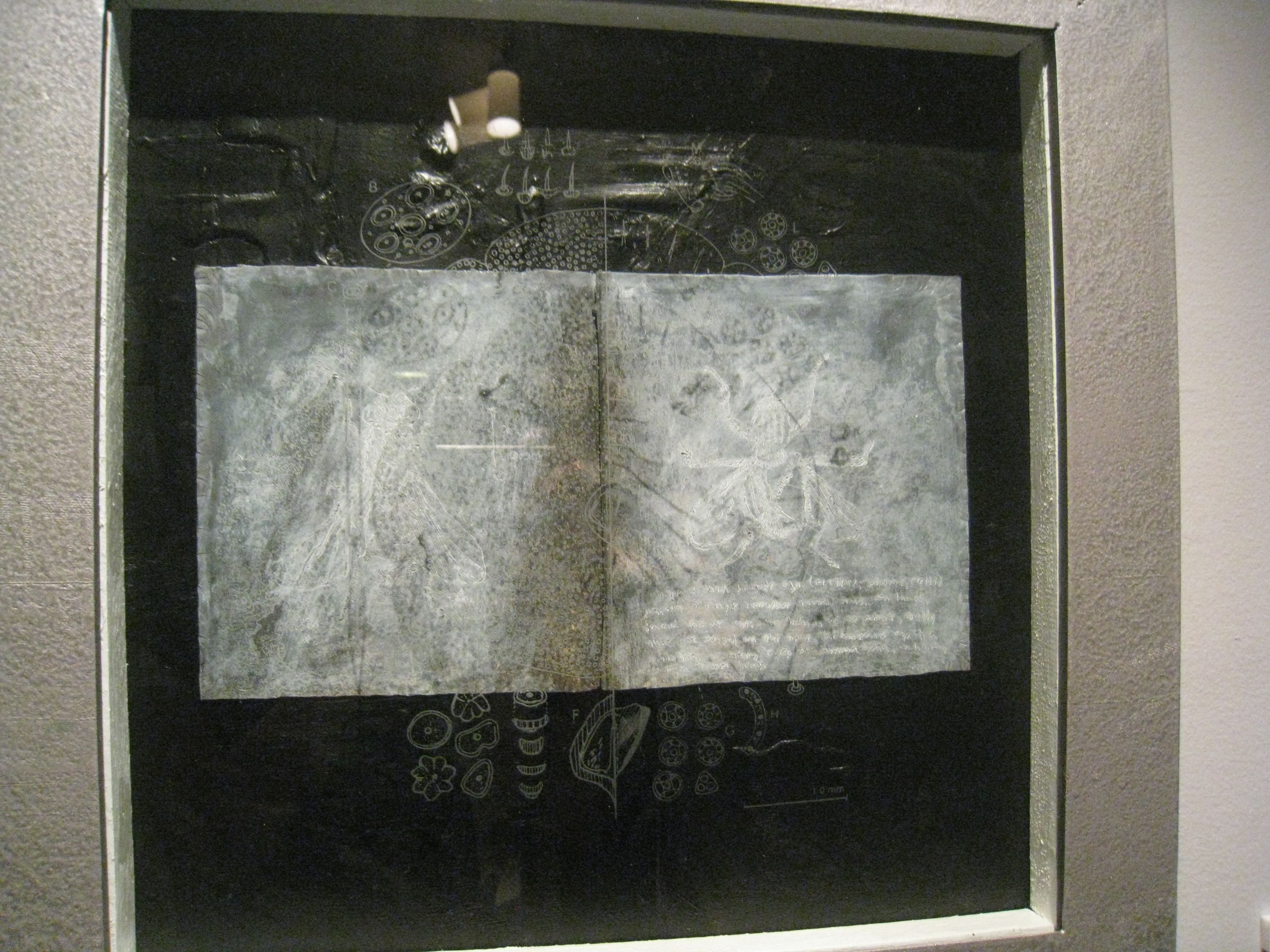
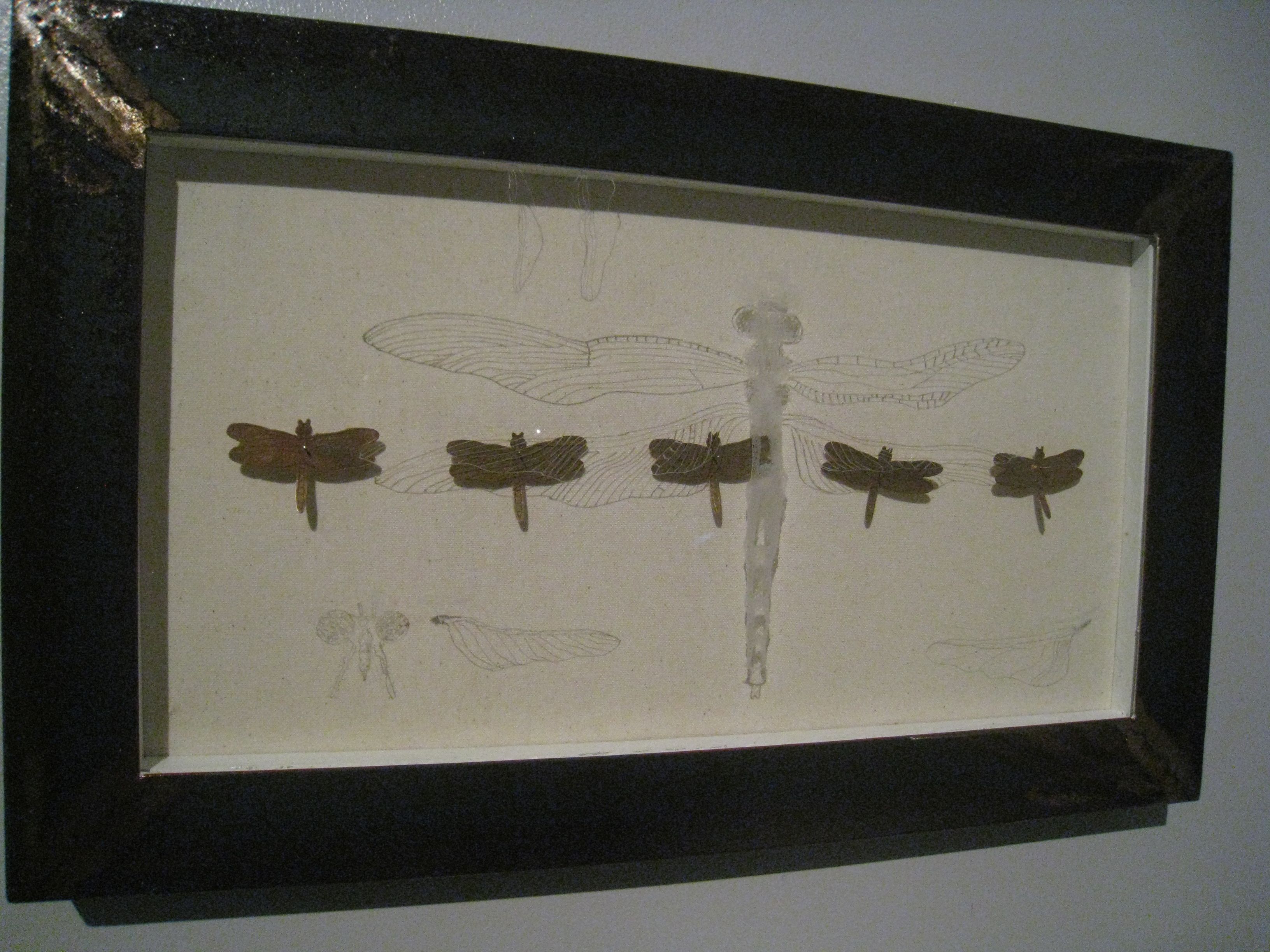
Raw and Shock, Diptera, and Ophiogompus Susbecha (Series No. 2) look like notes from field experiments, with samples and sketches scribbled onto its pages.  They are small-scale framed works, around the size of an A4 Bond Paper. All of them have etchings on glass superimposed on engraved metal.  In Diptera, for instance, Noell’s glass etching of a fly’s brain floats suspended above engravings of various-sized flies on

Detail, "Arachnids and Insects"

an oxidized metal strip.  In Ophiogompus Susbech (Series No. 2), a dragonfly engraved on glass hovers faintly above a row of brass dragonflies.  When hit by light at the right angle, the engraving casts a shadow of a large butterfly across the smaller, metal butterflies.

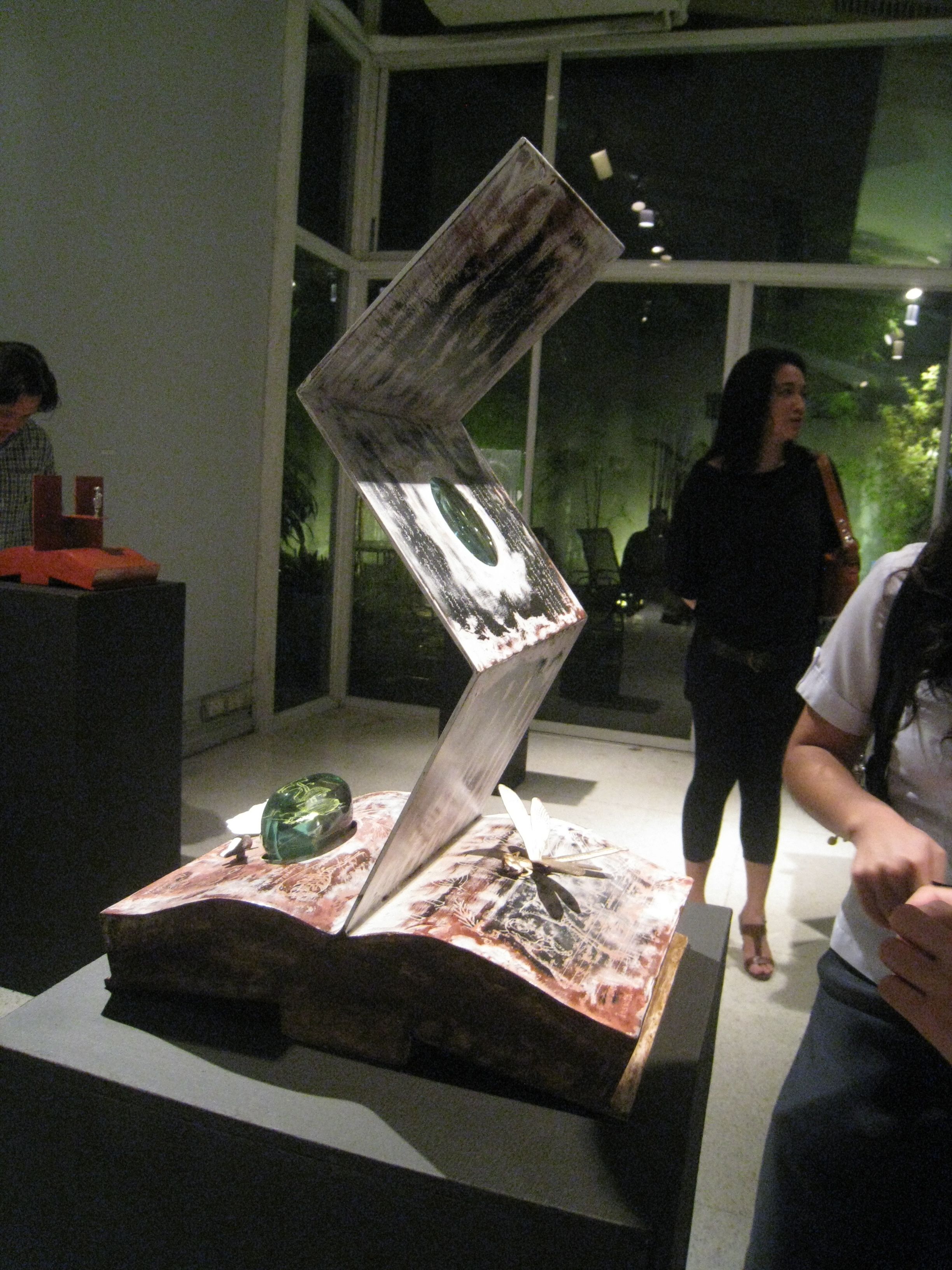
With Arachnids and Insects, Noell produced another facsimile of a research sketchbook, but one that stands in the round.  It resembles a thick tome, perhaps the

Another detail, "Arachnids and Insects"

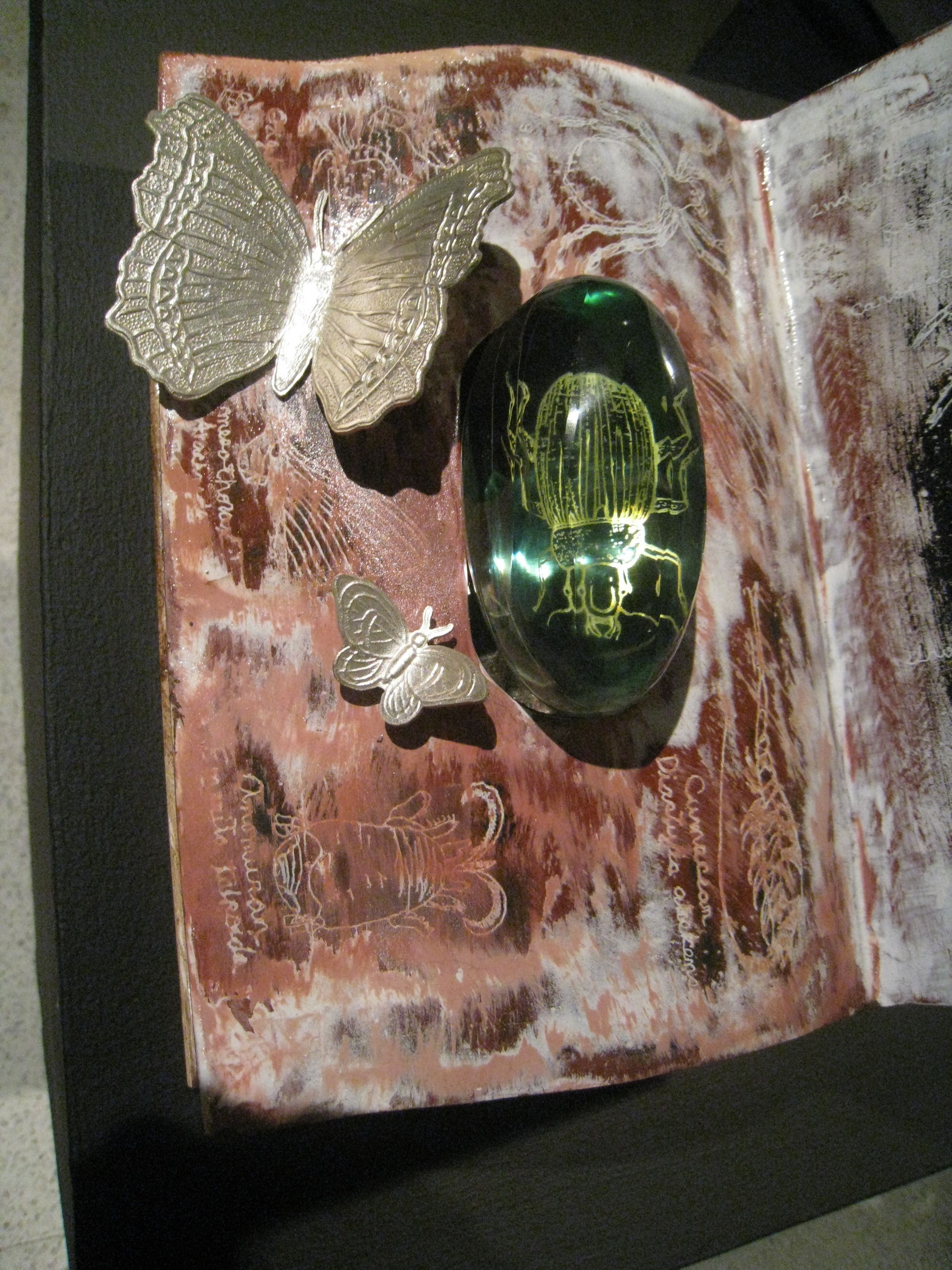
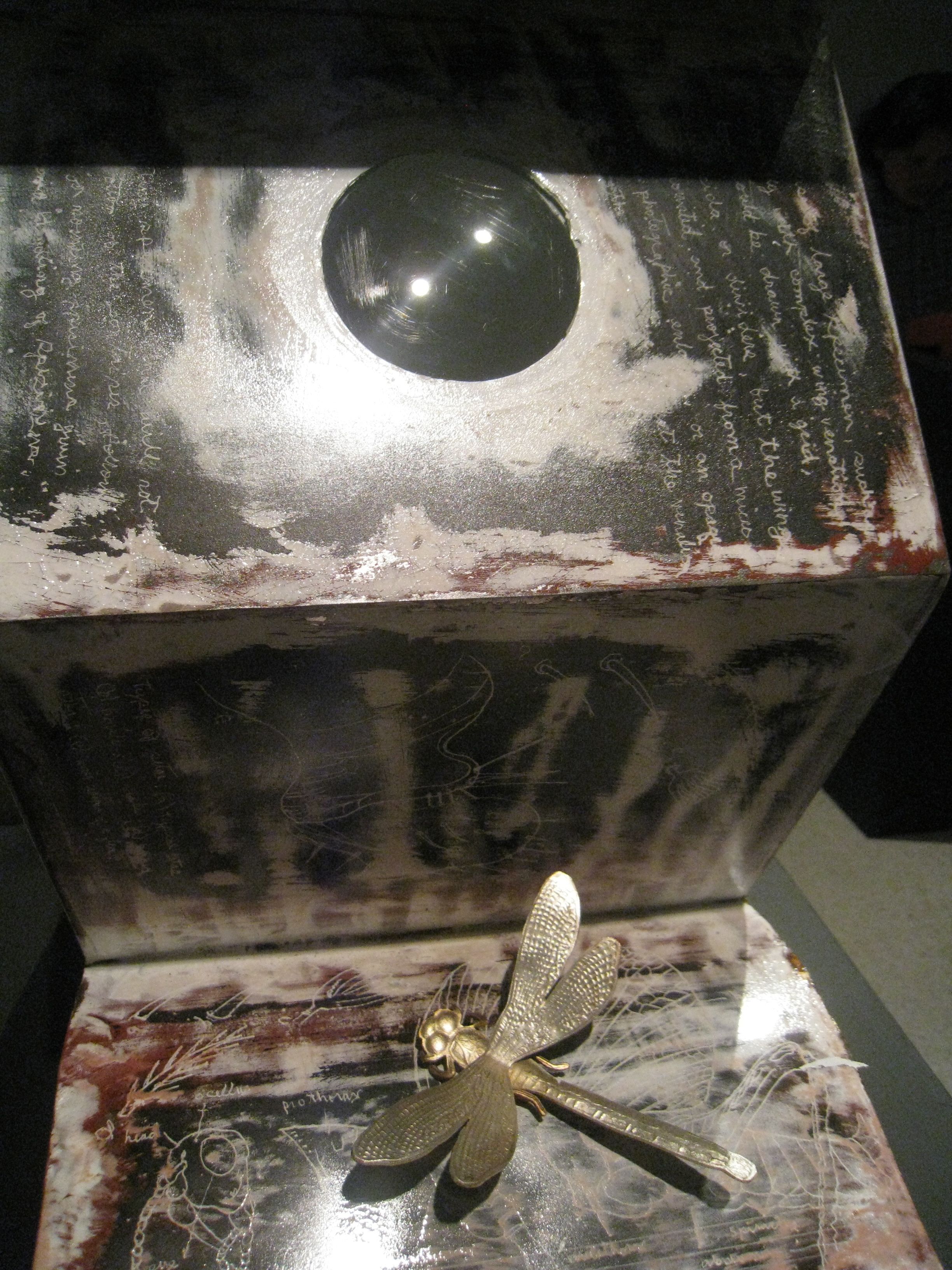
size of a family bible, opened up to reveal a page folded out.  A magnifying glass is embedded onto this page, from which you can inspect a beetle engraved within a glass sphere, or brass butterflies positioned beside it.

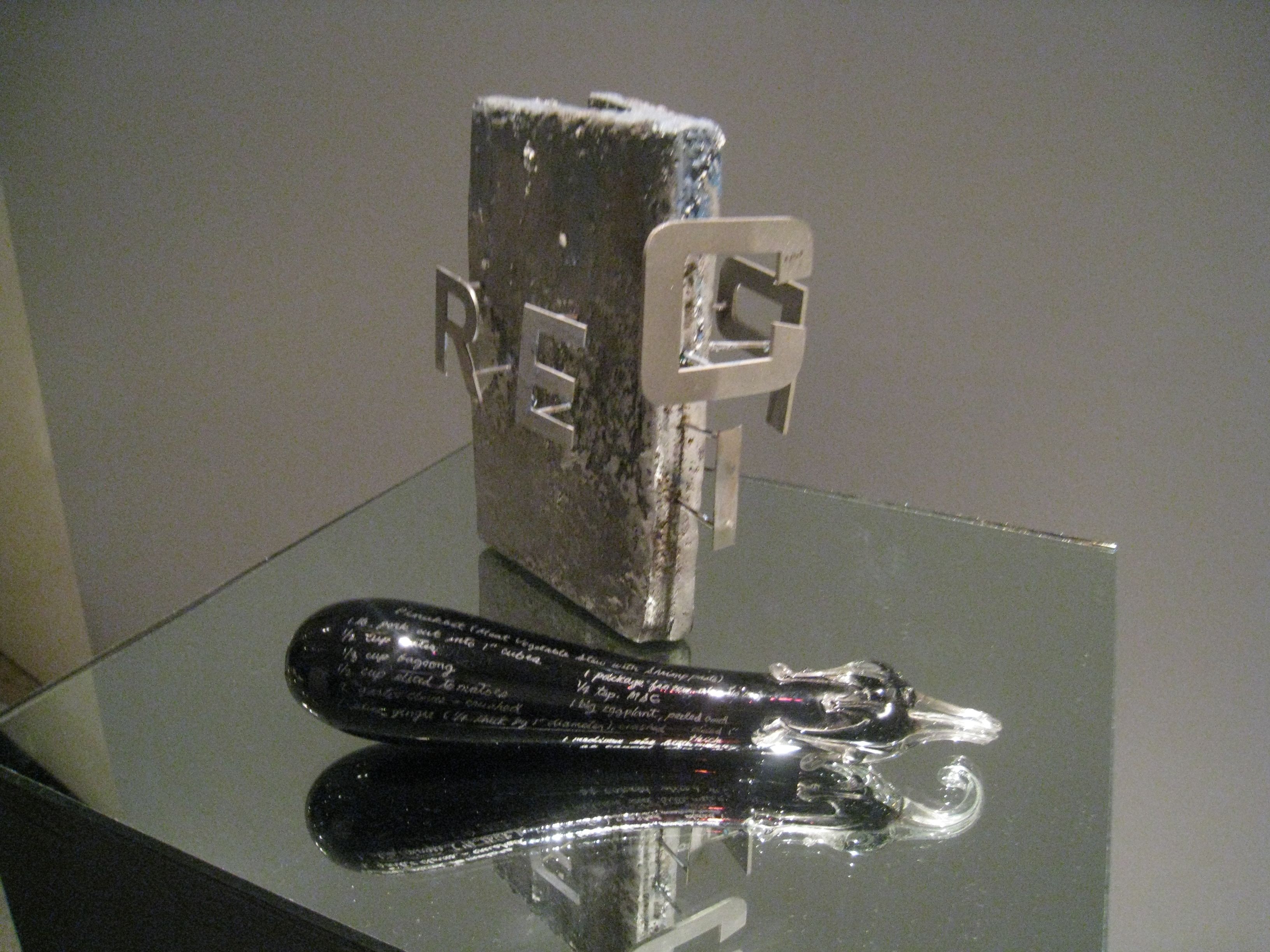
Cooked Book, one of the other free-standing pieces,  has letters forming the word “recipe” wrapped around it.  Inside, you find metal strips engraved with handwritten recipes.  Religious Inventory, on the other hand, is installed like an altarpiece; it rests on red velvet, atop a pedestal from which you view it by taking a few steps up.  I thought these two seemed a bit out of place, given the scientific bent of the show.  That is not to say, however, that they are not well-made.

Noell El Farol, "Box Reconstructed"

I personally prefer Noell’s pieces that use his cast glass forms, those that are more obviously derived from his excavations.  The wrought iron books seem a little too literal for my tastes.  What comes through though, in this show, as well as any that feature Noell El Farol’s work, is his quiet, erudite, fastidious attitude to doing sculpture.

Noell El Farol, "Cooked Book"

Bibliography runs from 2  to 20 September 2010 at Art Informal,  277 Connecticut St., Greenhills East, Mandaluyong.  Phone (632)725-8518 or visit http://www.artinformal.com

Noell El Farol, "Isarithmic Landscape"

Noell El Farol, "Religious Inventory"

Noell El Farol, "Ruins"

Noell El Farol, "Vessel Series 2"

http://www.youtube.com/watch?v=JO-OXP-8ImE


All In The Family: Mariano, Yasmin, and Haraya Ching

Mariano and Haraya Ching, "Jelly Ace Series 5" and "Jelly Ace Series 6", pyrograph and acrylic in wood

Mariano and Haraya Ching, "Jelly Ace Series 5" and "Jelly Ace Series 6", pyrograph and acrylic on wood

Just call it family bonding, Ching-style.  To most parents, especially those with busy careers and young children, spending time with their families means doing things together, mostly on weekends:  eating out, catching a movie, indulging in sports, visiting grandparents.  To artists Yasmin Sison and Mariano Ching,  it is inevitable that in addition to these, art plays a large part in their interaction with their five-year-old son, Haraya. They have  both just come off from doing work for shows out of Manila (Yasmin’s solo, Spaces In Between, was at Artesan in Singapore in June, while Nano participates in Japan’s Aichi Triennale this month). In this exhibit, Games For Growing, at Blanc Peninsula,  they come together as a couple and as a family, showing individual and collaborative work borne out of their role as parents to a precocious child.  To quote from Yasmin’s exhibit statement,”…the exhibition Continue reading


Chati Coronel's Hour In A Glass Balloon

I had not realized how much I missed seeing an exhibit of just paintings until I dropped by SLab this week for their trio of

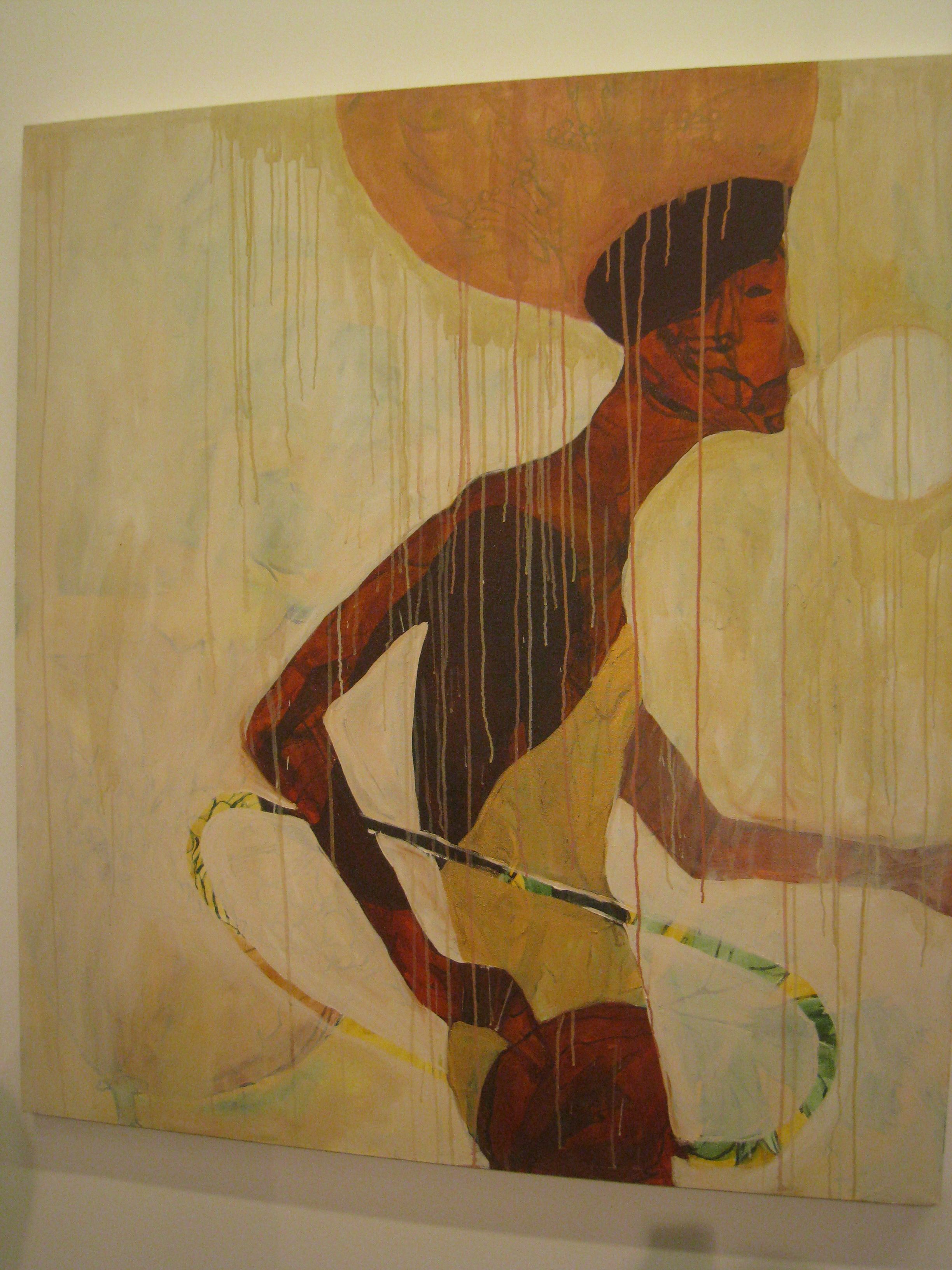
Chati Coronel, "Hula Hooped Bubble Gum Moon", acrylic on canvas, 5ftx4ft

openings.  At the moment, all the other shows worth visiting in Manila feature sculpture, installations, a variety of media except paintings on canvas.  I’m not complaining.  But sometimes, you do enjoy simply engaging your sense of sight, viewing a show with nothing too cerebral, just pieces that make you feel good by merely looking at them.   In that respect, Chati Coronel’s An Hour In A Glass Balloon works perfectly.

Chati Coronel, "The Knitters", acrylic on canvas, diptych, 5x4.5ft per panel

Chati has just moved to Manila after seven years in LA.  This exhibit brings her back to the Manila art scene, where she used to be an active participant.  She has shown with Surrounded By Water, the seminal artist- run space of the late 1990s.  She also spent time in Vermont on a residency grant, before her long-term move to the States.  Now she brings out a suite of large-scale paintings (they stand at 5 and 6 feet tall)  inspired by the retro palette and patterns that fill her grandmother’s house, the family home

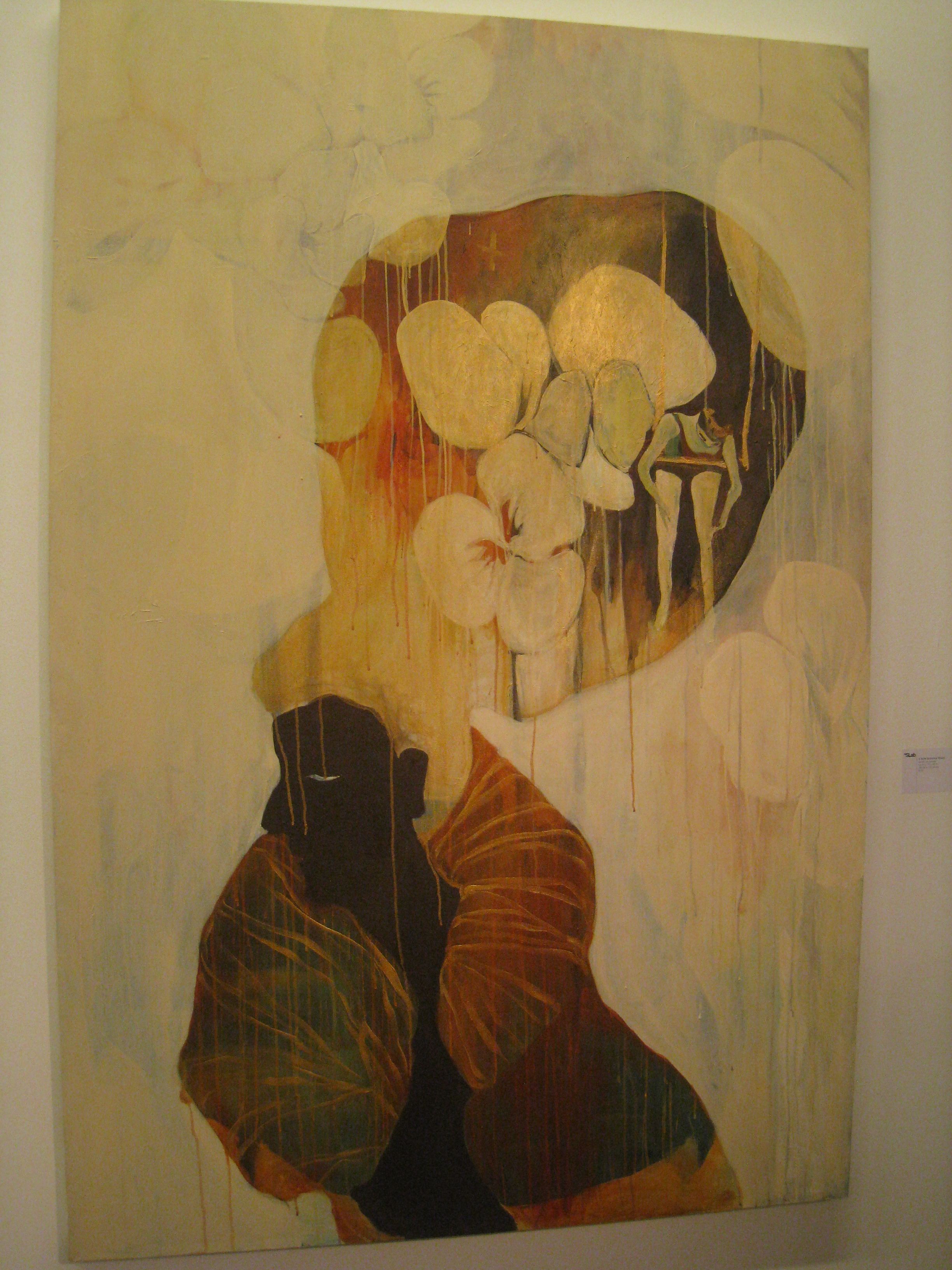
Chati Coronel, "A New Buddha Head", acrylic on canvas, 6x4 ft

she has returned to.

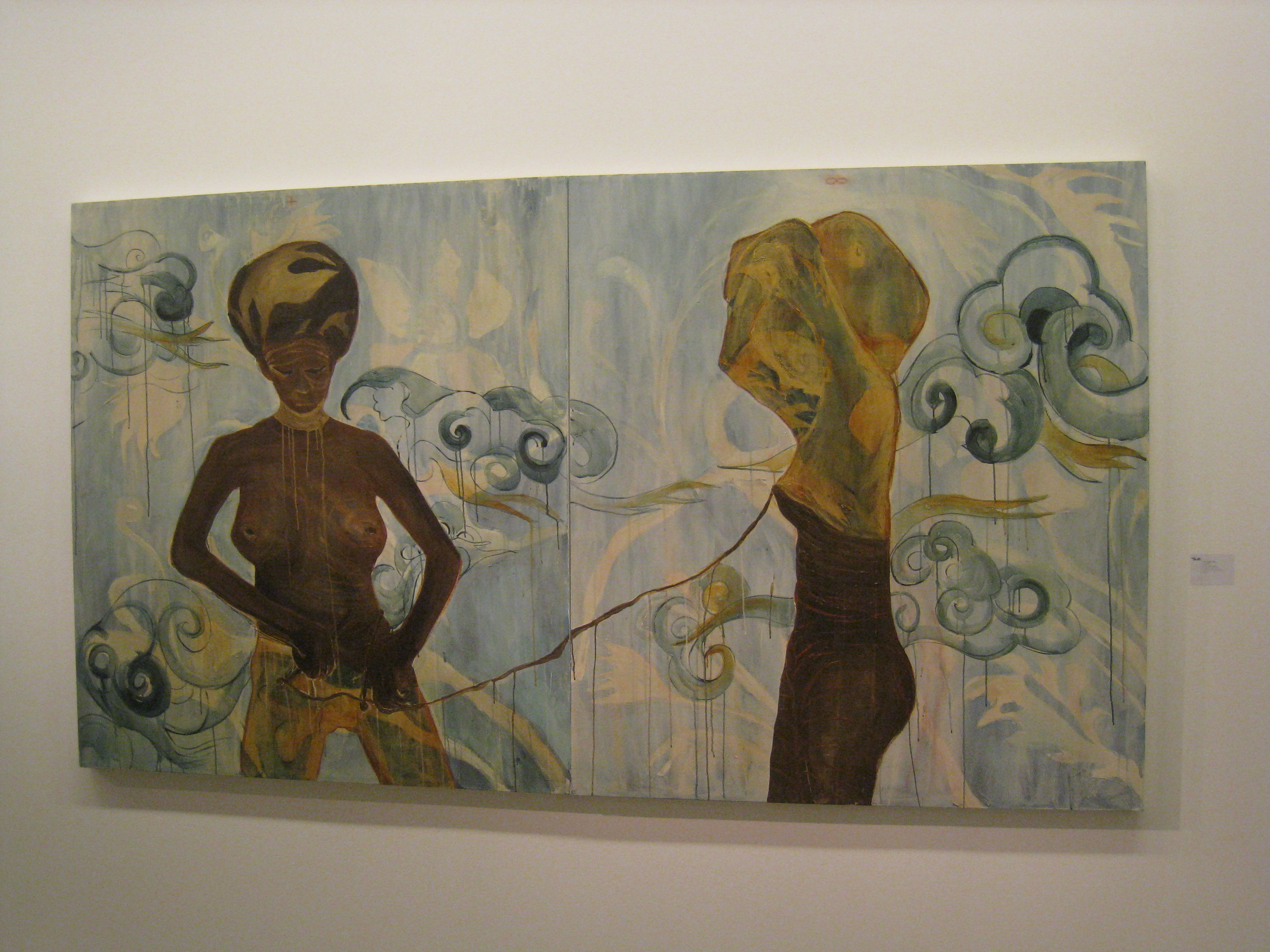
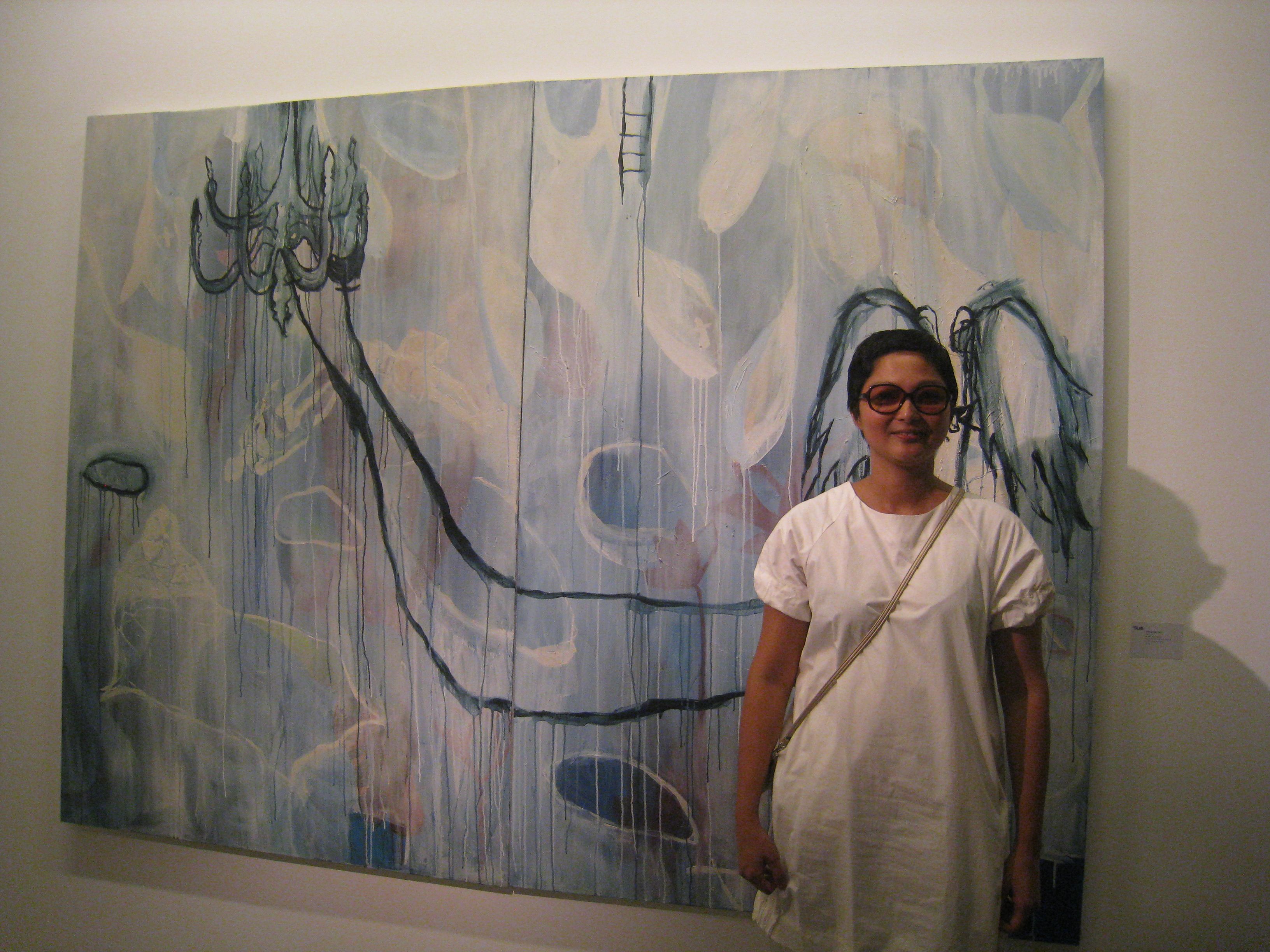
I don’t normally go for art that can be described as pretty.  But while you can say this about Chati’s paintings, you know they are also so much more.  Her brilliant colors exude  joy and ebullience, with dreamy, romantic titles (Hula Hooped Bubble Gum Moon, Turning Dakini). Her svelte and elongated females hint at the elegance of Mogdiliani’s women. They possess sophistication and a certain je ne sais quoi, nothing that feels contrived.  I especially liked Wedding Day, one of her two diptychs, with its barely discernible figures.  She painted them white, invisible amidst the patterns that swirl through her sky blue backdrop.

Chati Coronel with her acrylic on canvas diptych, "Wedding Day", 6x4ft per panel

It won’t take an hour to enjoy Chati’s glass balloon.  And even if you did spend more than that viewing the show, you’ll do so because her paintings are easy, uncomplicated, relaxing.

An Hour In A Glass Balloon runs from 1 to 29 September 2010 at SLab, 2F YMC Bldg, 2320 Pasong Tamo Extension, Makati City.  Phone (632) 816-0044 or visit http://www.slab.silverlensphoto.com

Chati Coronel, "An Hour In A Glass Balloon" and "Turning Dakini", both acrylic on canvas, 6x4 ft each

http://www.youtube.com/watch?v=zNMAw5IOoI4


Dick Daroy Takes His Time

Roderico Jose Daroy, Untitled, 1985-2010, termite-ridden glass on collage

They captivated me immediately, these blackened, flaked, seemingly battered pieces from Roderico Jose Daroy.  They reminded me of photos salvaged from our office after Typhoon Ondoy had wreaked its havoc.  We lined them up on the driveway to bake under the sun.  They curled up and cracked, and never looked the same again.

There’s something fascinating about these weathered images that Dick Daroy has put

Roderico Jose Daroy, Untitled, 2007-2009, collage

on the walls of The Drawing Room for his exhibit, and of time.  He framed them in metal, embellished and duly ornate, or in dark wood, classic and severe, bestowing elegance and stateliness to his murky, smeared collages and drawings.  Mr. Daroy creates from photos, prints, paper objects that catch his eye.  He loves to accumulate things from his travels, and collects reproductions from old books and magazines.  He never hurries his process.  He lives with his images for weeks, or months, or years, however long it takes for them to feel complete.  He sticks them up on the walls of his studio and gets to know them, and only then does he work on them.  When you see his pieces up close, you realize that they cannot be rushed, he can use no shortcuts.  Each piece is made up of layers, each process adding another coating, another tale, that transforms the original.

Roderico Jose Daroy, Untitled, 2007-2010, collage

The exhibit carries 36 of these framed works in the main gallery.  A few more hang in the secondary space, The Drawing Room’s office.  For one of his pieces, Mr. Daroy used a portrait by Nazi photographer Leni Riefenstall and worked on it in his kitchen, where he prepares his family’s meals.  He ran over the piece with a burnt pot, until it turned dark and viscous, with only traces of the original image discernible from underneath.  Another has been drawn over with squid ink, while others have been exposed to the elements.  He put together a collage 25 years ago, in 1985, but had not found the perfect frame for it until this year.  He mounted this beneath glass that harbored a colony of termites, and let nature take its course.  A suite of 16 pieces hang on the gallery’s main wall, all of them identical in size.  These are damaged photographs from a trip to Vigan, crackled and frayed, worked over with charcoal.  The figures have not been obliterated, just transmuted into

Roderico Jose Daroy, Untitled, 2009-2010, collage with coaster

abstract forms.

I had never seen Mr. Daroy’s work before.  His last exhibit was eight years ago, before he embarked on a nomadic life, traveling Asia with his wife. I had a nice chat with him over the phone about this show.  To learn more about him, I turned to Jose Tence Ruiz,  Mr. Daroy’s fellow artist and colleague, also a fount of information on the local art scene.  Bogie sent me an article written by Reuben Ramas Cañete, Fade To Black, published 1999 in transit magazine.  And from this I quote:

Roderico Jose Daroy, Untitled, 2009-2010, collage with book and coaster

“Dick Daroy’s pieces takes time to get used to—both on the conceptual and material level.  Art dealers will no doubt shake their heads at the viability of preserving and selling works that are predestined to self destruct before one’s very eyes….and this perception is perhaps one reason Daroy’s works are seldom seen outside the museum circuit.  They require a power of utmost concentration and meditation to search for the sudden flash of insight so popular among Zen practitioners, and this itself is the reward that the few courageous collectors of Daroy reap.  Beyond the blandly commercial consideration of owning a work long enough to dispose of it to the next highest bidder, Daroy’s work speaks of facing up to the inevitability of death; of accepting the fading of life from light to black.”

Roderico Jose Daroy, Untitled, 1995-2010, collage

and of time runs from 21 August to 11 September 2010 at The Drawing Room Contemporary Art, 1007 Metropolitan Avenue, Metrostar Building, Makati City.  Phone (632)897-7877 or visit http://www.drawingroomgallery.com

A suite of 16 Untitled pieces, all charcoal on damaged photos, collage

http://www.youtube.com/watch?v=Y7jeCDwRAAc


Helping Out Some Glorious Bastards

By the end of September, a group of Filipino artists head for Berlin, to the city’s Freies Museum, a space that proudly calls itself

Jayson Oliveria, untitled oil on canvas piece

“…a place for art and artists in all its contemporary manifestations.”  Manuel Ocampo curates Bastards of Misrepresentation:  Doing Time On Filipino Time, a group show on Manila’s cultural scene.  Running from October 1 to November 10, the exhibit brings together a whole range of work from  15 artists—-from Bea Camacho’s performances, Pow Martinez’s sound installations, Jayson Oliveria and Robert Langenegger’s paintings, to Poklong Anading’s photographs.  Scheduled to coincide with Art Forum Berlin and Berlin Liste, the city’s two important art fairs, the show presents an exciting opportunity to unveil Philippine contemporary art to a city at the forefront of important art movements.

Bea Camacho, "Modules"

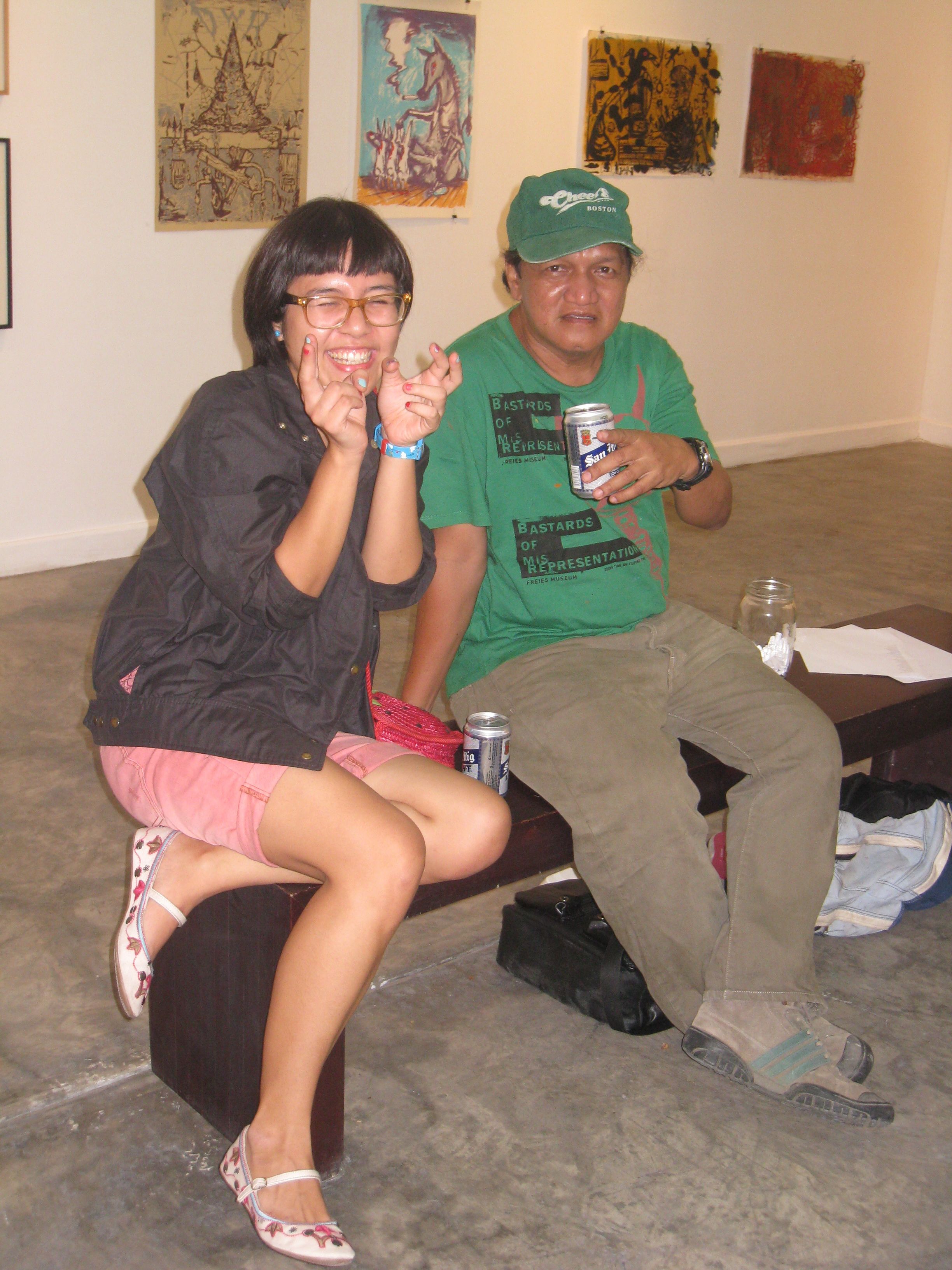
Two weeks ago, Blanc Compound played host to an art raffle, one of several efforts mounted by the group to raise funds for this upcoming show.  As we all know, events like this do not get any financial support from our cultural

Nona Garcia, Louie Cordero, Argie Bandoy, Vic Balanon

institutions.  Artists must rely on their own initiative.  Thirty collectors showed their support for this one, and, in addition to enjoying cans of ice cold beer, went home with works by the participating artists (some of which I’ve posted here).

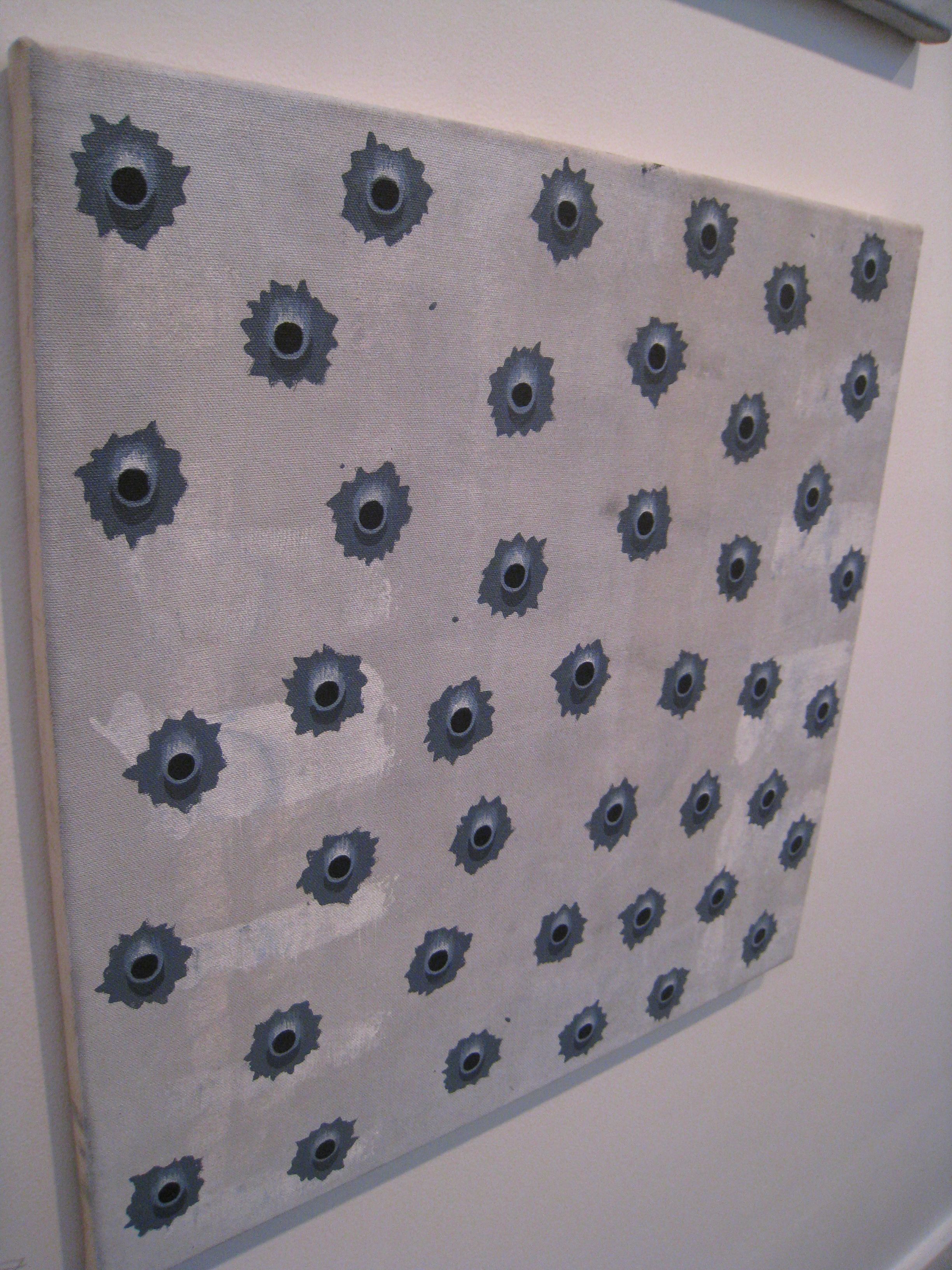
David Griggs, "Bullet 3"


Bastards of Misrepresentation:  Doing Time On Filipino Time will feature work by Poklong Anading, Argie Bandoy, Bea Camacho, Lena Cobangbang, Maria Cruz, Gaston Damag, David Griggs, Robert Langenegger, Romeo Lee, Pow Martinez, Manuel Ocampo, Jayson Oliveria, Jucar Raquepo, Gerry Tan, and MM Yu.

For more information, and for those interested to help the artists out,  visit http://www.bastardsofmisrepresentation.wordpress.com


Gerardo Tan, untitled collage

Jay Amante and Pow Martinez

Jucar Raquepo, "Horror Picture Show"

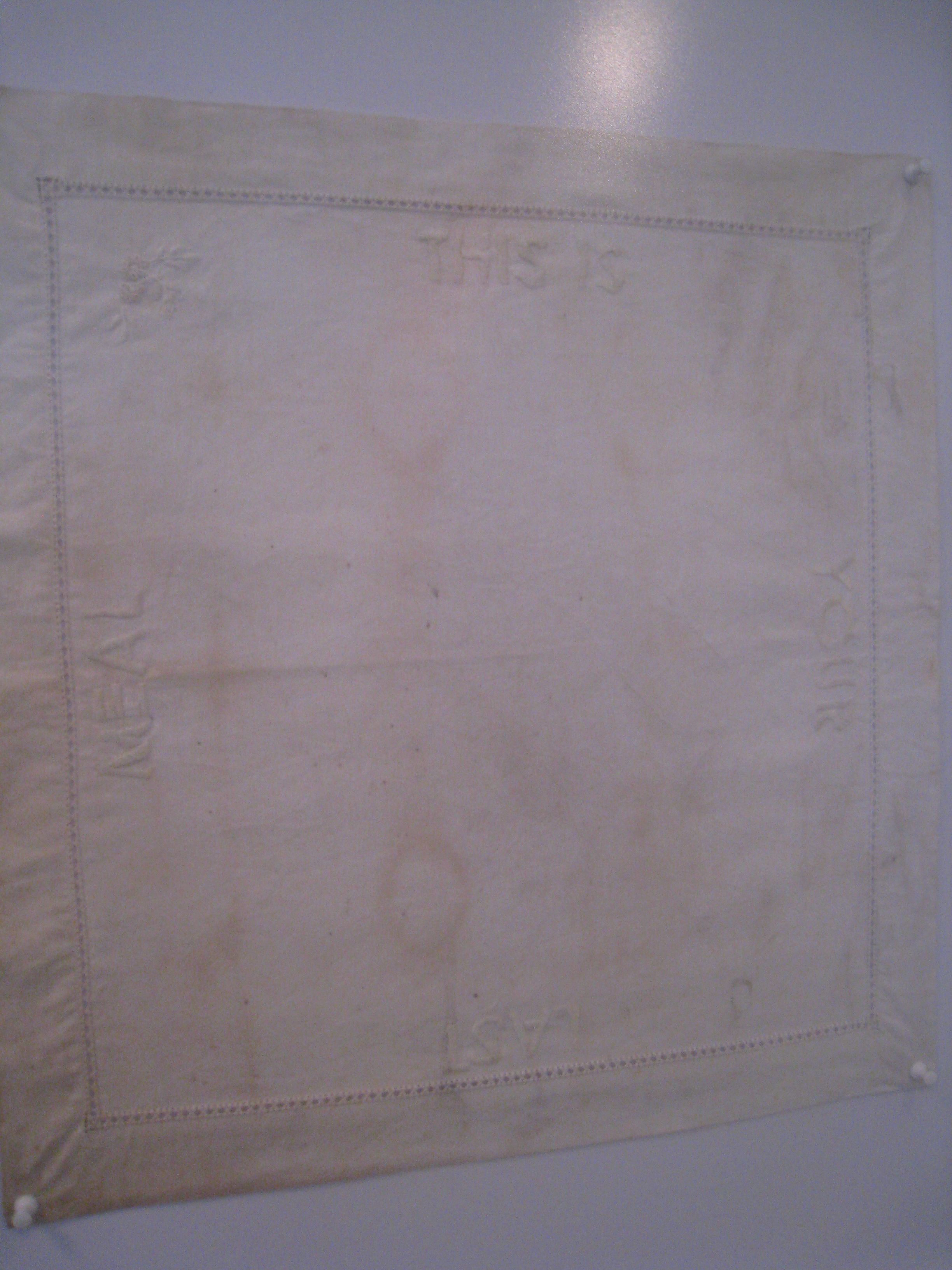
Lena Cobangbang, "From the Eggs to the Apples", embroidery on used napkin

Manuel Ocampo, untitled

Marcel Crespo and Rachel Rillo

Maria Jeona Zoleta and Romeo Lee

MM Yu, "Rescind"

Pow Martinez, untitled oil on canvas pieces

Robert Langenegger, "Stoney Knows How"

Robert Langenegger, "Stoney Knows Where"

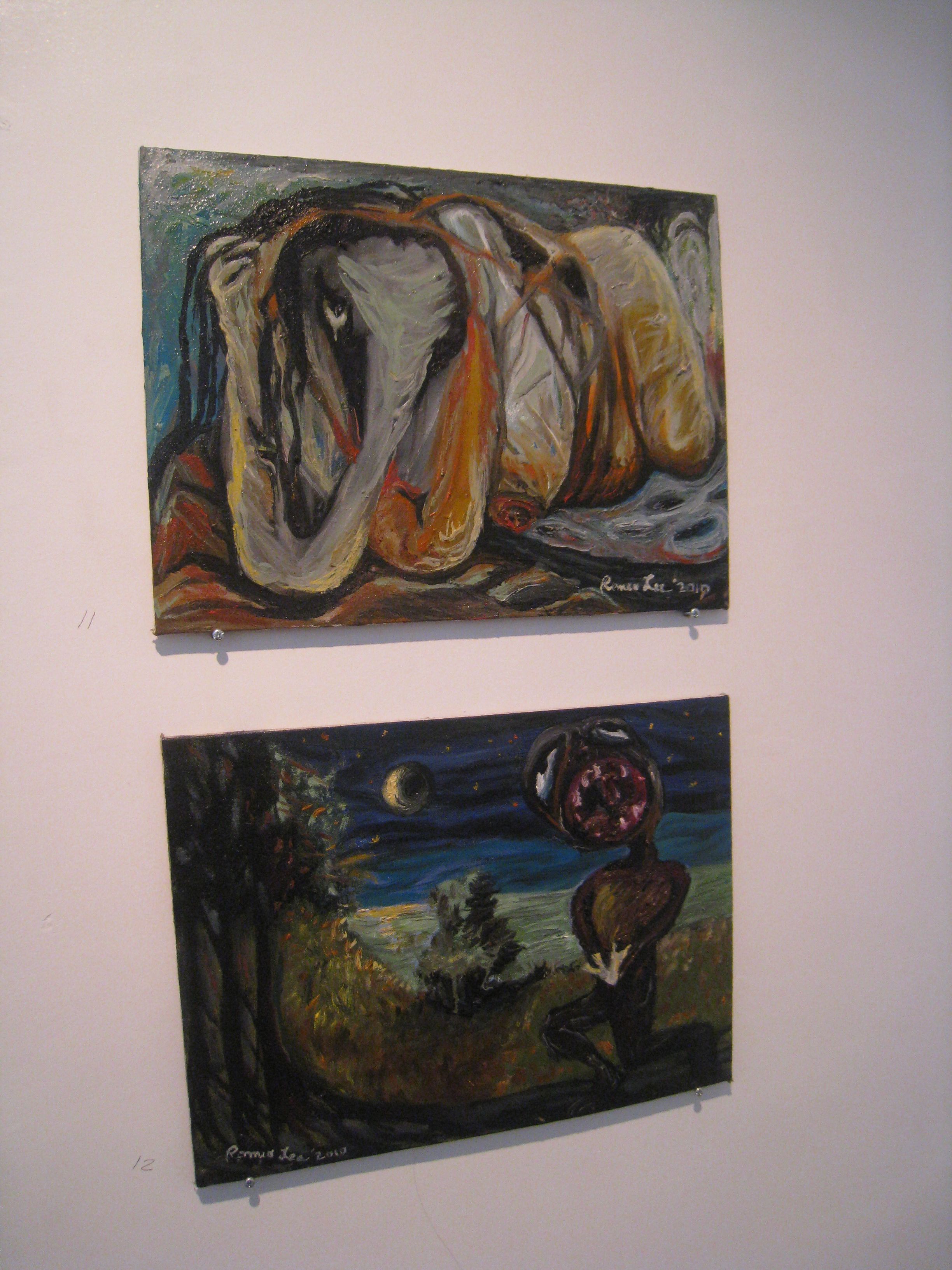
Romeo Lee, "Elepanty" and "Moon Lee"

Poklong Anading and Paolo Picones

Jucar Raquepo and Migs Rosales

By Gaston Damag


Pablo Capati Is In His Element

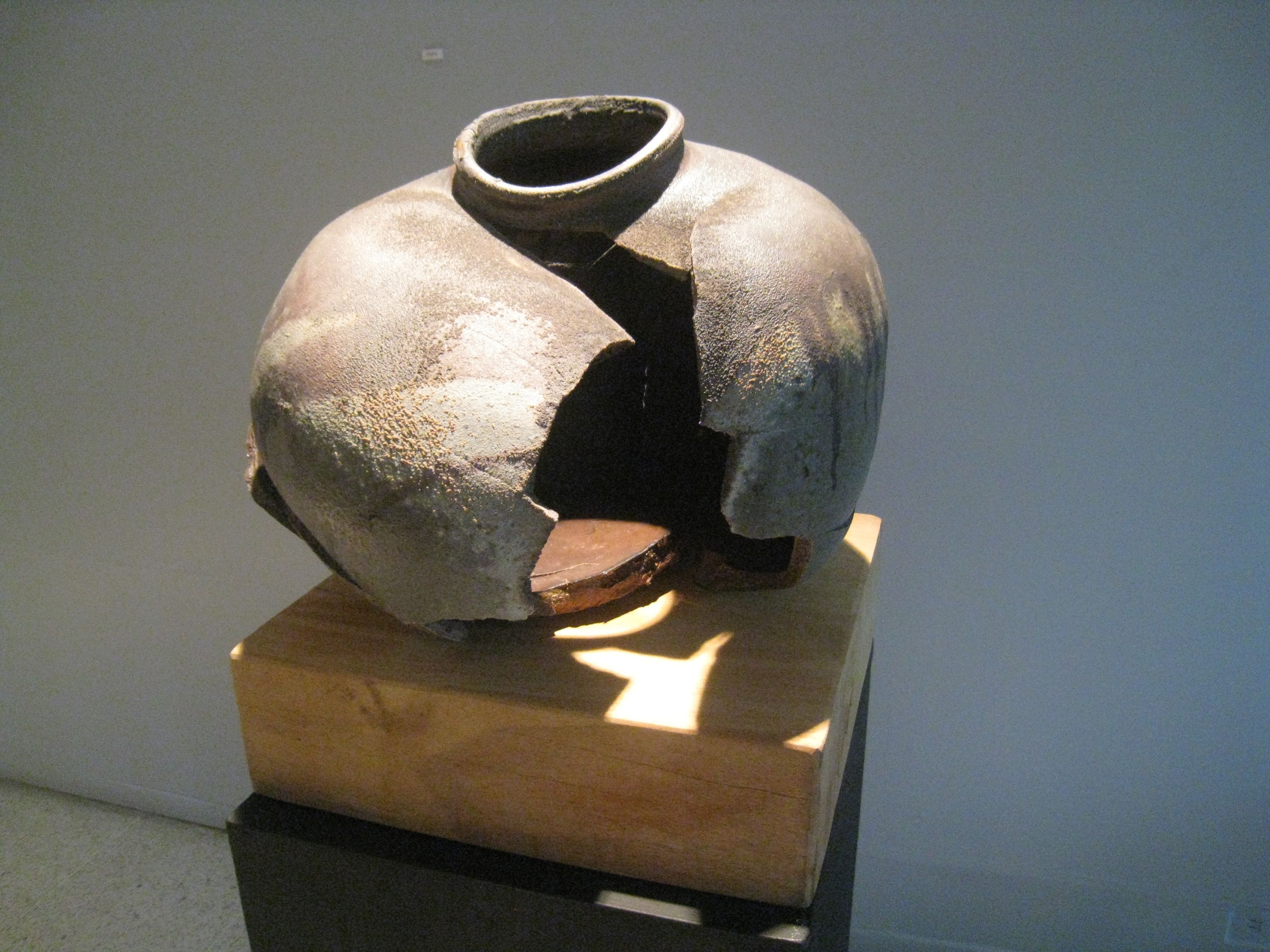
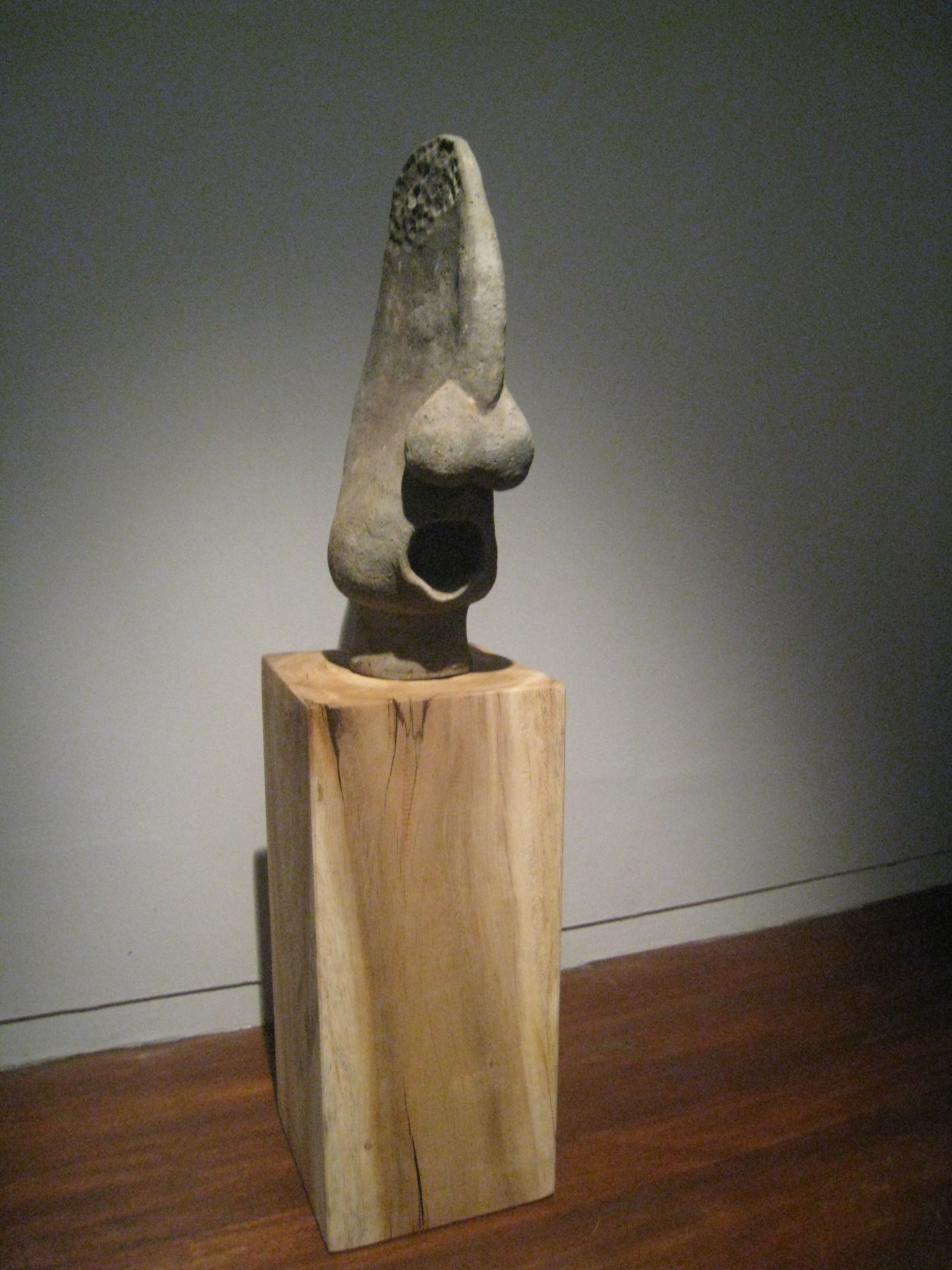
Pablo Capati III, "Sunken Treasure"

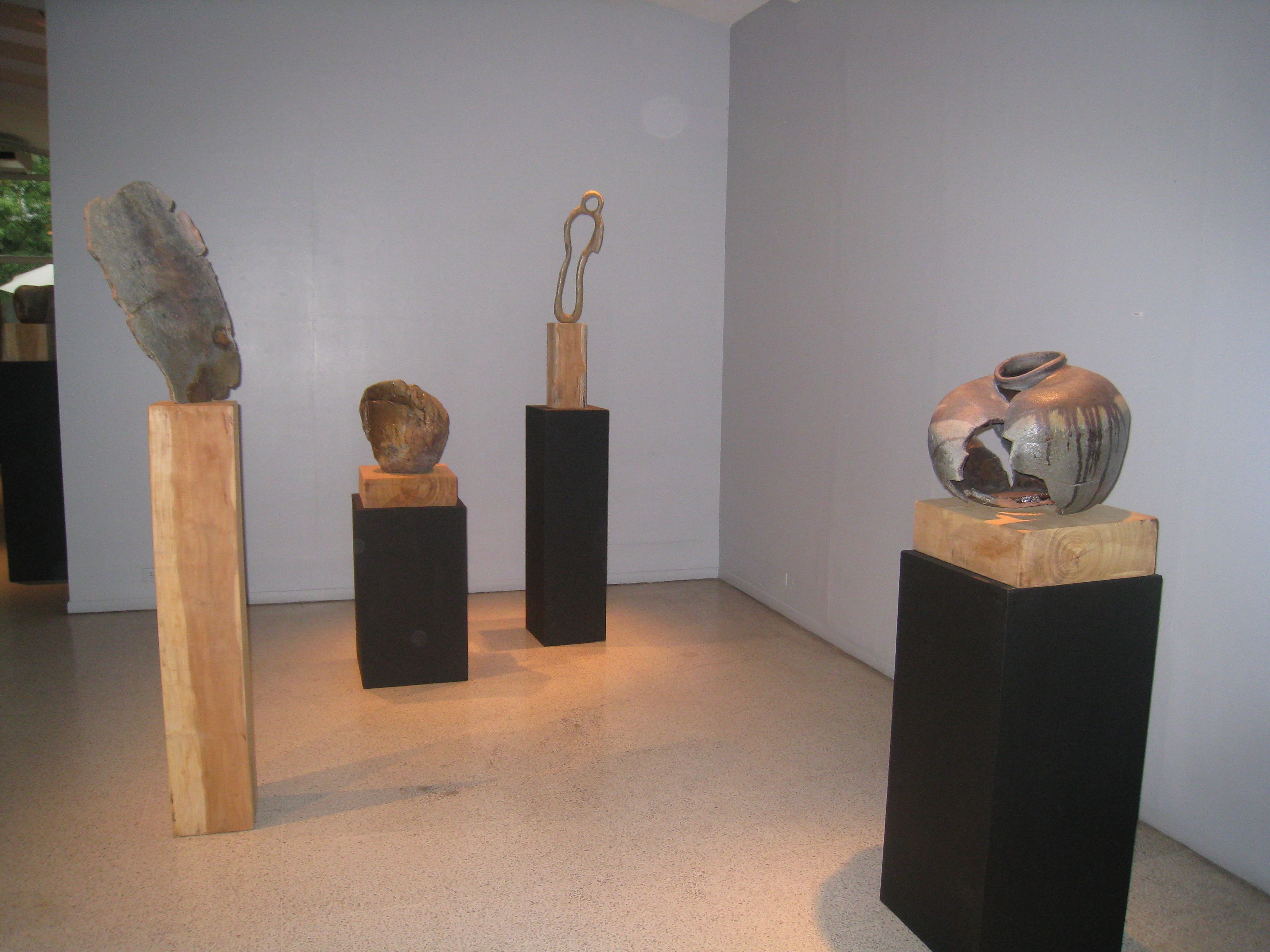
Ten years ago, Pablo Capati III spent his nights running Rokuro, his restaurant in Malate, on hip Nakpil Street.  Rokuro is the Japanese word for pottery wheel. Even then, the allure of what had been a craft learned in high school was undeniable.  As a teenager, Pablo lived in Japan.  And it was there where he learned the basics of stoneware, of expressing

Pablo Capati III, "Tsubo"

himself through his creations in clay.

In 2003, Pablo moved to Batangas, to his family’s farm, and committed himself to pottery full time.  Seven years later, as we come to view Element, his first solo exhibit, we see the beautiful results of that fateful choice.

Pablo Capati III, "Baal"

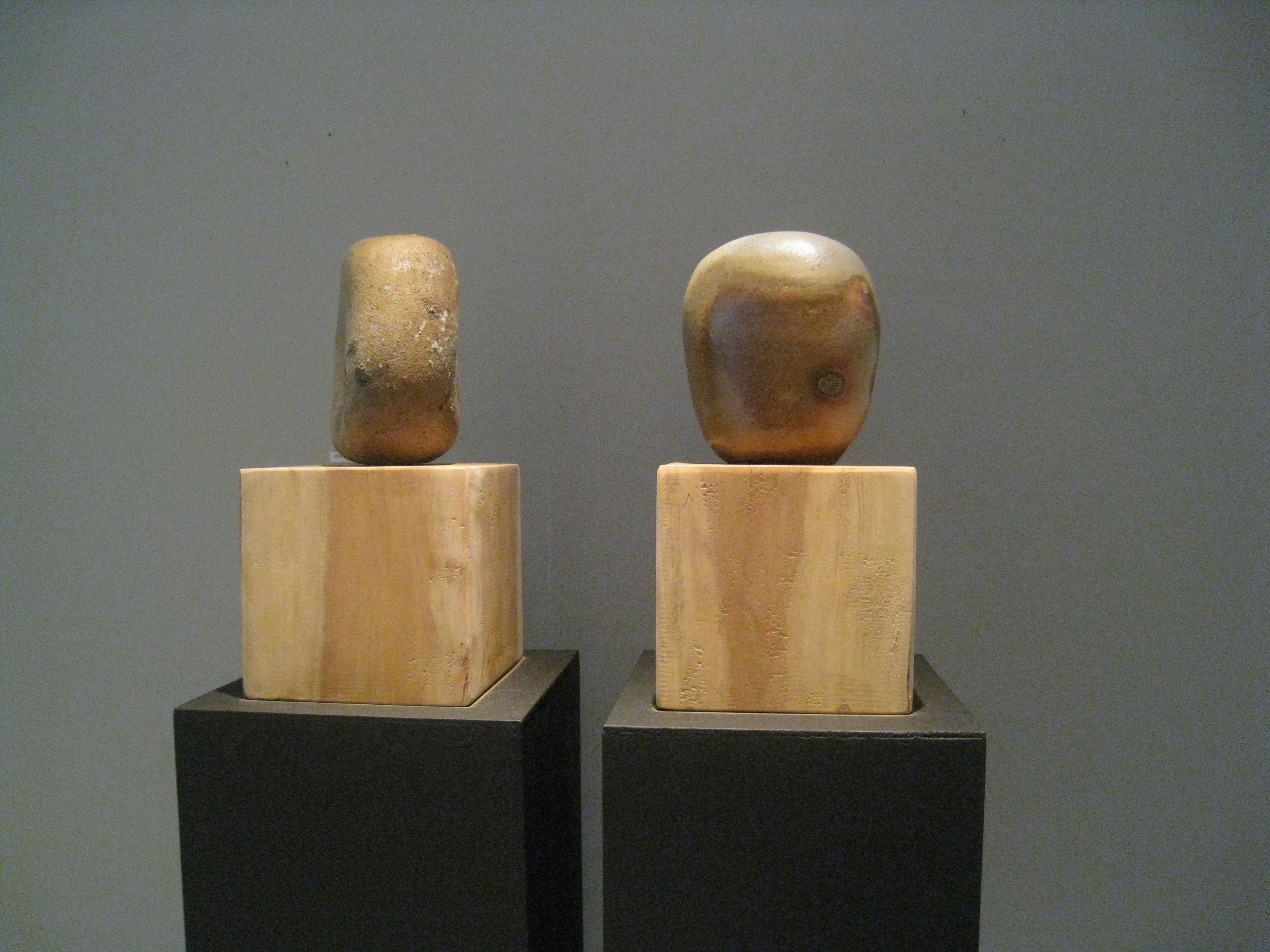
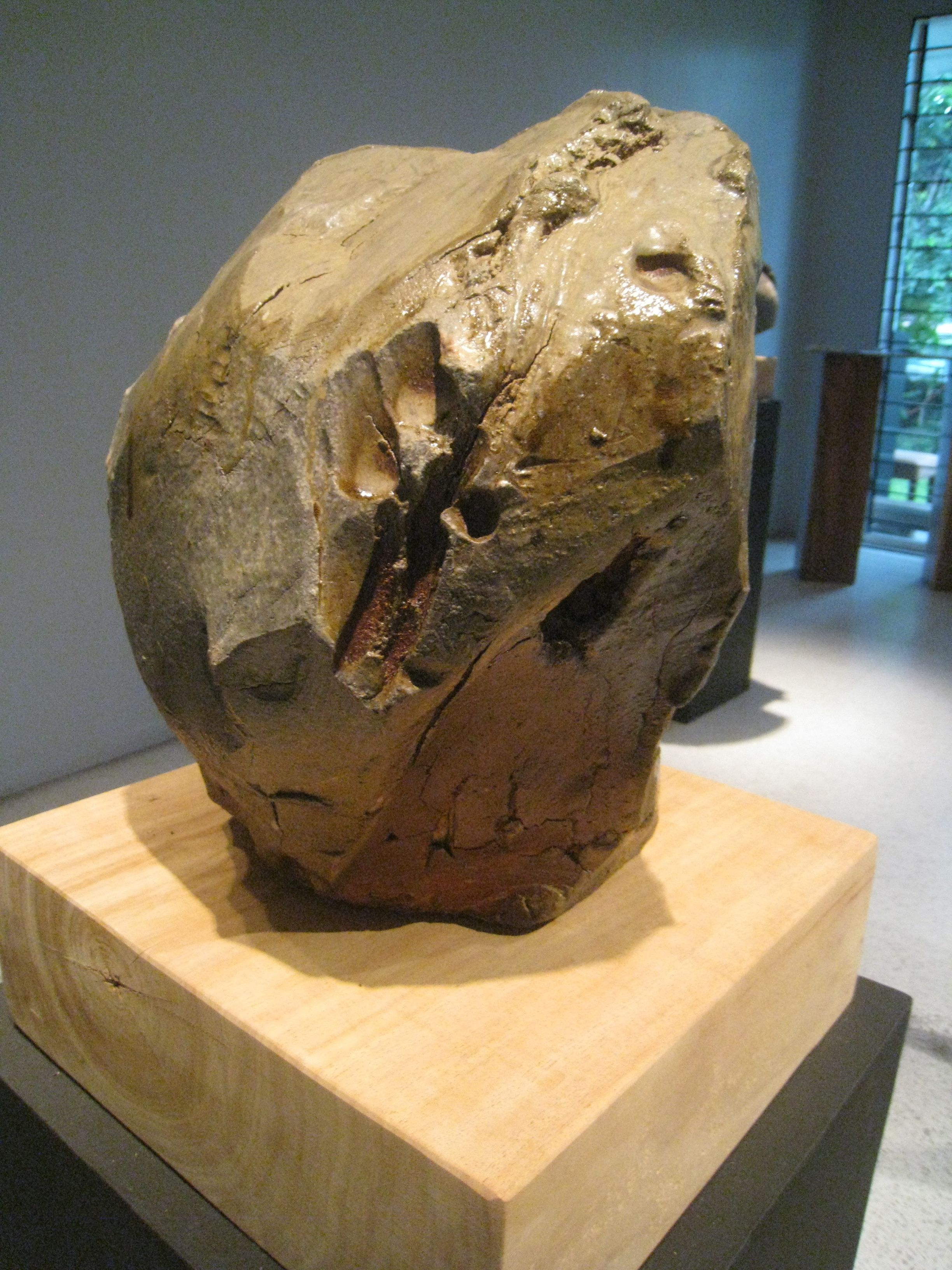
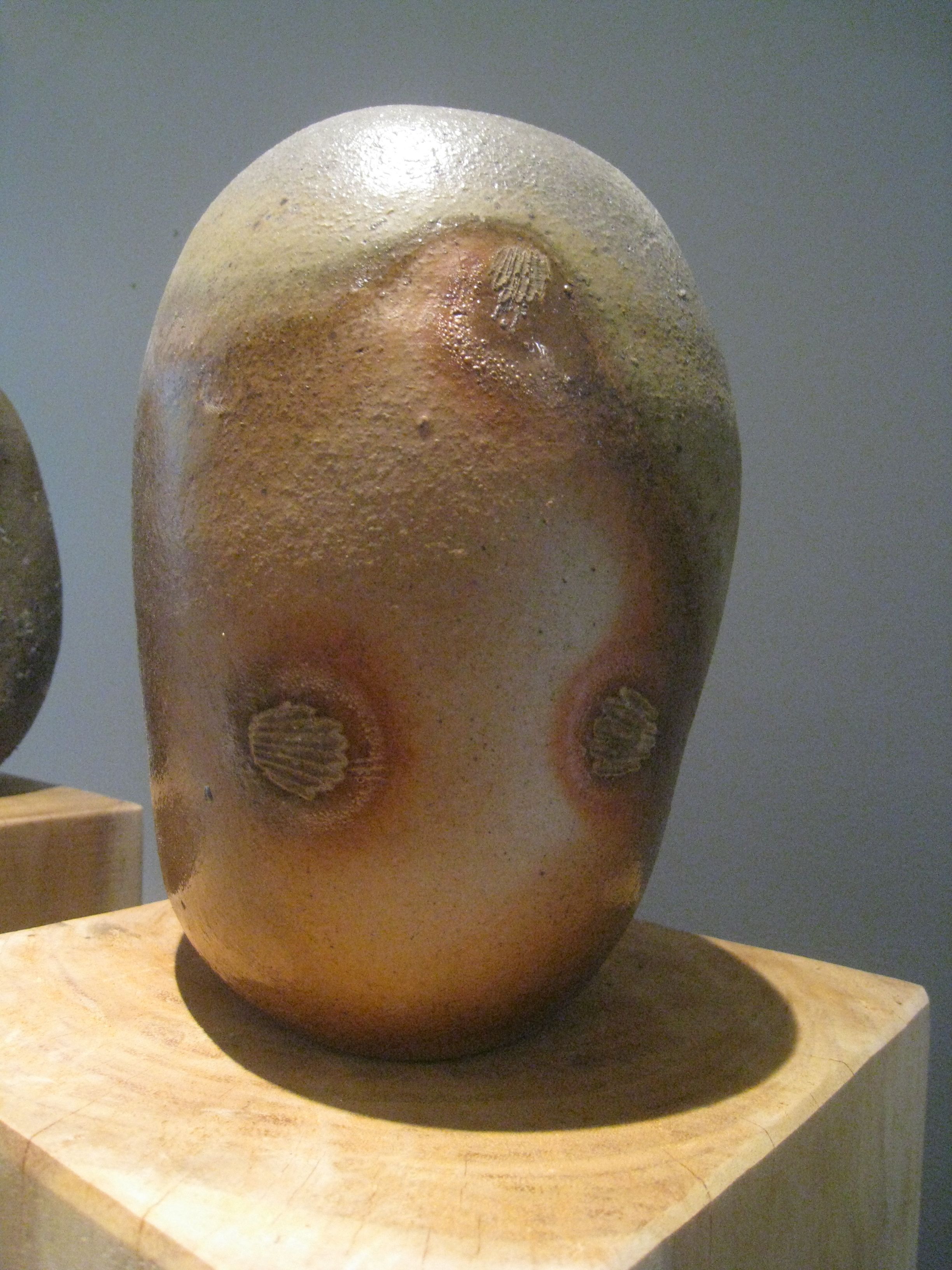
As art collector Rene Guatlo explains in his notes for this show, anagama is an ancient process that uses wood to fire pottery.  Pablo built his own wood-fired kiln by drawing on his experiences in Japan, and using books as references. Getting the desired finish and texture for the surfaces of his stone pieces requires patience and multiple attempts of trial and error.

Pablo Capati III, "Stone 4" and "Stone 5"

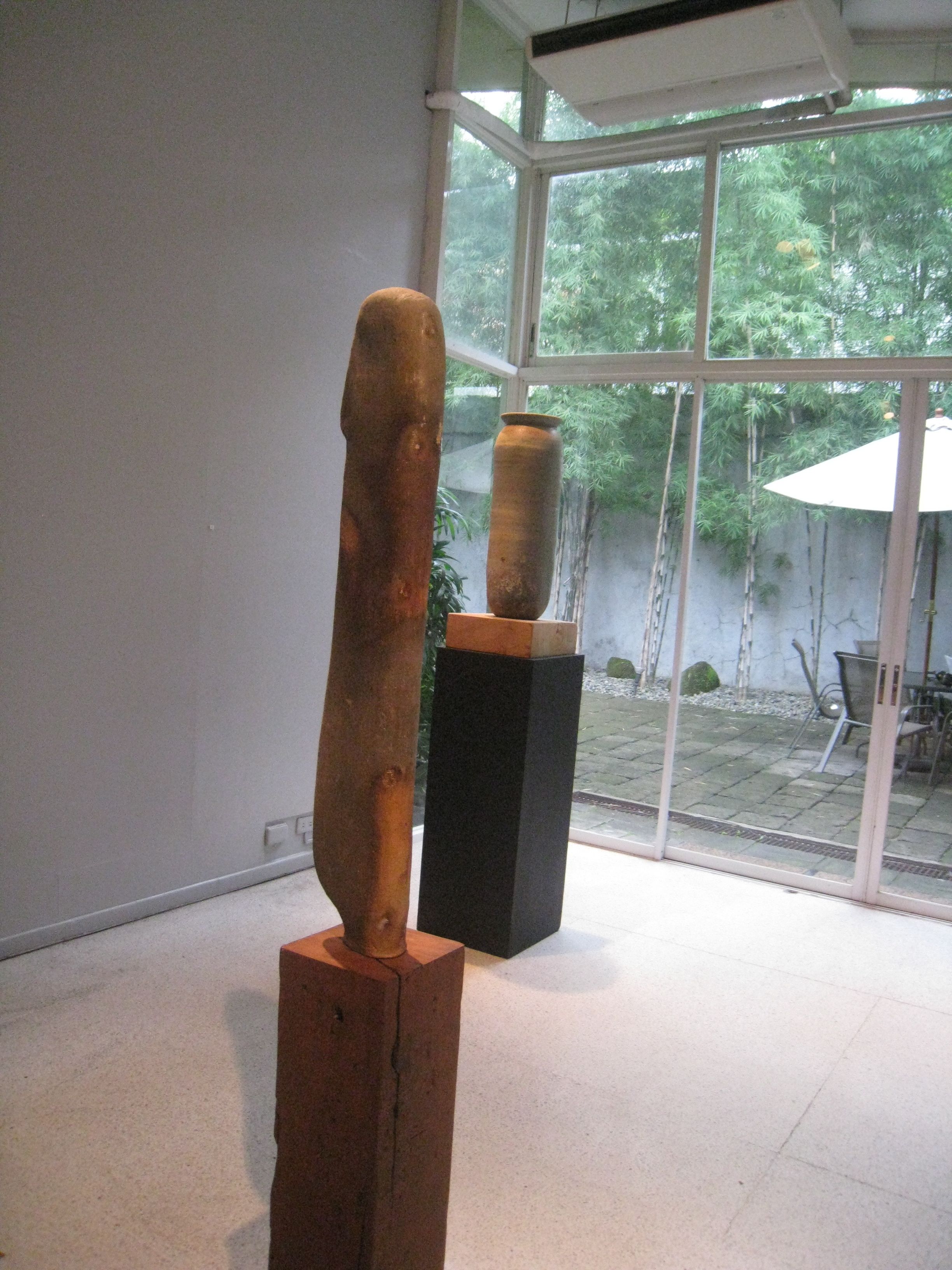
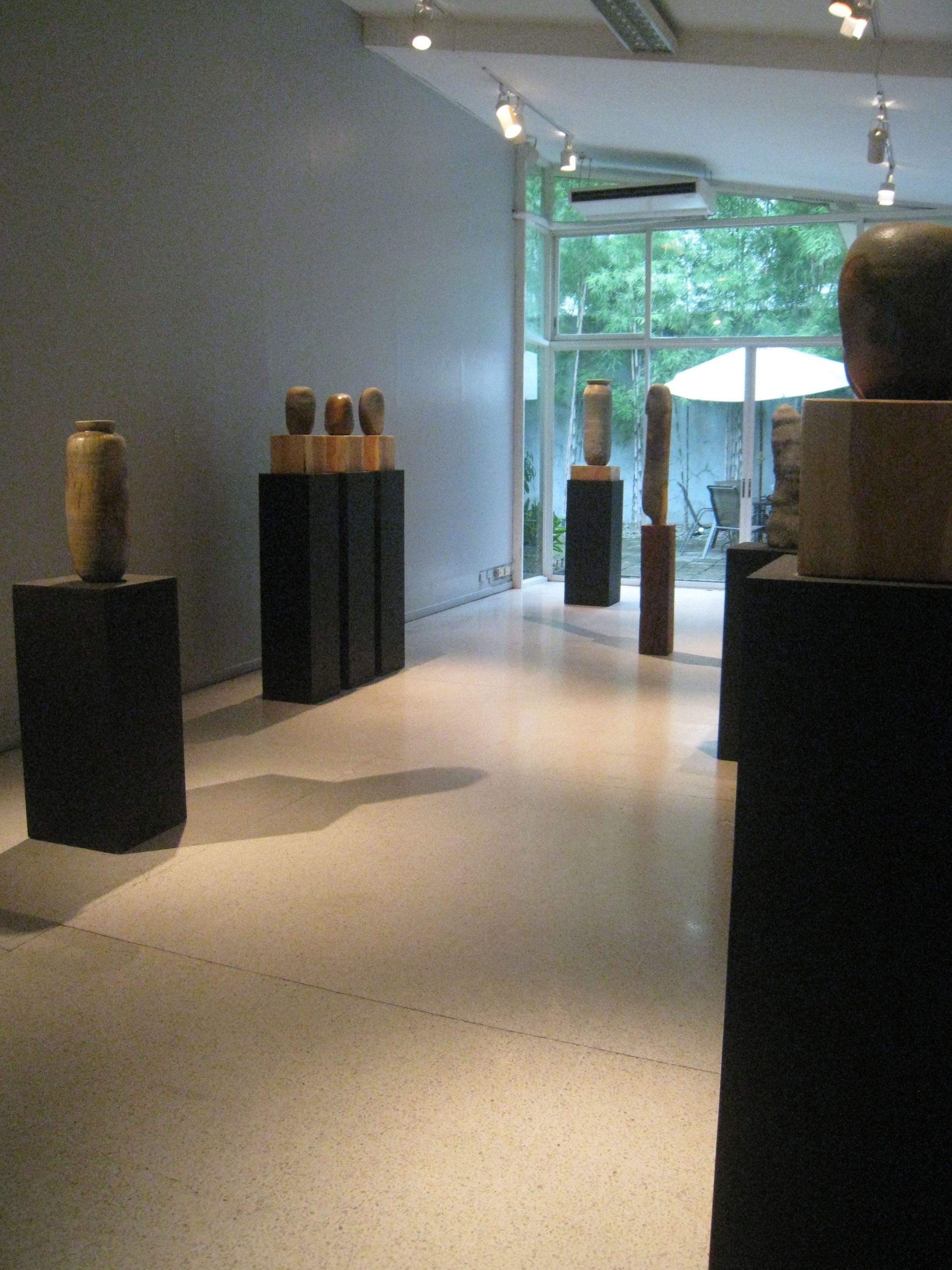
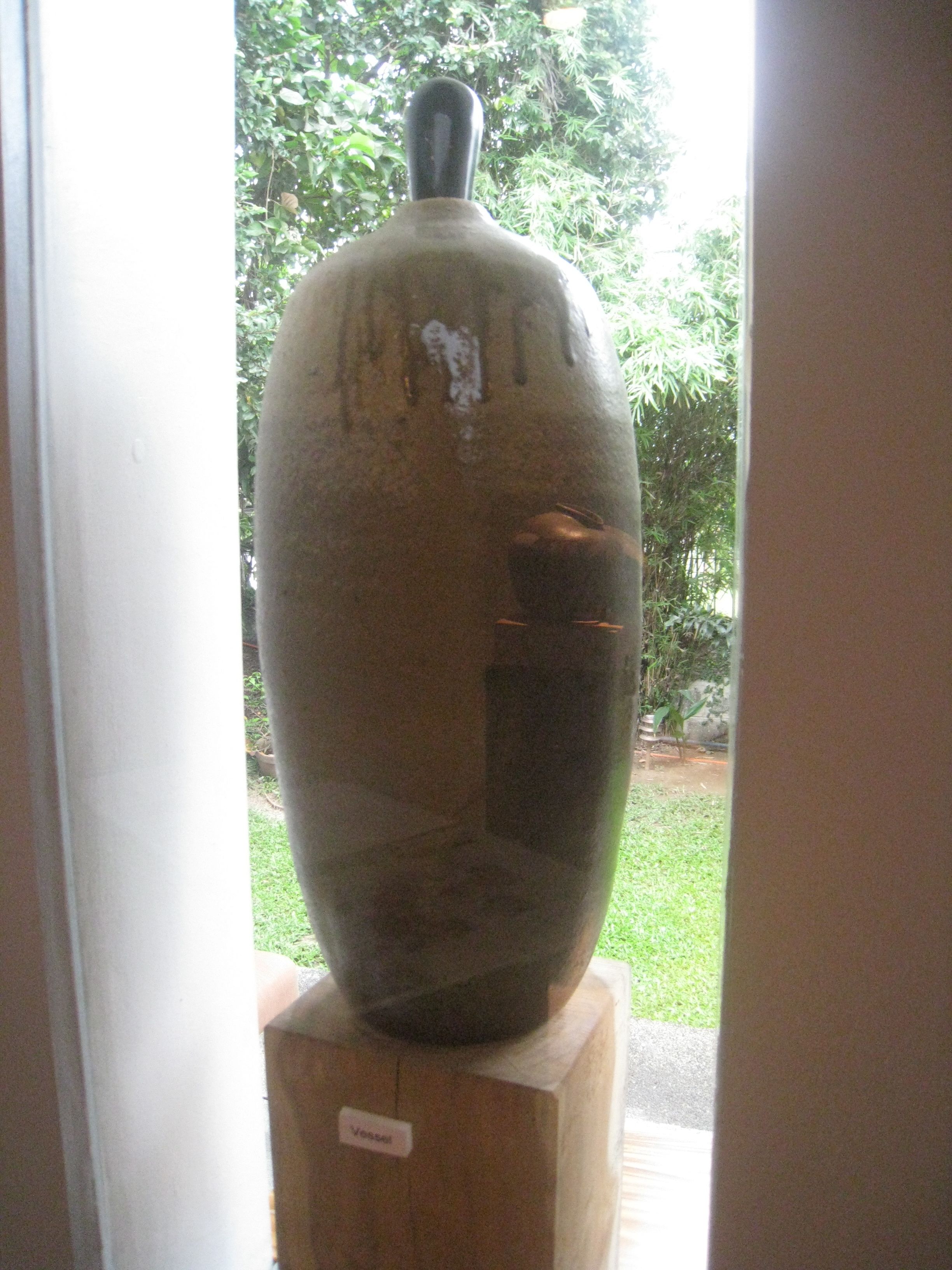
In the last few years before this show, Pablo kept his work to traditional vessels— vases, jars, tea services, utilitarian pieces that we normally associate with pottery.  For this show, he wanted to translate pottery into his own language, explore its infinite possibilities through sculptural forms.  As the photos attest, he has wonderfully carried a revered tradition into the realm of contemporary art.

Pablo Capati III, "Pablo's Gold"

Element runs until 28 August 2010 at Art Informal, 277  Connecticut St., Greenhills East, Mandaluyong.  Phone (632) 725-8518 or visit http://www.artinformal.com

For more information on Pablo Capati III and the anagama process see http://lifestyle.inquirer.net/artsandbooks/artsandbooks/view/20100802-284396/Art-of-anagama-pottery

Exhibit Installation View

Pablo Capati III, "Aura" and "Jar"

Seashell detail, "Stone 5"

Another installation view

Pablo Capati III, "Vessel"